
The transition to electric vans in the United Kingdom presents a complex picture of progress and persistent challenges. While major commercial fleets are increasingly adopting zero-emission vehicles, nationwide sales figures reveal a significant shortfall against government targets, sparking debate about the pace of change.
The Fleet Perspective: Early Adopters See Benefits
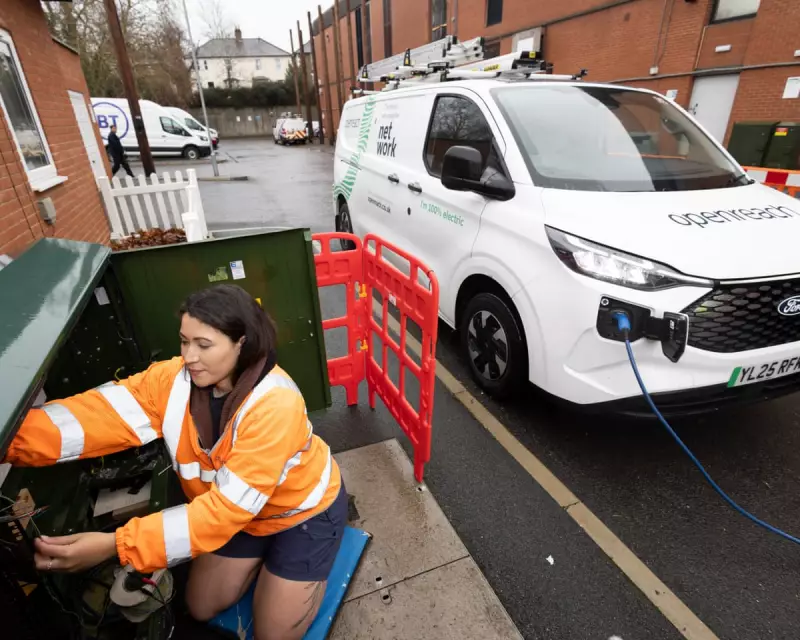
For some of Britain's largest vehicle operators, the shift to electric is already delivering tangible advantages. Openreach, BT's fibre broadband subsidiary, operates one of the country's most substantial electric van fleets, with 6,000 electric vehicles among its 23,400-strong fleet and plans to add another 1,000 by March. Engineers report positive driving experiences, with Jordane Roach, an Openreach engineer, stating: 'This is so much easier to drive. I'd never go back to diesel.'
Royal Mail, with the UK's largest commercial fleet of approximately 43,000 vehicles, has found electric vans particularly suitable for its operations. The predictable daily routes and overnight depot charging make battery-powered vehicles a logical choice. The postal service has deployed 8,000 mid-sized electric vans and recently introduced micro-electric vehicles and heavy electric lorries, potentially enabling zero-emission parcel delivery from start to finish.
Economic Considerations and Operational Advantages
Cost savings represent a significant driver for companies making the switch. Research from the Centre for Economics and Business Research indicates that European sole traders could save approximately €14,000 (£12,200) over three years compared to diesel equivalents, despite higher upfront purchase prices. Large fleet operators benefit from substantial discounts through bulk purchasing, with some securing reductions of up to 25% on list prices.
Operational reliability has emerged as another advantage. Judy O'Keefe, Openreach's director of fleet, highlights reduced breakdown incidents, stating: 'They are way more reliable. Breakdowns, being left on the side of the road at night, are significantly down.' The company has implemented charging solutions including home chargers for employees and strategic partnerships to access charging infrastructure during off-peak hours.
The Broader Market Challenge: Missing Targets
Despite these fleet successes, the wider UK market tells a different story. Electric van sales have substantially lagged behind government expectations outlined in the Zero-Emission Vehicle (ZEV) mandate. For 2025, the target was set at 16% of new van sales being electric, but manufacturers achieved only 9.5% amidst an overall van market that contracted by 10%.
The regulatory framework includes complex 'flexibilities' that allow manufacturers to earn credits through various means, including improving emissions from petrol and diesel vehicles and carrying over credits between years. Thinktank New Automotive estimates the effective target for last year was closer to 9.35%, suggesting manufacturers might avoid penalties despite missing headline figures.
Manufacturer Perspectives and Industry Tensions
Major van manufacturers express concerns about the current trajectory. Eurig Druce, UK group managing director for Stellantis (owner of Peugeot, Citroën, Fiat, and Vauxhall), acknowledges compliance challenges, stating: 'The reality for the majority of manufacturers in the UK is they're struggling to comply. The take-up has been slower than any of us would have liked.' He advocates for government review of targets and removal of caps on electric van grants.
This perspective contrasts with that of fleet operators actively seeking more electric vehicles. Abby Chicken, Openreach's head of sustainability, emphasizes both the business case and environmental imperative for switching, while Dominic Phinn of the Climate Group's EV100 campaign notes that member companies 'can't get enough' of electric vans.
Future Outlook and Market Evolution
The regulatory landscape continues to evolve, with headline targets increasing to 24% for 2026 and reaching 70% by 2030, ahead of the planned 2035 ban on new petrol and diesel van sales. Market dynamics are shifting with Chinese manufacturers like Maxus gaining ground alongside established players Ford, Stellantis, and Volkswagen.
Industry analysts highlight underlying economic pressures. Ben Nelmes, chief executive of New Automotive, observes: 'Most van makers still are making less profit on their electric van sales than they are on their diesel van sales. They are doing everything they can to boost their margins.' Meanwhile, the eventual trickle-down of fleet vehicles to the secondhand market may improve accessibility for smaller operators and sole traders.
As the UK works toward reducing transport emissions—vans accounted for 18 million tonnes or 12% of transport emissions in 2023—the electric van transition remains a critical but contested component of decarbonisation efforts. The experiences of early adopters demonstrate both the potential benefits and the practical challenges that must be addressed to accelerate widespread adoption across all segments of the market.



