
Court of Appeal Declares Tower Hamlets Mayor Acted Unlawfully Over LTN Removal
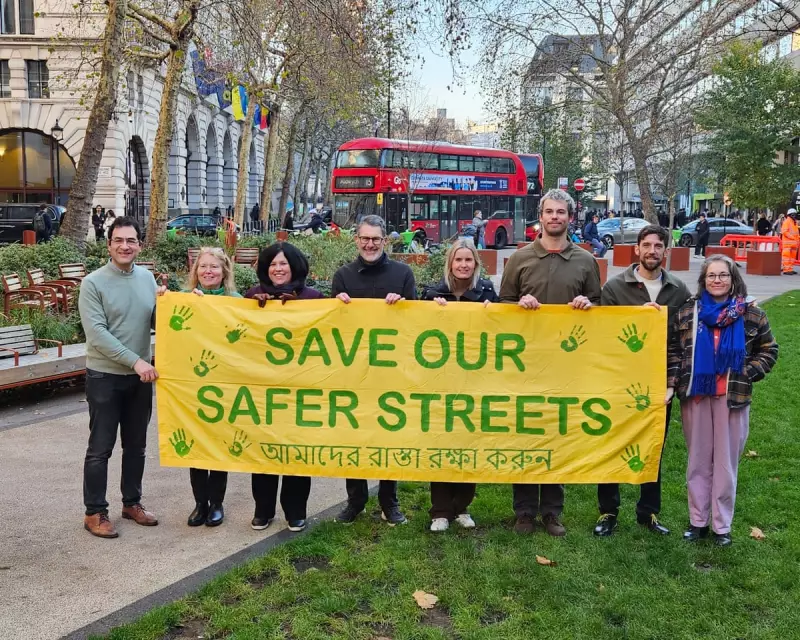
The Mayor of Tower Hamlets, Lutfur Rahman, has been found to have acted unlawfully by the Court of Appeal in his attempt to remove three low traffic neighbourhood (LTN) schemes. This landmark ruling represents a significant victory for road safety activists who have campaigned for over three years to preserve the traffic restrictions in the east London areas of Bethnal Green, Shoreditch, and Columbia Road.
Campaigners Feel Vindicated After Prolonged Legal Battle
Road safety campaigners have expressed feelings of vindication following the court's decision. The case reached the Court of Appeal after Mayor Rahman initially succeeded in a High Court hearing last December. The campaign to retain the LTNs garnered substantial local support, including endorsements from NHS trusts and the headteachers of five local schools.
Campaigners argued that these neighbourhood schemes provide essential benefits to local communities. They described the LTNs as "simple and cheap infrastructure which protects our public realm from the worst impacts of cars and drivers' behaviour." Furthermore, they emphasised how these measures "encourage and support people who choose or have no choice but to walk, cycle or get public transport" while reducing isolation and improving safety and accessibility for vulnerable residents.
Legal Basis for the Ruling Against the Mayor
The judge determined that Mayor Rahman lacked the authority to remove the LTNs because they were implemented as part of a traffic strategy agreed with Transport for London (TfL). Ted Maxwell of Save Our Safer Streets highlighted the crucial role played by TfL's involvement in the appeal process. "We the community brought this legal challenge, including raising thousands of pounds for legal support, but the involvement of TfL was key," Maxwell stated.
He specifically praised TfL's barrister, Charlotte Gilroy GC, describing her contribution as "quietly devastating in court." The judge explicitly ruled that Rahman had acted beyond his powers, confirming that he does not possess the authority to remove schemes delivered under TfL's implementation plan.
Broader Implications for London's Transport Policy
This ruling carries significant implications for transport policy across London. Sadiq Khan, the Mayor of London, has consistently advocated for reducing car journeys throughout the capital. Last year, he called for more low traffic streets and committed to implementing 20mph speed limits in appropriate areas.
A TfL spokesperson welcomed the Court of Appeal's decision, stating it provides "welcome clarity on the scope of London boroughs' legal duties to implement and retain schemes funded by TfL to implement the mayor's transport strategy." The spokesperson further emphasised that "walking and cycling infrastructure, such as low traffic neighbourhoods, plays an important role in making our streets safer."
Maxwell expressed hope that this victory would inspire other activists across London, describing it as "a shot in the arm" for campaigners advocating for safer streets. "We are vindicated and this is a very emotional moment for us," he added, reflecting the profound significance of this legal outcome for the community campaign.



