
Bogotá's Green Revolution: How Latin America's Cycling Capital is Fighting Air Pollution
In a remarkable urban transformation, Bogotá has emerged as Latin America's undisputed leader in sustainable transport infrastructure, deploying the continent's most extensive cycle lane network as part of a comprehensive strategy to combat dangerous air pollution levels. The Colombian capital, once notorious for having particulate concentrations seven times above World Health Organization limits at the turn of the century, has achieved a significant 24% reduction in air pollution between 2018 and 2024 through innovative policies targeting both affluent and vulnerable neighbourhoods.
Sunday Streets and Sustainable Mobility
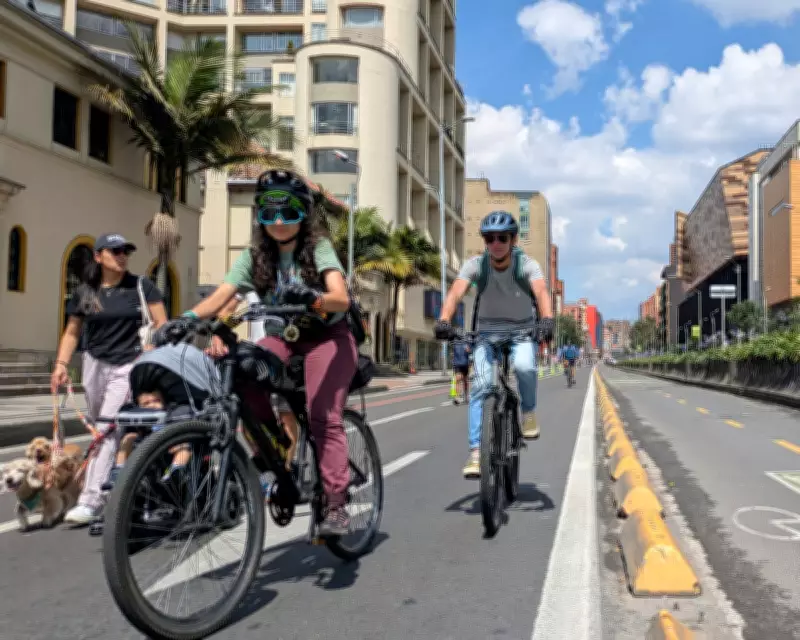
Every Sunday, Bogotá undergoes a remarkable metamorphosis as streets across the city close to motorised traffic and transform into vibrant urban parks. This weekly ritual sees rollerbladers with boomboxes performing graceful figures of eight, Lycra-clad cyclists speeding downhill, and young children taking their first tentative pedal strokes on bicycles. This visible celebration of car-free space represents just one element of Bogotá's multi-faceted approach to improving air quality for its eight million residents.
The city's commitment to sustainable transport has manifested in impressive infrastructure developments. Bogotá now boasts 350 miles of dedicated cycle lanes weaving through urban landscapes, complemented by 1,400 electric buses forming one of the world's largest sustainable bus fleets. Additionally, three new cable car lines (two currently under construction) are being developed to connect mountainous areas with the city centre, providing cleaner alternatives to traditional transport methods.
Environmental Justice in Action
What distinguishes Bogotá's approach is its commitment to environmental justice, deliberately targeting interventions in the most polluted and economically disadvantaged neighbourhoods first. The city has pioneered clean air zones known as Zumas (zonas urbanas por un mejor aire), beginning implementation in Bosa, a southern district housing over 700,000 socially vulnerable residents that suffers from particularly severe air pollution.
"Bogotá is living proof of how cities can cut air pollution, fight climate change and give their residents healthier futures," states Jaime Rueda, Bogotá lead at the global Breathe Cities initiative. Unlike many cities that typically begin environmental improvements in affluent areas, Bogotá has prioritised neighbourhoods where respiratory illnesses claim 8.7 to 17.3 lives per 100,000 people, compared to the citywide average of 7.47 deaths per 100,000.
The Bosa Transformation
In Bosa, where residents describe keeping windows permanently closed against pervasive dust and children experience constant respiratory issues, the Zuma initiative represents a comprehensive urban renewal project. The area currently provides just 5 square metres of green space per resident, making it one of Bogotá's least verdant districts. The transformation plan includes 39 specific interventions, from road repaving and lorry rerouting to creating parks and urban forests.
Adriana Soto, Bogotá's secretary for the environment, explains the critical nature of the intervention: "This is where air pollution has the most serious impacts on people's health, largely due to unpaved roads, a lack of green space and highly polluting freight transport. This is where it is really killing people."
Transport accounts for 17% of PM2.5 pollution in Bogotá, with trucks generating nearly half of that total. A significant 40% of PM2.5 emissions originate from dust churned up by traffic on unpaved roads, highlighting the interconnected nature of infrastructure and air quality challenges.
Ambitious Future Plans
Looking forward, Bogotá's administration has announced ambitious environmental targets, including planting 1,500 trees, establishing more than 2,700 gardens, creating 362 urban gardens, and developing three urban forests by 2027. The city even plans to transform bridges and the under-construction metro system into walled gardens, further integrating greenery into urban infrastructure.
Mayor Carlos Fernando Galán emphasises the philosophy driving these initiatives: "Clean air should not be a privilege. With the Zumas we are bringing environmental action to neighbourhoods that have carried the heaviest burden for too long, showing that cities can protect public health by bringing greener, healthier streets to the communities that need them most."
Jane Burston, chief executive of the Clean Air Fund, observes the broader impact of Bogotá's approach: "Improving the green spaces and public transport as well means there is a lot of excitement about the clean air zone, and other neighbourhoods are already asking for one." This demonstrates how targeted environmental interventions can generate community enthusiasm and create momentum for wider urban transformation across the city.



