
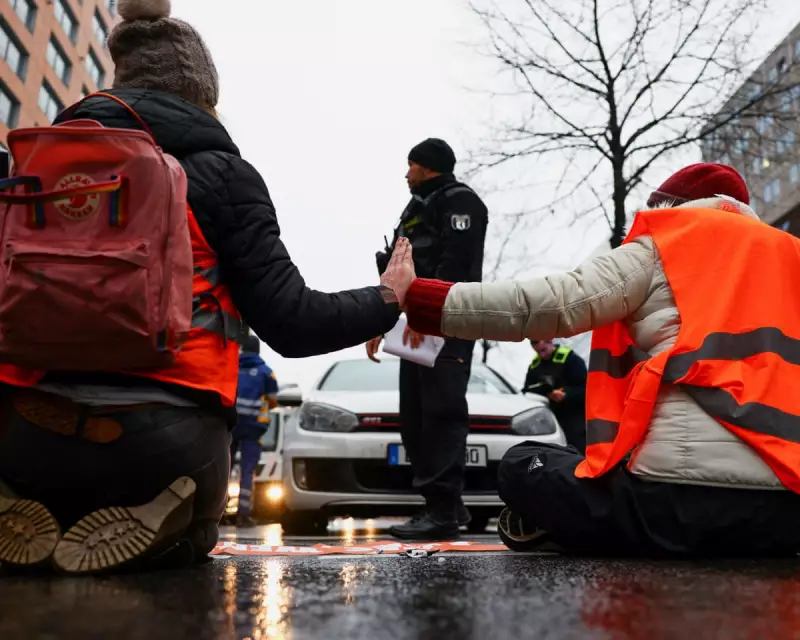
Climate activists from the Letzte Generation group have brought Berlin traffic to a standstill, blocking roads in protest against Germany's lack of motorway speed limits and demanding affordable public transport. Their dramatic demonstrations highlight a deepening conflict over the future of mobility in Germany's capital.
The Great Transport U-Turn
Since the conservative Christian Democratic Union (CDU) came to power in Berlin's 2023 election, the city has embarked on a dramatic reversal of previous green transport policies. The new governing coalition, mirroring the fractious national alliance between the CDU and centre-left Social Democratic Party (SPD), has swiftly moved to prioritise motorists over cyclists and pedestrians.
The CDU built its electoral victory partly on a backlash against car-critical measures introduced by the previous SPD-Green-Die Linke government. This debate has taken on characteristics of a culture war, with the far-right Alternative für Deutschland also campaigning vigorously for motorists' rights.
Funding Cuts and Policy Reversals
The new administration began by axing a high-profile pilot project to pedestrianise Friedrichstrasse, the main shopping street in eastern Berlin. More significantly, the government has announced plans to dramatically reduce budgets for bicycle lanes and pedestrian safety in 2026 and 2027.
Funding for measures including safer school routes and pavement upgrades will more than halve from €5.4 million to just €2.6 million. Financial support for speed cameras will also decrease, while subsidies for bike-sharing schemes could disappear entirely.
In a controversial September decision, speed limits on more than twenty busy streets were increased from 30km/h to 50km/h after officials determined emission-reduction targets had been met. Transport official Ute Bonde of the CDU defended the move, stating: "If I don't have a reason to set out 30 km/h then I'm not allowed to because that's what German federal law stipulates."
Historical Context and Cultural Divides
Berlin's current transport debate has deep historical roots. In the postwar reconstruction era, the city embraced the concept of autogerechte Stadt (car-friendly city), ripping out tramlines particularly in West Berlin to accommodate motorists. Eighty years later, critics argue Berlin is returning to this outdated vision while other European capitals like Paris, Amsterdam and Copenhagen forge ahead with climate-friendly policies.
Transport researcher Giulio Mattioli from the University of Dortmund observes: "I think if we're talking about this new wave of sustainable transport measures that we see in many cities across Europe, then definitely Berlin is not following those and even working in the other direction."
The political geography of Berlin exacerbates these tensions. The city's sprawling boundaries encompass what would be suburbs in other capitals, meaning voters on the urban fringe - who are particularly car-dependent - wield significant influence. For many older Berliners and easterners who grew up under communism, cars remain powerful symbols of independence, freedom and status.
Meanwhile, residential parking permits have been capped at just over €10 per year since 2008 - far below administrative costs and less than a 24-hour metro ticket.
Torstrasse: The Battle Ground
The redevelopment of Torstrasse, a 2km thoroughfare dating to the 18th century, has become the latest flashpoint in Berlin's transport wars. The redesign will fell dozens of mature trees, reduce pavement space to accommodate a bike lane, and restrict parking while maintaining four lanes for traffic.
Local business owner Giuseppe Amato voices concerns shared by many residents: "How am I supposed to do business? They're going to make it boring, that's my biggest fear. My guests want to sit outside and watch the world go by - it's like a cinema here."
Teacher Carina Haering, 39, represents the opposing view: "I know people in Barcelona in the beginning weren't thrilled either, but then they noticed how much quality of life can be gained. It's 2025 - it's time to think about it here too."
Conflicting Visions for Berlin's Future
Johannes Kraft, a CDU transport expert, defends the government's approach: "The goal is to renovate and expand infrastructure for all modes of transport." He pointedly added: "To all those who still believe that Berlin can be supplied by cargo bikes, the car belongs in Berlin. We're making sure the city functions."
This remark targeted Green party proposals to subsidise climate-friendly cargo bikes and stereotypes of wealthy parents in districts like Prenzlauer Berg cycling on expensive models.
Meanwhile, the city continues with controversial projects including completing the A100 autobahn ring, which threatens several nightclubs in eastern Berlin. The city has also announced ambitious plans to plant one million trees by 2040 at a cost of €3.2 billion, though experts note rigid road laws may complicate this initiative.
As Berlin grapples with these competing visions of urban mobility, the protests continue, the community meetings grow increasingly heated, and the future of Germany's capital as a sustainable European city hangs in the balance.



