
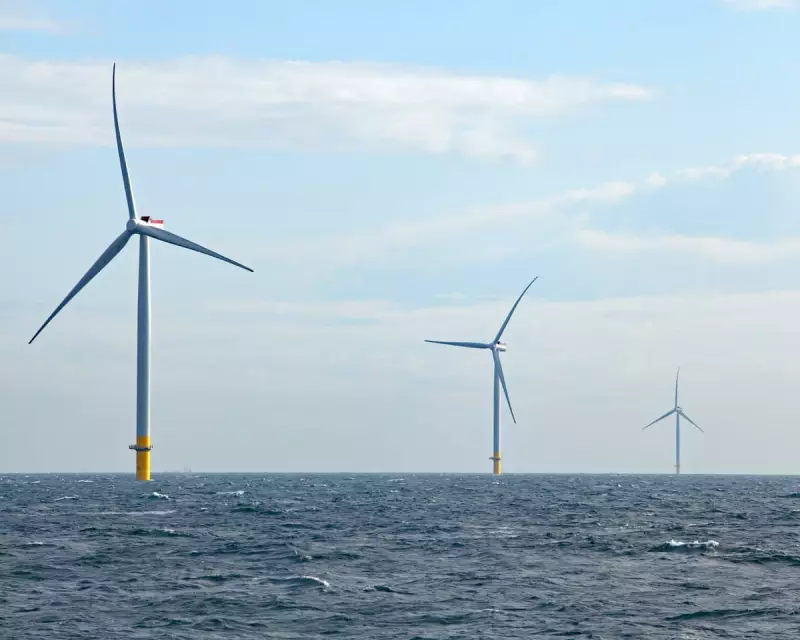
The United Kingdom has joined forces with nine other European nations in a groundbreaking agreement to construct a massive offshore wind power grid in the North Sea. This landmark pact aims to transform the ageing oil basin into a substantial clean energy reservoir, marking a significant step in Europe's renewable energy ambitions.
A Transformative Energy Initiative
Under the terms of the agreement, which will be formalised in the Hamburg declaration, the participating countries will develop extensive windfarms at sea. These installations will be directly interconnected through high-voltage subsea cables, creating an integrated offshore wind power network. The project is projected to deliver an impressive 100 gigawatts of offshore wind capacity, sufficient to power approximately 143 million homes across Europe.
International Cooperation and Signatories
Energy ministers from ten nations are expected to sign the declaration on Monday. The participating countries include the United Kingdom, Belgium, Denmark, France, Germany, Iceland, Ireland, Luxembourg, the Netherlands, and Norway. This collaborative effort represents a substantial commitment to cross-border energy infrastructure and renewable energy development.
UK Energy Secretary Ed Miliband emphasised the strategic importance of this initiative, stating that the UK is standing up for national interests by pursuing clean energy solutions. He described the agreement as part of broader efforts to escape what he termed the fossil fuel rollercoaster, highlighting the economic and environmental benefits of transitioning to renewable sources.
Political Context and Industry Support
The agreement comes shortly after former US President Donald Trump criticised European wind power development during remarks at the World Economic Forum in Davos. Despite such external commentary, the pact reaffirms Europe's strong commitment to wind energy expansion, building upon previous commitments made three years ago to develop 300 gigawatts of offshore wind capacity in the North Sea by 2050.
Energy UK, the sector's trade association in Britain, has expressed full support for what it describes as landmark efforts to transform the North Sea into a regional clean power hub. Chief Executive Dhara Vyas emphasised that deeper cooperation on supply chains, standardisation, and shared infrastructure represents both a strategic necessity and the most effective approach to reducing energy costs for households and businesses while fostering sustainable economic growth and creating high-value employment opportunities.
Additional Collaborative Agreements
In a related development, Miliband is expected to sign a statement of intent with Germany, Belgium, Denmark, and the Netherlands to facilitate cross-border offshore electricity projects. This supplementary agreement will focus on joint planning initiatives and cost-sharing arrangements, further strengthening regional energy cooperation.
Renewable Energy Progress in Europe
The North Sea wind grid initiative aligns with broader renewable energy trends across Europe. Last year marked a significant milestone when wind and solar power generation surpassed fossil fuels in the European Union's electricity mix, accounting for 30% of the bloc's total electricity generation. This shift demonstrates the accelerating transition toward cleaner energy sources across the continent.
In the United Kingdom specifically, the government recently awarded record subsidy contracts for offshore wind projects this month, providing substantial support for the national goal of establishing a clean electricity system by 2030. These developments collectively underscore the growing momentum behind offshore wind energy as a cornerstone of Europe's energy transition strategy.



