New research has revealed a staggering scale of waste in British households, with over 200 million items of children's clothing discarded every year. The study, commissioned by technology company Epson, paints a concerning picture of fast fashion habits applied to the youngest members of society.
The Mountain of Discarded Children's Wear
The figures are difficult to comprehend. The UK throws away a collective 216 million pieces of children's clothing into landfill each year. To visualise this immense volume, if each item was folded to a 1cm thickness and stacked, the pile would reach 2,160,000 metres high. That is a shocking 244 times the height of Mount Everest (8,848m).
The research, which surveyed 7,000 parents across the UK and six other European countries, found that Britain's 12.7 million children typically have 17 items binned per child annually. This is nearly double the number discarded by parents in France, who throw away just nine items per child each year.
Parental Habits and the 'Quickest Way Out'
Despite a growing awareness of sustainability, the study uncovered a significant gap between intention and action. While 66% of UK parents claim to actively consider more sustainable clothing options for themselves, nearly 48% admit to disposing of their children's clothes in the quickest and easiest way possible, which often means the general waste bin.
Convenience appears to be a major driver, with 35% of parents confessing they have binned clothes simply because they lacked the time to explore other options. The lifecycle of these garments is remarkably short. The average item of children's clothing is worn just 20 times before being thrown away or passed on.
Financial investment remains high, with the typical British parent of a child aged 1-16 spending £794.60 annually on their child's wardrobe. Alarmingly, 12% of parents buy new clothes for their children every single week.
Innovation and Collaboration for a Sustainable Future
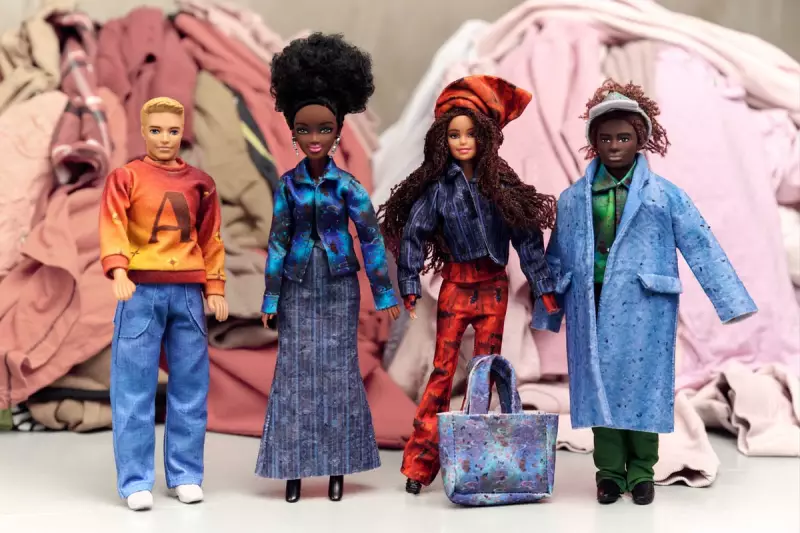
To highlight potential solutions to this environmental crisis, Epson collaborated with acclaimed fashion designer and sustainability advocate Priya Ahluwalia. Together, they created 'Fashion Play', a doll-sized collection designed to showcase how technology can repurpose waste.
The miniature garments were produced using Epson's Dry Fibre Technology, which processes textile waste, and printed with their water-saving Monna Lisa digital textile printer. This project serves as a creative proof of concept for circular fashion.
Maria Eagling from Epson stated: "Fashion offers every age a creative avenue for self-expression, but we all have a part to play in making better choices... While there are simple actions consumers can take, we wanted to show how innovation like Dry Fibre Technology can also help cut down the amount of clothes that go into landfill."
Designer Priya Ahluwalia, known for her upcycling work, commented on her motivation: "Travelling to India and Nigeria, I witnessed the true scale of textile waste as a result of the Western second-hand clothing industry. That experience has stayed with me, and I have since endeavoured to work in a way that is better for people and the planet."
The report also highlighted seasonal waste, noting that children receive around nine clothing items from friends and family during Christmas, three of which will never be worn. This research underscores a critical need for a shift in both consumer behaviour and industry innovation to address the mounting problem of textile waste.