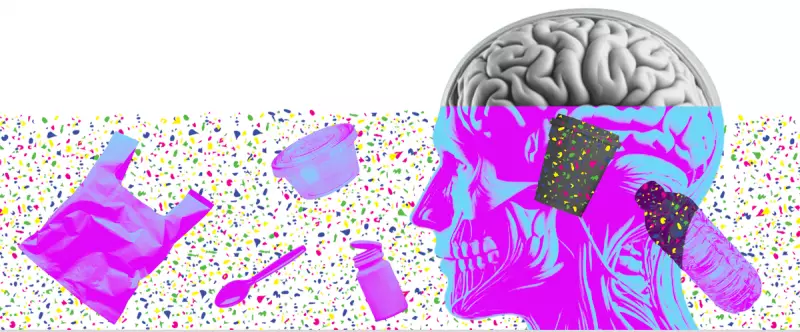
For years, alarming headlines have warned that our bodies are filling with microplastics. Studies reported these tiny plastic fragments in human cells, brains, placentas, and even testicles, painting a dire picture of pervasive contamination. However, a significant reassessment is now underway, with leading scientists describing recent critiques as a "bombshell" that casts serious doubt on the validity of many of these high-profile findings.
The Gold Rush in Microplastics Research
As public and scientific concern over plastic pollution surged, the field of microplastics research expanded rapidly. Damian Carrington, the Guardian's environment editor, notes that this influx was likened by some to a "gold rush." It was an exciting, new, and highly relevant area of study. Journalists, including Carrington, reported on what appeared to be groundbreaking discoveries published in prestigious journals, from microplastics in the brain to those crossing the placental barrier.
Yet, behind the scenes, a steady drip of criticism began from analytical chemists and other researchers who were unconvinced by the methodologies. What started as one or two sceptical voices grew into a consistent pattern of published challenges, questioning whether these startling results were, in fact, accurate or merely false positives.

Why Measuring Microplastics is So Problematic
The core issue lies in the immense technical difficulty of detecting and quantifying minuscule plastic particles within complex biological tissues. The field is young and lacks the long-established, verified standard practices that exist for analysing other pollutants.
One technique under particular scrutiny is pyrolysis gas chromatography mass spectrometry. This method works by vaporising a sample and analysing the resulting molecules. The critical flaw is that the molecular fragments produced by certain plastics are identical to those produced by natural substances like human fat. This can lead to contamination or misidentification, where biological material is incorrectly flagged as plastic.
For example, a study reporting rising microplastic levels in the brain was later challenged by another team. They pointed out that the signal for polyethylene, a common plastic, could be confused with fat, suggesting that obesity levels might offer an alternative explanation for the data. A recent analysis has cited up to 18 studies where human tissue signals may have been mistaken for common plastics.
An Iterative Scientific Process
When confronted with these criticisms, many of the original researchers have been open about the need for collaboration and methodological improvement. The scientific process, as one researcher quoted from TV's Ted Lasso, is about "moving toward better." This iterative nature is a strength, not a weakness, of science.
Encouragingly, intense work is underway to refine analytical tools, and experts expect techniques to improve rapidly. However, this period of reassessment does raise concerns about how the plastics industry might use the narrative. Carrington, who has previously reported on industry lobbying against a UN plastics treaty, emphasises that a reporter's duty is to follow the evidence wherever it leads.
So, How Worried Should We Be?
The recalibration of certain extreme findings does not mean microplastics are harmless. The fundamental facts remain unchanged: microplastics are ubiquitous in the environment, we are undoubtedly consuming them, and they are almost certainly present in our bodies. The unknown factors are the precise quantities and locations, and their specific health impacts.
Notably, every researcher Carrington interviewed—including the staunchest critics of the contested studies—takes personal precautions. These range from regular dusting (as microplastics shed from clothing and carpets) to avoiding reheating food in plastic containers.
The message is one of nuance. The extreme contamination levels reported in some studies are likely incorrect, but the underlying problem is real. Scientists have also warned against unverified and expensive "detox" treatments, such as clinics offering blood cleansing for microplastics at a cost of £10,000, for which there is no evidence.

Ultimately, the wider case against plastic pollution remains robust. The plastics lifecycle is environmentally damaging, from fossil fuel extraction and chemical-laden production to problematic waste. Global efforts to secure a treaty to tackle plastic pollution stalled in August amid heavy lobbying, indicating the uphill battle that lies ahead, even as the science continues to evolve.