
In the smouldering aftermath of a ferocious bushfire, the central Victorian hamlet of Yarck stands as a stark testament to both devastation and defiance. The Longwood fire, which continues to burn across the state, has left a trail of destruction, claiming at least one life, destroying an estimated 300 structures—including 80 homes—and scorching a staggering 350,000 hectares of land.
A Defiant Stand Against the Flames
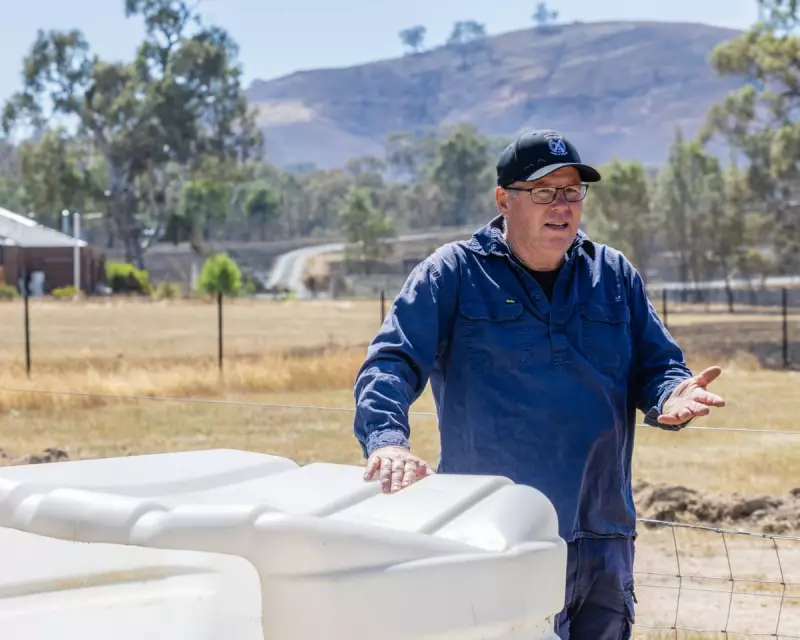
For resident David Rigby, escape became impossible as the fire bore down on Yarck on Sunday. With roads cut off by the advancing inferno, he made the fateful decision to stay and defend his property. Prepared with bore water and a generator, Rigby and about five neighbours rigged up sprinklers and hosed down houses in a desperate bid to save their street.
"I was stressed," Rigby recounted. "The wind was just howling through here. You couldn't see because of the smoke." His efforts, and those of his neighbours, were largely successful on his block, leaving his garden immaculate and his house standing just metres from blackened earth. Yet, the view from his property tells a broader story of loss, with neighbours' homes on the nearby ridge reduced to ashes. "We were pinched in the middle of it," he said. "It was calm, calm, calm, and then just hectic."
Community Reels from Widespread Loss
The scale of the disaster is still unfolding, with authorities working to make areas safe for evacuated residents to return. The human cost is profound, but the impact on livestock and livelihoods is also catastrophic. On the other side of the Yarck ridge, Kathy Munslow returned to her Gunyah Animal Healing Sanctuary to find a scene of horror.
"The animals are standing in smouldering paddocks and the fence is still burning," Munslow said. While Country Fire Authority (CFA) crews saved her house, everything else was gone, including a $3,000 shipment of hay—a year's worth for her struggling charity. With no power, running water, or phone reception, she embodies the isolation felt by many.
Local publican Chris Charman, who lost his own home, summarised the mood: "So many houses, and so many farms are gone. No one actually knows how bad it is. So many livestock are dead." The grim evidence litters the region, with dead koalas, cows, and unidentifiable carcasses on roads, and piles of hay still burning in paddocks.
The Long Road to Recovery Begins
At a community meeting in Seymour, deputy incident controller Greg Murphy outlined the challenges. The Longwood blaze had spread across 136,000 hectares, with powerlines down, trees blocking roads, and thick smoke posing ongoing dangers. "We're not out of the woods yet," Murphy warned, urging residents not to bypass official roadblocks.
The recovery phase is now beginning, marked by heart-wrenching necessities. Gun shops, like Shane Curley's Mansfield Field Hunting and Fishing, are donating ammunition to farmers facing the grim task of euthanising thousands of severely burnt sheep and cattle. "This will be very hard," Curley said, recalling the months spent on similar duties after the 2019-20 fires.
State Nationals MP Annabelle Cleeland, who fears her family farm may have lost 1,000 sheep, highlighted the urgent need for animal feed. "There is this deep innate sense of protection to get back there to make sure they've got food and water," she said, coordinating local relief efforts. Her sentiment echoes across a region where, as she starkly put it, "no one will be unscathed" by this tragedy.



