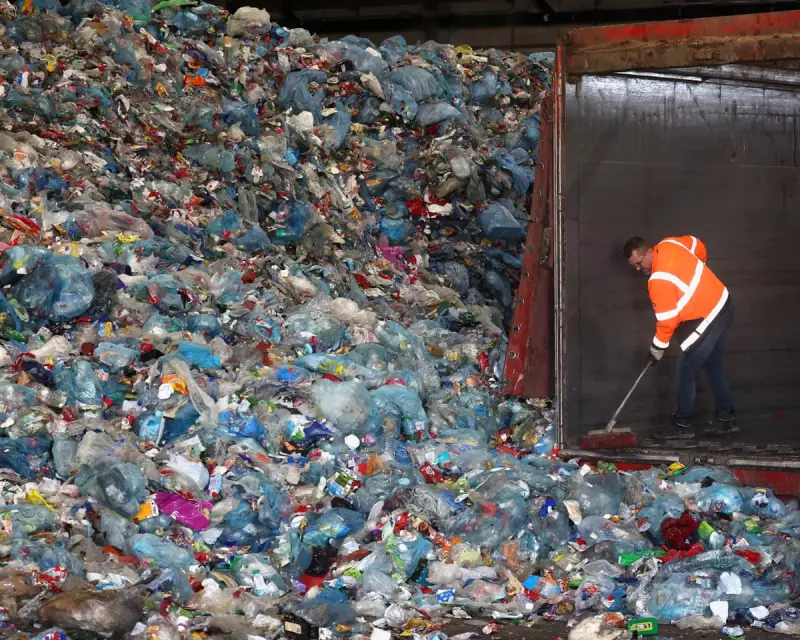
Experts Condemn 'Sustainable' Plastic Packaging as Misleading Greenwashing
Across Europe, supermarket shelves are increasingly filled with products boasting plastic packaging marketed as environmentally friendly and sustainable. However, independent experts are now raising serious concerns that these claims are largely misleading, with many brands using materials that contain only a tiny fraction of truly recycled waste while remaining predominantly fossil-based.
The Petrochemical Industry's Rebranding Strategy
Major petrochemical companies, including Saudi Aramco's subsidiary Sabic, have developed sophisticated methods to rebrand their plastic production as "circular" and climate-positive. Despite this marketing, the reality is that most of this packaging continues to rely heavily on petroleum-based virgin materials, contributing significantly to global warming and the ongoing plastic pollution crisis.
Under mounting industry pressure, European regulations appear set to legitimise these practices through what experts describe as greenwashing. Lax EU rules are scheduled to take effect in 2026, with similar UK regulations expected to follow in 2027, potentially enshrining misleading environmental claims into law.

The Problem with Chemical Recycling and Accounting Tricks
To promote what they call sustainable plastic, the industry heavily promotes pyrolysis – a chemical recycling process that converts plastic waste into pyrolysis oil. This energy-intensive method produces a hazardous compound that can constitute at most 5% of total feedstock, requiring dilution with 95% virgin naphtha to prevent damage to manufacturing plants.
"The whole process is labelled as plastic recycling, while fossil fuel use expands because virgin feedstock must be added," explained Helmut Maurer, former senior expert in the European Commission's environment department.
The industry relies on two controversial accounting methods to present appealing environmental credentials:
- Mass-balance bookkeeping allows manufacturers to attribute recycled input to specific output batches. For instance, if 5% pyrolysis oil mixed with 95% naphtha is credited to 5% of production, those 5 tonnes can be certified as "100% recycled" packaging, even if they contain no actual recycled material.
- The "avoided emissions" approach subtracts hypothetical carbon that would have been released if equivalent waste had been incinerated, creating apparent environmental savings compared to virgin plastic production.
"This is unfair to consumers – recycled content should be physically part of the final product," said Lauriane Veillard, policy officer at the NGO Zero Waste.
Questionable Environmental Assessments and Industry Influence
Public records suggest that Sabic's actual use of recycled material may represent even less than 5% of total feedstock, given the enormous quantities of virgin naphtha processed at their European facilities. The company's own life cycle assessment admits that the full pyrolysis-to-cracking process emits 6-8% more greenhouse gases than producing plastic from fossil fuels alone.
Only by counting "avoided" incineration emissions do net benefits appear positive – approximately 2kg of CO₂ less per kilogram of recycled plastic. "What matters is not hypothetical emissions from incineration that are 'avoided' on paper, but what is actually emitted in reality," Maurer emphasised.
Concerns about impartiality arise from Sabic's environmental assessments being reviewed by business partners, including the co-founder of Plastic Energy, Sabic's main feedstock supplier. Both companies declined to disclose full assessments or answer questions, while major brands using their packaging – including Kraft's Heinz Beanz and Mondelez's Philadelphia – did not respond to requests for comment.
The Broader Implications for Climate and Consumer Trust
"LCA documents serve no purpose other than advertising, because companies control the parameters to achieve desired results," stated Peter Quicker, professor of emission control in waste management at Aachen University in Germany.

Research indicates that such assessments can be selectively framed to mask true climate impacts, with carbon savings largely disappearing when recycled feedstock replaces only minimal fossil-based plastic. "The overestimated carbon savings follow the downstream value chain, amplified by mass-balance credit, to packaged products, potentially making consumer brands' statements unreliable and misleading," explained Margaux Le Gallou, senior programme manager at the NGO Ecos.
Over recent years, petrochemical companies have intensified lobbying efforts to ensure upcoming legislation accommodates mass-balance accounting, while simultaneously securing supply deals with pyrolysis-oil providers. As demand for traditional fossil fuels declines, plastic production is becoming increasingly crucial for oil majors' future profitability, according to International Energy Agency analysis.
This situation creates a troubling paradox: mandatory recycled-content targets designed to reduce waste and emissions may technically be met through accounting tricks, even as virgin plastic production continues to expand. The result is a system that potentially misleads environmentally conscious consumers while failing to address the fundamental environmental challenges posed by plastic production and waste.