EPA Takes First Step Toward Regulating Microplastics in Drinking Water
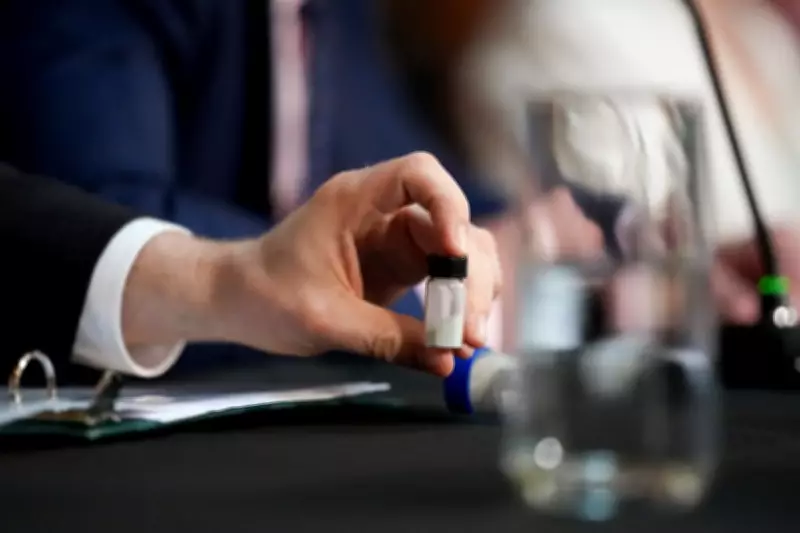
The Environmental Protection Agency has proposed a significant regulatory move that could eventually lead to limits on microplastics and pharmaceuticals in American drinking water. On Thursday, the agency announced its intention to include these substances on its Contaminant Candidate List for the first time, responding to growing public concern about plastic pollution and pharmaceutical contamination in water supplies.
Addressing Public Health Concerns
EPA Administrator Lee Zeldin emphasized the importance of this proposal during an announcement at EPA headquarters in Washington DC. "I can't think of an issue that hits closer to home for American families than the safety of their drinking water," Zeldin stated, acknowledging widespread public anxiety about contaminants in household water supplies.
The proposal represents a potential victory for Health Secretary Robert F. Kennedy Jr.'s Maha movement, which has been pressuring the EPA to take stronger action against environmental contaminants. The movement has forged political connections with the EPA while expressing frustration over what they perceive as insufficient action on key environmental priorities.

The Contaminant Candidate List Process
The EPA's Contaminant Candidate List identifies substances in drinking water that are not currently regulated under the Safe Drinking Water Act. The agency has published a draft of the sixth version of this list, initiating a 60-day public comment period with plans to finalize the list by mid-November.
This new draft list includes four major contaminant groups: microplastics, pharmaceuticals, PFAS (per- and polyfluoroalkyl substances), and disinfection byproducts. Additionally, it contains 75 specific chemicals and nine microbes that may be present in drinking water systems across the United States.
Scientific Concerns About Microplastics
Recent scientific studies have revealed alarming findings about microplastic contamination. Researchers have detected these tiny plastic particles not only in drinking water but also in human organs including hearts, brains, and testicles. While the full health implications remain under investigation, medical experts agree there is significant cause for concern.
Pharmaceutical contamination presents another growing worry. Conventional wastewater treatment plants often fail to remove medications that enter the water supply through human excretion, creating potential risks for aquatic ecosystems and human health.
A Long Regulatory Road Ahead
Environmental advocates have welcomed the EPA's proposal as an important first step, but caution that the regulatory process typically moves slowly. "It's the beginning of a very long process that routinely ends in nothing," noted Erik Olson, a senior attorney at the Natural Resources Defense Council who specializes in drinking water protection.
Judith Enck, a former EPA regional administrator who now leads Beyond Plastics, expressed cautious optimism. "Including it in the list would be the first step toward eventually regulating microplastics in public water supplies and hopefully this is not the last step," she said.
Industry and Advocacy Responses
The American Chemistry Council, representing chemical manufacturers, stated support for standardized nationwide monitoring of microplastics in drinking water and research to better understand potential impacts. However, they emphasized the need for consistent monitoring protocols across the country.
Meanwhile, environmental groups like Food & Water Watch argue that listing contaminants falls short of their demands for comprehensive monitoring programs. The EPA typically uses its Unregulated Contaminant Monitoring Rule to collect data on suspected drinking water contaminants, but advocates want more robust action.
Broader Environmental Context
Dr. Philip Landrigan, director of the Global Observatory on Planetary Health at Boston College, warned that regulatory action alone won't solve the plastic pollution crisis. "If the United States does not rein in the accelerating growth in plastic production, which leads to plastic pollution, it will make little difference," he emphasized.

The United States is currently participating in international negotiations for a global plastic pollution treaty but has strongly opposed limits on plastic production, creating tension between environmental goals and industrial interests.
Political Dynamics and Future Actions
The EPA's proposal comes amid complex political dynamics. The agency has hinted at a forthcoming Maha agenda addressing issues including forever chemicals, plastic pollution, food quality, Superfund cleanups, and lead pipe replacement. In February, EPA press secretary Brigit Hirsch told the Associated Press that this agenda was in its "final stages."
Kennedy, whose 2024 independent presidential campaign highlighted plastic pollution concerns, has also announced a $144 million initiative called Systematic Targeting of Microplastics (Stomp). This program aims to develop tools for detecting and quantifying microplastics, mapping their movement through the human body, and ultimately removing them from biological systems.
"We can't treat what we cannot measure. We cannot regulate what we don't understand," Kennedy stated during the EPA announcement. "Together, we're going to define the risk, build the tools and act on the evidence regarding microplastics."
Historical Regulatory Patterns
The Safe Drinking Water Act, as amended in 1996, requires the EPA to publish the Contaminant Candidate List every five years. Following each publication, the agency must determine whether to regulate at least five contaminants from the list. However, historical patterns show limited regulatory action—through five previous cycles, the EPA has determined that no regulatory action was appropriate or necessary for most contaminants considered.
In March, the EPA announced it would not develop regulations for any of the nine pollutants from its most recently examined list, illustrating the challenges of moving from listing to actual regulation.
Ongoing Environmental Battles
The regulatory landscape remains contentious. In May, the EPA announced plans to rescind limits on some less common "forever chemicals" in drinking water, approximately one year after the Biden administration finalized the first-ever national standards for these substances. Environmental groups including the Natural Resources Defense Council are fighting to preserve the Biden-era regulations.
David Murphy, a former fundraiser for Kennedy's presidential campaign who now works with the Maha movement through United We Eat, offered a mixed assessment of recent developments. While encouraged by progress on microplastics, Murphy criticized Zeldin for approving new pesticides during his tenure. "It's one step forward, two steps back at the EPA," he commented on Thursday.