
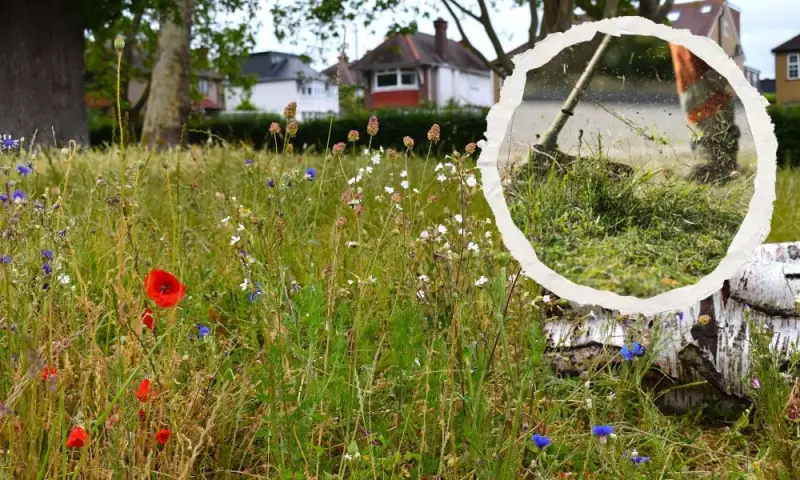
New research has revealed that people across Britain are more supportive of wild, less frequently mown parks than previously assumed - but only if these natural spaces maintain an attractive appearance.
A study published on Tuesday, November 11th, 2025, conducted by researchers from Durham University in collaboration with Durham County Council, surveyed more than 900 people about their preferences for local green space management.
The Beauty Factor in Wild Spaces
The research team discovered that most participants actually wanted less mowing and more wild spaces in their local parks, indicating substantial public backing for more natural approaches to green space management.
Nearly all respondents expressed deep concern for the environment and acknowledged the ecological damage caused by frequent grass cutting. Conservation charity Plantlife confirms that reduced mowing allows diverse wildflower species to flourish, creating vital food sources for pollinators and wildlife.
However, when researchers analysed what truly drove support for greener mowing policies, environmental benefits weren't the deciding factor. Whether people considered wild areas visually appealing proved to be the crucial element influencing their preferences.
From Resistance to Acceptance
Study participants who viewed unmown or rewilded areas as beautiful were significantly more likely to support them, while those who perceived these spaces as messy or untidy remained opposed.
This finding challenges the long-standing assumption that promoting ecological advantages alone would win public support for rewilding initiatives. The research helps explain why some biodiversity projects have faced criticism despite their environmental merits.
Lead researcher Jack Hughes from Durham University expressed enthusiasm about discovering public openness to reduced mowing. "It's understandable that people want that change to make where they live prettier," he noted.
Practical Solutions for Councils
The study suggests that making wild spaces appear intentional and well-designed - rather than neglected - could dramatically increase public acceptance.
Several straightforward approaches could help local authorities implement these findings:
- Incorporating mown edges around wildflower areas
- Planting colourful, native wildflowers
- Adding trees or artistic features
- Clearly communicating how changes enhance local beauty alongside wildlife benefits
Durham County Council, which co-designed the survey and helped recruit participants, already plans to use these insights to guide their open space management strategies.
Mr Hughes emphasised the importance of evidence-based approaches, stating: "It is important to collect evidence to see what is actually influencing opinions, rather than assuming it is as simple as just sticking up a sign that says wilder spaces are better for nature."
He expressed hope that policy makers and land managers nationwide would consider beauty as a fundamental component of rewilding messaging and strategy.
The research demonstrates that combining ecological benefits with aesthetic considerations could help councils save money on maintenance while simultaneously boosting biodiversity - with public support firmly on their side.



