From Barren Field to Thriving Ecosystem
What was once an 8.5-acre field of rough grass and nettles in Wellington, Somerset has been completely transformed over five years into a flourishing forest garden. Volunteers from Transition Town Wellington (TTW) have worked tirelessly to create this remarkable green space, which now features winding woodchip pathways, a riot of herbs, and a protective food hedge, or "fedge," encircling the entire area.
The scale of change is dramatic. Saplings planted as knee-high muddy twigs now spread their branches overhead, while seven-foot high cardoons stand proudly with their fat black seedheads. This incredible transformation has now received national recognition.
Royal Horticultural Society Recognition
The dedicated team recently received the thrilling news that their project has won a Royal Horticultural Society award for sustainable gardening. This prestigious award is one of only five community awards given by the RHS, highlighting not just horticultural excellence but also the broader benefits that community gardening brings to both people and the natural world.

There's particular sweetness to this achievement for the volunteers, who see themselves as part of a growing grassroots movement of ordinary people across Britain working together to care for the land and each other.
A Community in Action
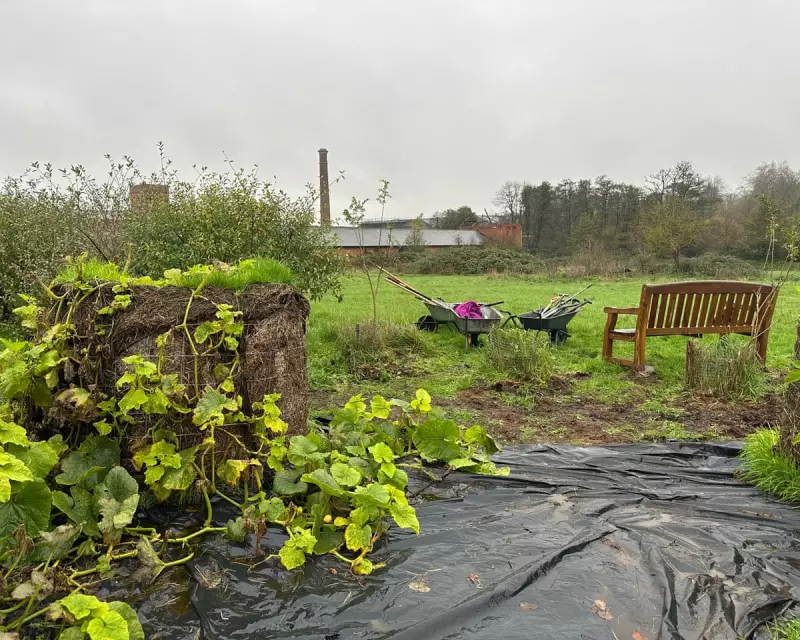
Even on rainy mornings, the volunteers remain hard at work in Fox's Field. The recent visit captured a typical day of activity, with team members engaged in various essential tasks:
- Helen directing operations with cheerful efficiency
- Robin discovering a stash of neatly opened hazelnuts
- Jay transporting materials in wheelbarrows, leaving deep boot prints
- Diana removing unwanted dock plants
- Maya finding unidentified shiny dark brown fungi
The work involves practical tasks like clearing grass from black plastic clearance mulch and creating compost heaps for next year's mulch. Even the local wildlife participates, with a robin frequently appearing to investigate what the busy humans have unearthed.
Though TTW doesn't own the land, they consider themselves its guardians. After a brief tea break to celebrate their award, the volunteers immediately returned to work, demonstrating their ongoing commitment to this remarkable community project that continues to evolve and inspire.