As autumn draws to a close, British gardeners are being urged to take advantage of this crucial window for tackling invasive weeds that could otherwise strengthen over winter and return more vigorously in spring.
According to gardening experts, November represents one of the last opportunities before colder weather sets in to remove unwanted plants effectively. The Royal Horticultural Society confirms that digging at this time of year efficiently kills annual weeds while allowing gardeners to remove perennial weed roots completely.
Three Problem Weeds Requiring Immediate Attention
While the term 'weed' can sometimes be unfairly applied, the UK now hosts several invasive species that pose genuine threats to native plants and even property. Some are so problematic that failing to control them could land homeowners in legal trouble.

Japanese Knotweed: The Property Menace
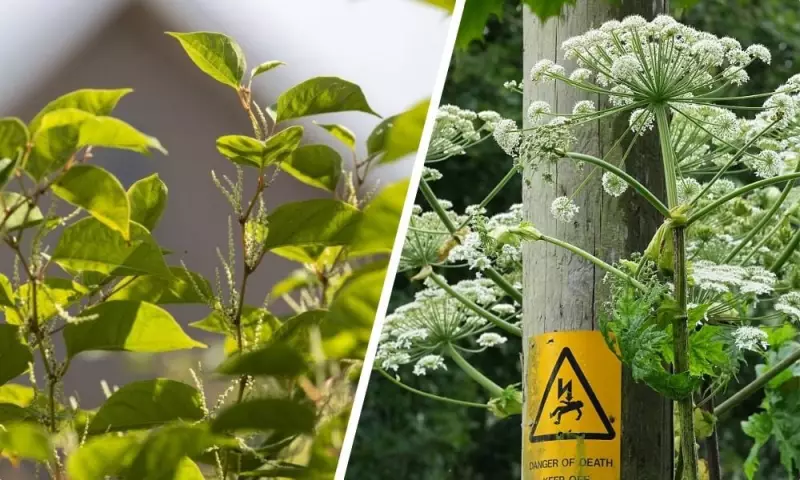
Originally introduced as decorative planting, Japanese knotweed has become notorious for its destructive capabilities. This rapidly growing, incredibly hardy plant can exploit weaknesses in structures, potentially causing damage to tarmac, paving, and even building foundations.
Identifying features include rounded pink buds at ground level in spring, which develop into bamboo-like stems with reddish-purple speckling and spade-shaped leaves. By November, the stems typically appear brown and dried out after dying back for winter.
Homeowners must legally declare its presence when selling property, as it can affect mortgage applications. Lenders often require an eradication plan, and the plant is classified as 'controlled waste', meaning disposal is restricted to approved sites only.
The RHS recommends hiring specialist invasive weed control companies rather than attempting removal yourself, as accidentally spreading fragments of rhizome or stem can lead to regrowth years later.
Giant Hogweed: The Toxic Invader
Another ornamental plant turned invasive, giant hogweed grows rapidly to heights of up to 20 feet. Its danger lies in the sap, which contains furocoumarin - a chemical that causes severe skin sensitivity to sunlight.
Contact with giant hogweed sap can result in serious burns, blistering, and even temporary or permanent blindness if it reaches the eyes. Many victims require hospital treatment after exposure.
Early identification is possible through 'rosettes' of serrated, bright green leaves. Mature plants develop umbrella-like stems with upward-facing white flowers, eventually producing distinctive penny-sized, paper-thin seeds with dark brown stripes.
It's illegal to plant or cause this species to spread, with restrictions on growing, cultivating, selling, and transporting it. Like Japanese knotweed, it's classified as controlled waste and cannot be added to home compost or council green waste bins.
Himalayan Balsam: The Environmental Threat
Don't be deceived by its attractive pink flowers - Himalayan balsam represents another invasive species causing significant environmental damage. A single plant can produce hundreds of seeds in explosive pods, which readily colonise waterways and form dense stands that smother native plants.
This annual plant leaves riverbanks and streams vulnerable to soil erosion after it dies back in winter, having eliminated competing vegetation during its growing season.
Identification features include tall, upright stems with serrated, lance-like leaves and sweet-scented pink flowers that give way to elongated seed pods as autumn progresses.
While not illegal to have in your garden, it is prohibited to allow it to spread, with similar restrictions on cultivation and transportation. The RHS recommends cutting back or removing plants before seed formation, ensuring proper destruction rather than disposal in green bins.
With November offering optimal conditions for weed removal, gardeners are encouraged to act now to prevent these problematic species from establishing stronger footholds during the winter months.