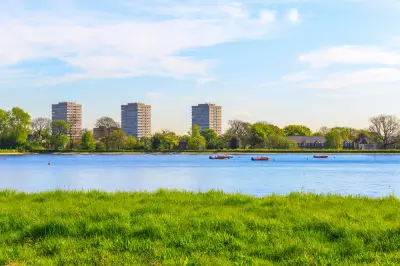
Beddington Farmlands, a wildlife site roughly the size of Hyde Park in Hackbridge, remains closed to the public as restoration efforts are pushed back to 2029, prompting local protests and concerns over environmental changes. The site, which is meant to become a public nature reserve, currently offers limited access, with many residents forced to view it from behind locked gates.
Plan delays and public frustration
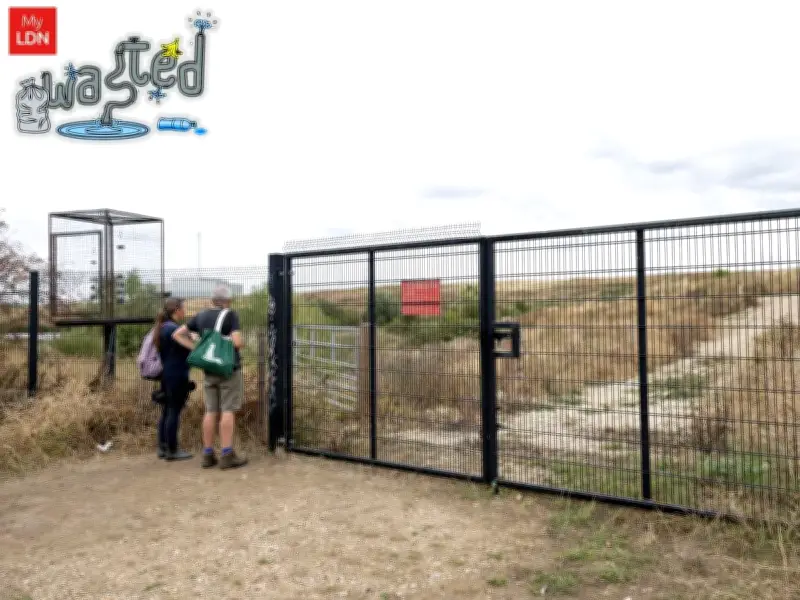
Residents and activists gathered outside the locked gates of Beddington Farmlands last week to protest the recently approved plans, which delay full restoration to 2029—six years later than originally planned. The revised deadline includes environmental changes that locals fear could hinder the site's recovery from its past as a landfill.
“It looks like you’re going to an army base from here,” Hackbridge resident John Knight told the Local Democracy Reporting Service (LDRS), standing outside the site’s gates adorned with anti-trespassing warnings. Hackbridge’s Labour councillor Dave Tchil, who attended the planning meeting where Valencia Waste Management’s new plans were approved on September 2, expressed frustration: “It feels like they haven’t been challenged. They keep getting away with it.”

What has changed in the restoration plans?
The 88.4-hectare site was originally due to become a public nature reserve as part of the Wandle Valley Regional Park, with 12.6 hectares of acid grassland and lowland heath, wetlands, seven bird hides, and almost 3km of footpaths. Valencia missed the legally binding 31 December 2023 deadline to complete habitat works, prompting Sutton Council to threaten enforcement action.
The revised plans replace acid grassland with lowland meadow and push final restoration to 2029 through staged targets. They also include using treated effluent to feed wetlands, building a 900-square-metre maintenance shed, and introducing controlled public access with seasonal curfews and automatic gates. The council can draw down a £2.33 million developer bond if work is delayed again.
However, opponents see these changes as a significant departure from the original blueprint. Speaking at the meeting, Tony Burton, Chair of the Wandle Valley Forum, said: “We now have a landscape in wildlife decline and are presented with watered-down plans that do less for both wildlife and public access.”
Environmental concerns over acid grassland loss
The loss of acid grassland remains a key concern. The council said the change was prompted by difficulties in growing acid grassland on the former landfill’s alkaline soil, with attempts to acidify it potentially mobilising contaminants that could impact the nearby River Wandle. Birdwatchers like Pasha Dilan warn of significant biodiversity impacts: “Acid grassland is incredibly important for birds. Birds, plants and insects are going to go.”
Campaigners also criticised the council and Valencia—who took over the site from Viridor in 2021—for moving forward with acid grassland plans despite knowing the site’s history. Sutton resident and Green Party member Doug Shaw said: “They are a business who are more interested in doing their business.”
Public access remains limited
Years after original plans, public access is limited to a handful of open days and keyholding members of the Beddington Farmlands Bird Group. Isabella Woolston of the nearby bedZed eco-estate said: “I have lived overlooking this place for 24 years of my life. It is harder to find info about how the project is going or how to access it because they (Valencia) are a business.”
Doug noted several permissive paths intended for public access still looked “rough and ready” and could pose risks to visitors. He pointed to a bird hide visible beyond the locked gates but largely inaccessible, asking: “How difficult would it be to just extend the path to the hide?” Under the new plans, visitors would have year-round access along the western permissive path and around the southern lake, while routes through sensitive habitats would be controlled. Six designated routes would be managed with automatic and lockable gates; however, Tony Burton called the proposed 2.30 pm winter closures to protect ground-nesting birds “simply ludicrous”.

Water management and enforcement
Thames Water plays a significant role in the site’s restoration due to its nearby Beddington Sewage Treatment Works. Under the new plans, wet grasslands and lakes would be fed with treated effluent from Thames Water’s main effluent carrier, with lining beneath key wetlands to retain water. Although Thames Water has backed the plans in principle, concerns remain over water quality and controls to prevent storm sewage reaching sensitive bird habitats. Sutton Green Party activist Helen John told the LDRS: “Trying to get Thames Water to sit around the table is a nightmare.”
Sutton’s Lib Dem Council believes the revised plans put it in a stronger position to hold Valencia to account. It hopes the £2.33 million collateral trust will prevent further delays. However, opponents argue the council has failed to address the site’s long-running under-delivery. Helen said a key concern was that a waste operator had been tasked with restoring the site, rather than a traditional trust arrangement as originally proposed in 2016 plans. “A waste operator opening a nature reserve... they must have come up with that idea in a pub over a couple of pints,” she said.
Cllr Tchil, one of four opposition councillors on Sutton’s Lib Dem-majority council, said scrutiny must continue: “Valencia needs to get its act together and Sutton Council toughen up to guarantee it happens.” Locals and campaigners told the LDRS their confidence in the site’s future had been eroded by previous delays. Julie Knight, who lives on the Flowers Estate with her husband John, said: “Now it is going to be my great grandchildren coming here.”
Sutton Council and Thames Water respond
Following the approval, Councillor Jayne McCoy, Chair of Sutton Council’s Planning Committee, said: “We know how important it is for our residents that the long-promised works to restore the landfill site and create a new nature reserve at Beddington Farmlands are completed as soon as possible. The council can now finalise a legal agreement to ensure that VWM carries out the remaining works in clear phases. Crucially, it will also allow the council to take action if any commitments are not met and ensure each phase is completed to a strict timescale. We hope this decision gives the council the tools to finally ensure delivery of this strategically important new open space dedicated to nature conservation.”
A Thames Water spokesperson said: “Beddington Farms has had a long and complex history around its ownership and plans, as outlined in the planning application by Valencia Waste to Sutton Borough Council. Thames Water has invested more than £400,000 over the past four years for ongoing habitat management, support of hydrological investigations and installation of pumps to manage water levels, and continues to review requirements at Beddington.” Valencia Waste Management was approached for comment.