
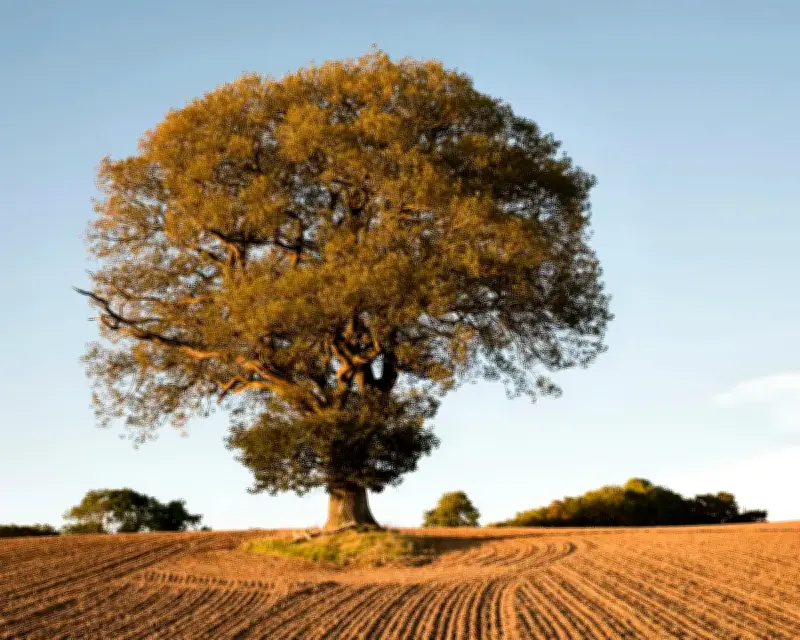
In response to a recent letter suggesting that gardeners and park managers should switch to drought-tolerant non-native species, two experts have argued that such a shift could be counterproductive, emphasizing the unique ecological value of native plants.
Native Plants Support Ecosystems Beyond Pollinators
Martin Sullivan, professor of global change ecology at Manchester Metropolitan University, and Lorraine Du Feu from Cheltenham, Gloucestershire, both wrote to the Guardian to challenge the proposal put forward by Richard Eltringham in a letter published on 5 August. Eltringham had argued that climate change necessitates adopting a planting palette of drought-tolerant non-native species.
Sullivan acknowledges that horticulturists often highlight the value of non-native plants for pollinators, but he stresses that other ecological interactions, such as food plants for insect larvae, are harder to replace. He points out that native oaks support 2,300 other species, while drought-adapted non-natives cannot substitute for all these interactions.
Native Species Can Adapt to Changing Climate
Sullivan also challenges the assumption that native species are tied to a preindustrial climate. "There is evidence of rapid microevolutionary changes in oaks in response to recent climate change," he notes, "so those crisping saplings might be part of selection for drought adaptation." He cautions that alternative planting palettes are not a panacea, observing that Mediterranean landscapes are often brown in summer precisely because of plants' adaptations to hot, dry conditions, while the UK's dull, wet winters can kill many drought-tolerant species.
"Our climate is changing," Sullivan concludes, "but a kneejerk shift away from native planting might make things worse."
Native Plants Already Drought-Tolerant
Lorraine Du Feu echoes Sullivan's concerns, expressing puzzlement at the suggestion to move towards non-native species. She notes that despite current moves towards wildlife-friendly gardening, the majority of plants in gardens and parks are already exotics, some well adapted to drought and others less so. She emphasizes that many native plants are also drought-tolerant and that discouraging people from planting natives could undermine efforts to support native insects, which need plants that provide for all stages of their lives, not just adult pollinators.
"By all means adapt planting to cope with the changing climate," Du Feu advises, "but don't assume that this means abandoning an admirable trend towards planting native species."
The letters highlight a growing debate over how to manage green spaces in the face of rising temperatures and prolonged dry spells, with experts urging a measured approach that preserves biodiversity while adapting to new conditions.



