
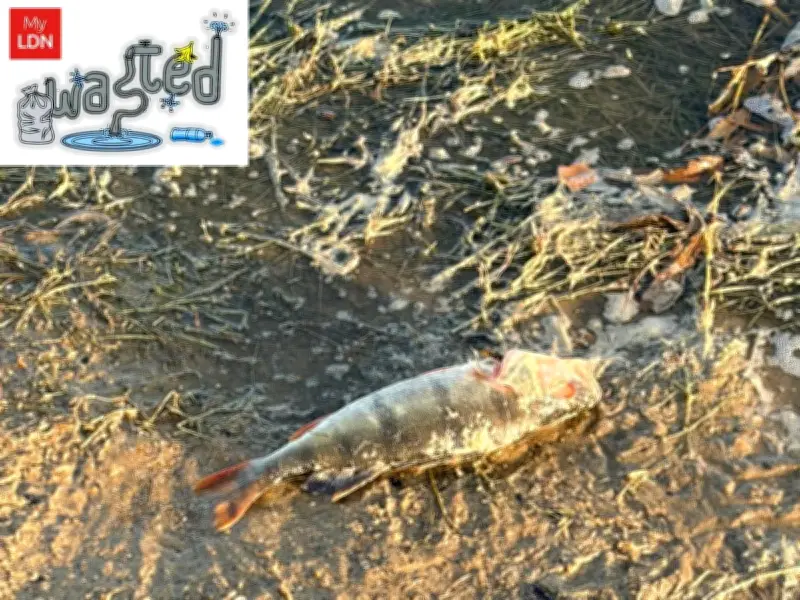
Dead fish have been spotted washing up on the shores of Ruislip Lido, a popular West London lake, after oxygen levels in the water plummeted to 20%. The Environment Agency (EA) has supplied three aerators to re-oxygenate the water and save the remaining fish, while fishing has been temporarily banned.
Residents spot dead eel and multiple fish species
Residents walking around Ruislip Lido on Monday, August 24, discovered the washed-up fish carcasses. A local councillor confirmed the issue in an online community group, sharing photos showing a dead eel alongside several other fish species.
Cllr Philip Corthorne told residents that the fish deaths were caused by low oxygen levels in the water, likely due to the prolonged hot weather this summer. He said: “We're advised the lake is now closed to fishing to preserve stocks and the EA say it may take 3/4 days to stabilise the lake, and they'll reassess.”
Environment Agency responds with aerators
The Environment Agency attended the site and tested the water. Corthorne explained: “The oxygen levels are at 20% which is the cause of the fish mortalities. The EA are lending us 3 aerators to re-oxygenate a portion of the lake where the most fish are gathered. This will be run during the day. Our team will monitor the units and top up fuel when necessary.”
A lake aerator adds oxygen and moves water, helping fish breathe and preventing deaths during hot weather. It also keeps the ecosystem healthy, prevents water stagnation, supports good bacteria by controlling algae growth, and can stop foul smells.
Hottest summer on record worsens conditions
Cooler water holds more dissolved oxygen than warmer water. As water heats up, molecules move faster, pushing free oxygen into the atmosphere, reducing the amount available for aquatic life.
In August, the Met Office announced this summer is on course to be the hottest since records began, with 37 consecutive heatwave days somewhere in the UK. Several long-standing records have been broken, including the driest July in England and Wales in 190 years. By July 15, the UK had already recorded more days above 30 degrees than in the whole of 1976, a year remembered for its iconic heatwave.
Swimming risks at Ruislip Lido persist
Ruislip Lido is managed and owned by Hillingdon Council. Swimming has long been banned, yet thousands still visit each summer, many entering the water against the rules and ignoring warning signs. Blue-green algae poses a significant toxic threat to visitors and pets, while cold water shock heightens drowning risk, especially as the lake's depth fluctuates unexpectedly. Visitors are also warned of 'swimmer's itch', an allergic response to tiny parasites in the water.
The Environment Agency was contacted for further information. Fishing remains closed until the lake stabilises, with a reassessment expected in three to four days.



