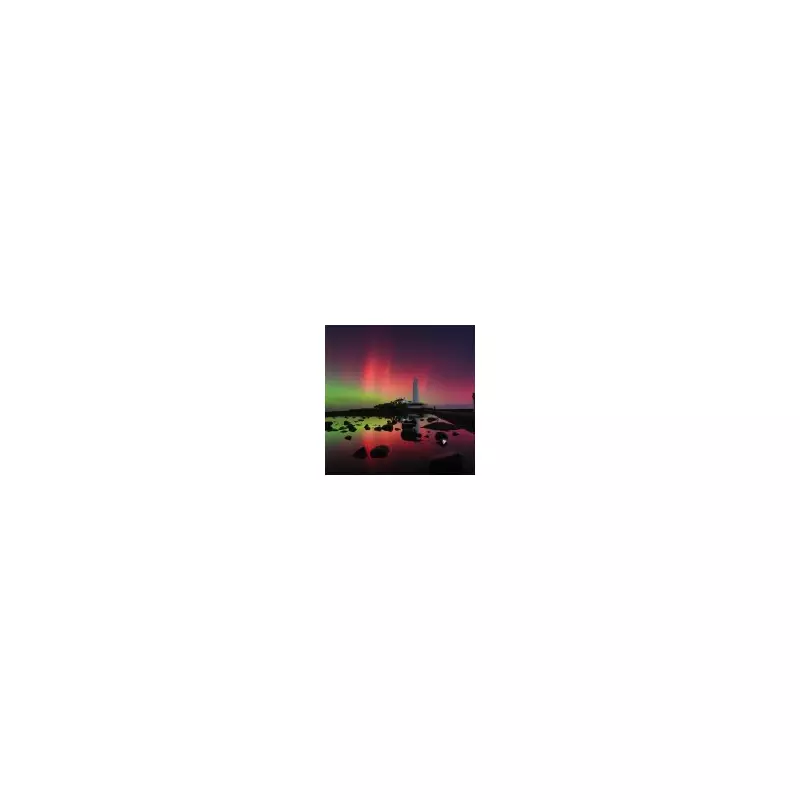
A spectacular celestial show unfolded over the United Kingdom on Wednesday night, as the Northern Lights, or aurora borealis, painted the skies with vibrant hues of green and red. This dazzling display was triggered by a potentially 'severe' geomagnetic storm, offering a rare treat for skygazers across the nation.
The Science Behind the Spectacle
According to experts at Royal Museums Greenwich, the aurora is a direct result of activity on the surface of the Sun. Solar storms eject vast clouds of electrically charged particles, which travel through space. While Earth's magnetic field deflects most of this solar material, some particles become trapped and are channelled towards the north and south poles.
As these particles accelerate into the Earth's atmosphere, they collide with atoms and molecules of gas. It is these high-energy collisions that create the shimmering curtains of light we know as the aurora. The phenomenon is typically concentrated at the magnetic poles, but during periods of intense solar activity, the visible area expands significantly.

Decoding the Colours of the Aurora
The specific colours of the Northern Lights depend on which gases in our atmosphere are being excited by the solar particles. The two primary gases, oxygen and nitrogen, produce different shades.
The most common colour, a brilliant green, is characteristic of oxygen at lower altitudes. When nitrogen molecules are hit, they can produce stunning purple, blue, or pink hues. The appearance of a deep scarlet red is a special occurrence, indicating that oxygen at very high altitudes is interacting with the solar particles, which only happens during particularly energetic displays.
Where and When to See the Northern Lights in the UK
Under normal conditions, the auroral oval is located over regions like Scandinavia, Canada, and Alaska. However, increasing geomagnetic activity causes this oval to spread, pushing the visibility of the Northern Lights further south. This is what allowed people across the UK to witness the event on the night of November 12, 2025.
While sightings in the UK are possible every few months, they are highly dependent on three key factors: your geographic location, the level of solar activity, and, crucially, having clear, dark skies away from light pollution. For the best chance of seeing the aurora, monitor space weather forecasts and head to rural areas with an unobstructed view of the northern horizon.