Southern Hemisphere Treated to Rare Celestial Display
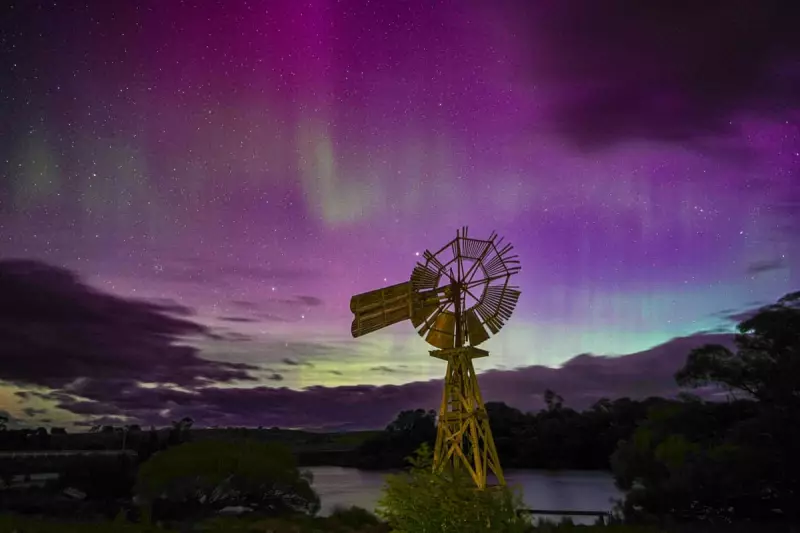
Skywatchers across Australia and New Zealand were treated to an extraordinary natural light show on Wednesday night as the aurora australis, or southern lights, painted the sky with vibrant colours. The spectacular display reached as far north as Port Macquarie in New South Wales, with photographers capturing stunning images from Tasmania to New Zealand.
The Science Behind the Cannibal Solar Storm
The breathtaking phenomenon resulted from what space weather experts have dubbed a 'cannibal' solar storm - an unusual event where multiple solar eruptions merge before reaching Earth. According to Dr Laura Driessen from the Sydney Institute for Astronomy, the sun released two strong coronal mass ejections - bursts of high-energy plasma - towards Earth on 9th and 10th November.
'The one on the 10th was a bit faster, so it caught up with the one on the ninth,' Dr Driessen explained. The British Geological Survey confirmed to CNN that 'the second one caught up with the first one and they amalgamated together by the time they reached Earth. Hence, the term 'cannibalised', as the second one gobbled up the first one.'

Global Impacts and Disruptions
The powerful geomagnetic storm had significant consequences beyond creating beautiful sky displays. In Australia, the Bureau of Meteorology's space weather forecasting centre reported the storm reached G4 geomagnetic storm conditions on Wednesday. Meanwhile, in the UK, local activity reached a G5 rating - the maximum on the geomagnetic storm scale - in the early hours of Wednesday morning UK time.
The storm's intensity caused practical disruptions, including postponing the launch of two Mars-bound NASA spacecraft. Blue Origin, the space tech company behind the mission's launch vehicle, stated on X: 'Due to highly elevated solar activity and its potential effects on the ESCAPADE spacecraft, NASA is postponing launch until space weather conditions improve.'
According to the BGS, the double hit of the cannibal solar storm resulted in the largest induced geoelectric field recorded in the UK since records began in 2012. Such electric fields can produce currents with the potential to damage transformers in power grids.
Dr Sara Webb, an astrophysicist at Swinburne University, explained the science behind auroras: 'You're seeing charged particles that are falling on to the Earth's magnetic field and essentially being tunnelled down some of our magnetic field lines and interacting with the gases and the dust that we have in our atmosphere.'
The event also produced displays of the northern lights (aurora borealis) in the northern hemisphere, making it a truly global celestial event that demonstrated the sun's powerful influence on our planet's space environment.