Belgian National Park Embraces Darkness to Protect Wildlife
A radical project in Belgium's Entre-Sambre-et-Meuse national park is challenging decades of conventional wisdom by permanently turning off streetlights deemed unnecessary. The initiative aims to restore natural darkness in one of Europe's most light-polluted countries, where the Milky Way has become a rare sight outside remote areas.
The Glowing Problem from Space
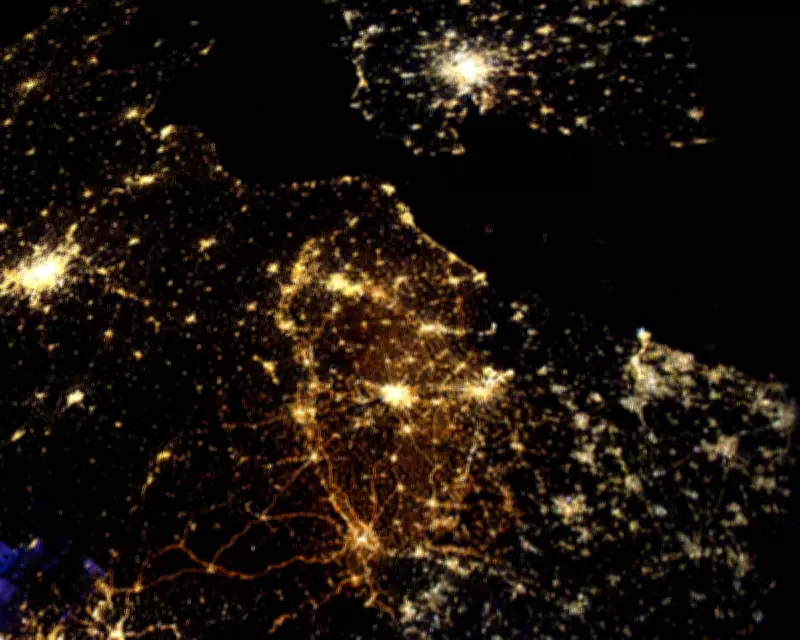
Belgium appears as a brightly lit Christmas decoration when viewed from the International Space Station at night. This extensive illumination has made the country one of Europe's worst offenders for light pollution, with artificial lighting disrupting ecosystems across the region.
The project, which began in 2021, targets 75 streetlights identified as "pointless" - those located more than 50 meters from the nearest building and within 50 meters of Natura 2000 protected sites. These lights often illuminate rural roads between villages where few people walk at night.

Safety Concerns Versus Environmental Benefits
Local resident André Detournay, who has lived in Mazée village for four decades, expresses skepticism about the initiative. "Having lights here is logical," says the 77-year-old. "I walk here with my dog and it makes me feel safe and gives me some protection from theft."
Detournay, who has created ponds for frogs on his property, adds: "I am for frogs. But near a village, we need lights. You would have to prove it significantly increased biodiversity here to persuade me otherwise."
The Scientific Case for Darkness
Research over the past decade has demonstrated that artificial lighting disrupts numerous species, including insects, birds, and amphibians. The illumination interferes with feeding patterns, reproduction cycles, and navigation abilities. In France alone, an estimated 2,000 billion insects die annually due to public lighting, either from exhaustion or increased predation.
Nicolas Goethals, who leads the project, emphasizes that safety remains paramount. "We cannot say to an old lady we want to prioritize bats over you," he states. However, he argues that "the normal should be darkness. It's night-time!"
Questioning the Safety Assumption
The public debate around streetlights typically assumes they enhance safety, but research presents a more nuanced picture. While lighting increases people's perception of safety and willingness to walk at night, studies have found inconclusive evidence that it actually reduces crime. Research examining reduced street lighting in England and Wales found no significant changes in crime rates or road collisions.
Jacques Monty, a municipal worker with 35 years of experience maintaining lighting, expresses caution. "It could be good, but we need to make sure it doesn't compromise the safety of people - that is my priority," he says while dismantling a streetlight near Nismes village, where limestone caves serve as a bat hotspot.
A Growing European Movement
The Belgian initiative aligns with broader European efforts to reduce light pollution. Thousands of French communes now switch off public lighting during the middle of the night to conserve energy and protect wildlife. The European Union has developed guidance for creating dark corridors for wildlife and reducing artificial light at night.
"Seventy-five streetlights might not seem like much but you have to start somewhere," says Goethals, who has organized community talks and night walks to promote the project's benefits. "It's not right that lights are on all night long for everybody and not used."
Alternative Uses for Infrastructure
Elsewhere in the national park, another infrastructure project demonstrates how disused structures can support wildlife. Old electricity pylons, once considered threats to birds, are being retrofitted with nesting platforms for white storks at a cost of €500 each.
This initiative has proven universally popular, with nearly 800 stork sightings recorded in 2025 - a dramatic increase from just occasional sightings in 2011. "People love these birds," notes Goethals. "I've never spoken to someone who doesn't like seeing them in their nests."

The Bigger Picture
The €308,000 project represents a significant shift in how protected areas approach conservation. By treating darkness restoration as equivalent to pond or woodland restoration, the national park acknowledges light pollution as a serious environmental pressure comparable to habitat loss or chemical contamination.
Globally, 80% of people now live under light-polluted skies, a transformation that began with the electric lightbulb 150 years ago. As Goethals collaborates with French colleagues to extend "darkness infrastructure" across Europe, this small Belgian experiment signals a growing movement to reclaim natural nightscapes.
"Here is just the start - real darkness infrastructure will come off the back of this," Goethals predicts, suggesting that after more than a century of illuminating every corner of the night, humanity may be ready to let darkness return where it belongs.