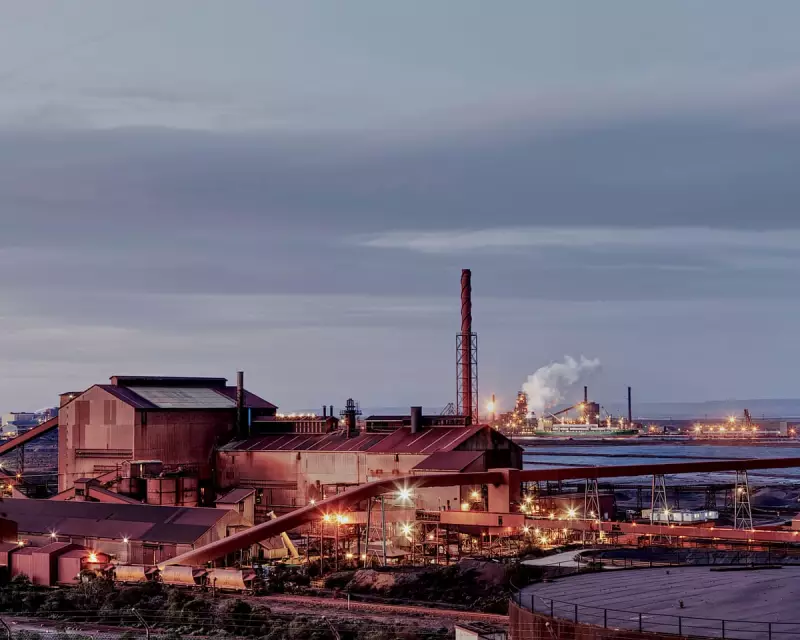
The administrator overseeing the Whyalla steelworks faces a critical decision that could shape Australia's industrial future: whether to base the facility's operations on gas or embrace green hydrogen technology.
The Perfect Storm for Green Iron Production
Whyalla presents what experts describe as potentially the world's best location for low-cost green iron production. The region boasts abundant magnetite ore, ideal for green iron manufacturing, combined with excellent solar and wind resources in the Spencer Gulf area.
Additional advantages include existing port infrastructure and a skilled workforce, creating what Rod Sims, chair of the Superpower Institute, and CEO Baethan Mullen describe as a unique opportunity for globally competitive green iron production.

The $2.4 Billion Rescue Package
In February, the South Australian government forced the Whyalla steelworks into administration, appointing advisory firm KordaMentha as administrator after creditors were owed over $1 billion. Shortly after, both commonwealth and South Australian governments announced a joint $2.4 billion rescue package.
The steelworks complex comprises multiple facilities including mining operations focusing on magnetite ores, a blast furnace, basic oxygen furnace for crude steel production, downstream fabrication facilities, and shipping infrastructure.
Gas vs Green Hydrogen: The Economic Reality
Experts argue that choosing gas technology would be economically unsustainable for Australia. East coast gas prices range between $12 to $13 per gigajoule, approximately four times higher than prices in the Middle East and United States.
"It is insanity to start a new industry which you know can never be profitable and which will always rely on continuing taxpayer support to subsidise high gas prices," the experts state.
Furthermore, gas infrastructure requires significant pipeline expansion costing hundreds of millions of dollars and considerable construction time, while renewable energy projects could be completed within similar timeframes.
Bluescope's Position and Government Responsibility
Despite Bluescope holding right of last refusal in the tender process, the company has expressed no interest in green iron production, even questioning the technology's viability despite evidence to the contrary.
This stance has potentially deterred other bidders interested in pursuing green pathways, placing the facility's future squarely in the hands of government commitment to green transition policies.
The South Australian government has previously championed green iron leadership through legislation and funding, while the commonwealth's Future Made in Australia policy focuses on net zero transformation - policies that align perfectly with green iron production.
Why Green Hydrogen Makes Economic Sense
Modelling from the Superpower Institute indicates Whyalla can produce green iron at costs competitive with fossil fuel alternatives, particularly when environmental impacts are factored into calculations.
The region's renewable energy advantages position it for some of the world's lowest electricity prices, with backup available through grid connections, increasingly affordable batteries, and peaking gas plants for rare emergency needs.
Both technological pathways require initial government support, but only green iron is projected to reach self-sufficiency as global decarbonisation progresses.
The fundamental question remains: if not now for green iron production in Whyalla, when? And if not here, where else in Australia possesses such ideal conditions?