Appalachia's Clean Energy Dreams Dashed by Funding Cuts
Jacob Hannah, the CEO of Coalfield Development, recently witnessed what seemed like a historic opportunity to transform Appalachia's economic landscape vanish almost overnight. In 2022, the Biden administration allocated billions of dollars specifically designed to revitalise former coal communities, creating building blocks for transitioning from extractive industries to advanced energy technologies like solar power.
This substantial investment, delivered through Biden's landmark Inflation Reduction Act (IRA), represented the largest financial injection into Appalachia since Lyndon Johnson's 1960s "war on poverty." The funding aimed to establish long-term economic, climate and social resilience in regions historically dependent on coal and timber.
Historic Investment Meets Sudden Reversal
"We knew we were living in a historic moment, not just because of the amount of funding, but because the whole region mobilised to meet the moment," explained Hannah, a 33-year-old fifth-generation Appalachian. "It was a once-in-a-generation cash injection designed to prioritise extraction-based communities as part of the energy transition."

The optimism proved short-lived. On his first day in office, Donald Trump scrapped Biden's clean energy and environmental programmes, dismissing them as "woke, anti-American liberal hoaxes." The wholesale cull included the $3bn Environmental and Climate Justice Program created specifically to address climate crisis impacts and environmental damage at local levels.
Hannah described the reversal as "deeply damaging and demoralising" for communities that had finally begun to feel competitive after almost a century of economic decline.
Real-World Consequences for Struggling Communities
The funding cuts have had tangible, damaging effects across Appalachia. Coalfield Development, headquartered in Huntington, West Virginia, had been coordinating efforts to access more than $900m of the historic IRA investment through a coalition of universities, unions, nonprofits, businesses and local governments.
Every single grant Coalfield Development was helping coordinate has been impacted. The organisation, which has trained over 4,000 people—including many formerly incarcerated individuals and those in addiction recovery—in skills ranging from solar installation to drywalling, now faces an uncertain future.
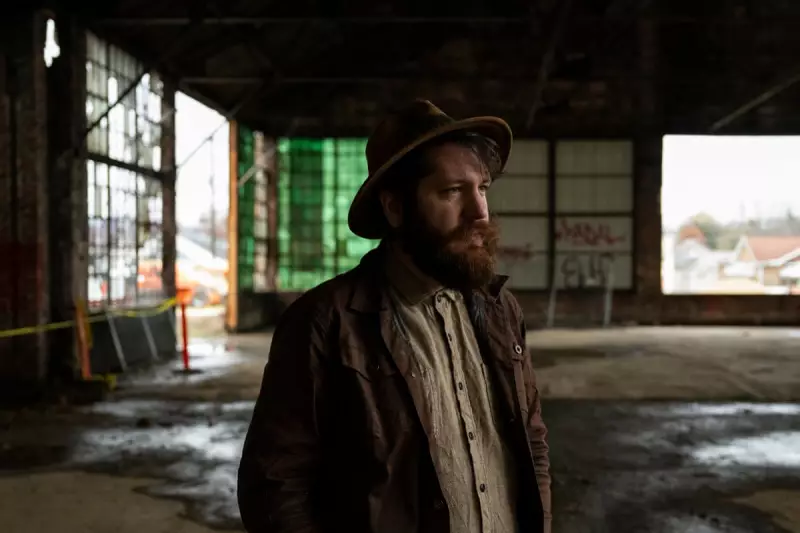
In Huntington, a city of 45,000 residents that was once a major transportation hub for coalfields, the economic damage is particularly visible. A multimillion-dollar redevelopment of the sprawling Black Diamond warehouse complex has stalled due to grant suspensions and federal shutdown payment delays. Coalfield Development itself is waiting for close to $3m in overdue reimbursements.
Solar Industry and Environmental Projects Hit Hard
The renewable energy sector has suffered significant setbacks. Solar Holler, a solar developer and installation company employing 105 people across Kentucky, West Virginia, Ohio and Virginia, had been growing at 20-30% annually but now forecasts roughly flat growth for 2026.
Dan Conant, Solar Holler's founder and CEO, explained that tax incentives for residential solar—accounting for 70% of their business—will be axed by year's end, with commercial tax breaks ending in late 2027. Meanwhile, Trump's tariffs and trade restrictions have caused supply chain delays and nearly doubled solar energy costs on the market.
Environmental justice initiatives have been equally devastated. Appalachian Voices, a nonprofit working on securing a just energy transition, had its $500,000 EPA grant summarily terminated. The grant was intended to help five former coal communities in Virginia increasingly suffering severe floods due to climate change and mining's environmental legacy.
Small Communities Bear the Brunt
In Lee County, where 85% of voters supported Trump and almost half rely on food stamps, the funding loss has been particularly painful. The community had earmarked $40,000 for an asbestos survey in Pennington Gap as part of efforts to demolish a derelict, frequently flooding supermarket and create green space to mitigate future flooding.

Emma Kelly, Appalachian Voices' New Economy program manager, explained that for small communities like Pennington Gap, "securing funding for revitalisation projects is like a game of Jenga, and removing just one or two pieces can make the whole stack collapse."
The situation is equally dire in Dante, Virginia, a sparsely populated former mining community suffering frequent power outages, including a four-day blackout during major flooding in July and nine days after Hurricane Helene in August 2024. Dante's share of the terminated EPA grant was designated for a feasibility study to convert the old railway depot into a resilience hub with solar panels and battery storage.
Compounding the crisis, Dante remains without a fire station after nearly $400,000 appropriated by Congress to replace one demolished due to subsidence was rescinded by the Trump administration.
Political Irony and Community Resilience
The funding cuts present a political paradox, as many of the hardest-hit areas voted overwhelmingly for Trump. The former president secured every West Virginia county in 2024 with an average of 70% of the vote—the highest percentage any party has won in the state's history.
Lou Ann Wallace, Dante's representative on the Republican-controlled Russell county board of supervisors and a self-described Trump supporter, expressed frustration: "I don't think the president knew. We're dealing with the ills of industry here, and we've got to be able to clean this up so our people in these hollers can have a quality of life."
Despite the setbacks, Jacob Hannah remains determined to continue the fight. "The funding was committed by Congress, so we know the law's on our side, and that we will eventually win back some of these grants," he stated. "One objective was probably to remove confidence in the system, so we need to outlast what is a game of cash flow and the battle of morale."
Across Appalachia, communities that believed in Trump's promises to resuscitate coal country now face the harsh reality of his wholesale cuts to Medicaid, veterans affairs, food aid, education and the very clean energy projects that promised them a sustainable future.