Wealthy western nations could significantly boost their citizens' health and happiness by embracing environmental conservation and sustainable economic growth, according to the leader of the world's first carbon-negative country.
A Himalayan model for climate leadership
In an exclusive interview with the Guardian, Bhutan's Prime Minister Tshering Tobgay revealed how his small Himalayan kingdom has become one of the world's most ambitious climate leaders despite limited resources and significant geographical challenges.
The Buddhist democratic monarchy, nestled between India and China, has prioritised climate action through its unique development philosophy focused on gross national happiness rather than purely economic growth.

"Even with our limited resources and huge geographical challenges, we have managed to prioritise climate action, social progress, cultural preservation and environmental conservation because the happiness and wellbeing of our people and our future generations is at the centre of our development agenda," Tobgay stated.
Beyond GDP: The constitutional commitment
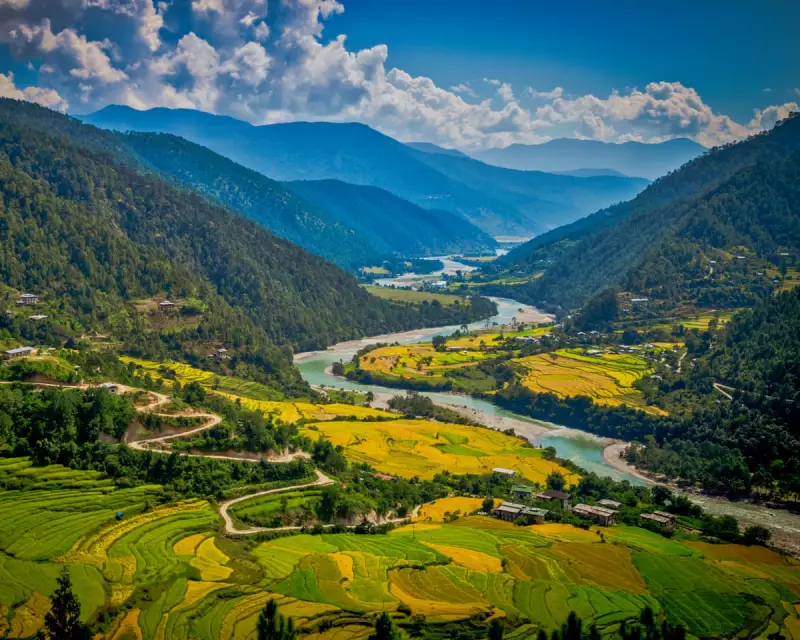
Bhutan's environmental commitment is deeply embedded in its governance framework. An entire article of the young democracy's constitution mandates environmental protection, requiring at least 60% of the country to remain forested in perpetuity.
This legal foundation has yielded remarkable results: 72% of Bhutan's territory is forested, creating a crucial carbon sink that sequesters approximately five times the amount of carbon dioxide the nation emits.
The country's population of 750,000 people, about half of whom are subsistence farmers, has maintained this environmental standard while achieving significant development milestones. In 2023, Bhutan graduated from the UN's least developed country category after making substantial progress in poverty reduction, education and life expectancy.
"For us, gross national happiness is the goal, and GDP is just a tool which means economic growth cannot be detrimental to the happiness and wellbeing of our people," Tobgay explained.
Climate leadership meets cultural preservation
Bhutan's environmental ethos stems from both practical climate concerns and deep spiritual beliefs. The Bhutanese people believe deities reside within all parts of the natural environment, leading to protected forests, certain water bodies being off-limits, and a ban on mountaineering.
This cultural protection extends to Gangkhar Puensum, the highest unclimbed mountain in the world, which rises more than 7,500 metres above sea level.
Despite their minimal contribution to global heating, Bhutanese communities face severe climate impacts. Mountain ranges are warming faster than the global average, causing glaciers to melt and lakes to overflow. Floods have already displaced farming communities, while road maintenance costs have more than doubled.
"We are sequestering around five times the amount of carbon dioxide we emit," Tobgay noted. "We are nature positive, carbon negative. Yet, because we are a landlocked mountainous country, we bear the brunt of climate change impacts."
A call for global climate responsibility
As the UN climate summit enters its critical final days, Tobgay delivered a powerful message to developed nations: fulfil your moral and legal obligations by reducing emissions and supporting vulnerable countries.
"The developed world must do more to fulfil their moral and legal obligations," he urged. "They must help the developing world adapt and reduce emissions by providing finance and resource and technology transfers, but most importantly they must reduce their own emissions."
Last year at COP29, Bhutan spearheaded the formation of an alliance with Panama, Suriname and Madagascar - other carbon-negative or carbon-neutral countries - to gain greater recognition for their oversized contributions to global climate action.
"In all the climate change discussions, the focus is on promises for the future, not on actual results," Tobgay observed. "We want our contributions and foregone opportunities to be acknowledged and compensated."

The leaders of these climate-forward nations plan to hold their inaugural summit in Bhutan next year, showcasing practical solutions and delivering a clear message to the developed world.
"So you may be an industrialised country, you've reaped the rewards and spread the benefits of industrialisation throughout the world, but it's time to now take stock of where we are," Tobgay concluded. "You don't need to reverse industrialisation and economic growth but you need to make it sustainable. GDP is for what? Reducing carbon emissions is for what? It has to be for the happiness and wellbeing of your people."