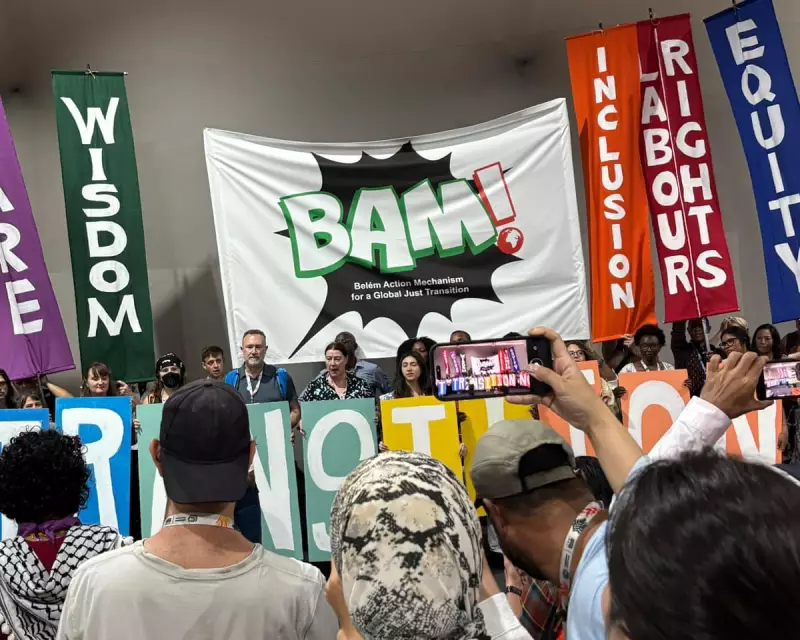
Throughout the bustling halls of the UN's Cop30 climate summit in Brazil, a simple, powerful acronym is emblazoned on badges worn by civil society activists: BAM!. This is not a tribute to vintage comic book sound effects but a show of support for the Belém Action Mechanism (BAM), a groundbreaking proposal designed to cement a just transition to a low-carbon global economy.
Securing the BAM has emerged as a top priority for climate justice advocates at these critical talks. Proponents argue that without a dedicated focus on justice, well-intentioned climate action risks leaving behind workers, communities, and those most vulnerable to economic shifts.
Why a Just Transition is Non-Negotiable
The current system, reliant on extractive energy and polluting industries, disproportionately harms frontline workers and local communities. Advocates for BAM insist that the new green economy must not replicate these injustices but should instead be engineered to boost prosperity and minimise inequality for all.

The movement received a monumental boost this week when the G77 and China, a bloc representing approximately 80% of the world's population, unified behind a call for a "just transition mechanism," signalling immense support for the BAM initiative.
From Labour Movement to Global Climate Policy
The concept of a 'just transition' originated within the US labour movement, where workers in polluting sectors demanded support and compensation as they moved into environmentally sustainable jobs. This idea has since been adopted and expanded by civil society to include all people affected by the shift to a green economy.
This broad group includes:
- Workers in the transition minerals sector.
- Communities living near mineral extraction sites.
- Those impacted by transformations in the agriculture industry.
While the 2015 Paris Agreement acknowledged the framework in its preamble, and subsequent COPs have developed work programmes, these have not included binding requirements for nations. BAM supporters say their proposal is the crucial next step to change that.
What Would the Belém Action Mechanism Actually Do?
BAM is designed to move the just transition from abstract concept to concrete action. Its proponents highlight that current global efforts are fragmented and lack accountability.
"No one is even tracking progress on this," said Teresa Anderson, global climate justice lead at ActionAid. "BAM would fix that."
The mechanism would:
- Require countries to take coordinated, concrete steps towards a just transition.
- Develop a system for tracking global progress and understanding its impacts.
- Create a platform for sharing best practices and supporting implementation, especially in low-income nations.
Although BAM would not mandate new climate finance, it would prioritise non-debt-inducing finance and the sharing of technology with developing countries, upholding values already agreed upon in the Paris Agreement.
Who Supports BAM and Who Stands in Opposition?
BAM was developed by a powerful coalition of civil society groups, including the Climate Action Network, the Women and Gender Constituency, labour and youth movements, and the Global Campaign to Demand Climate Justice. At Cop30, a coalition of Indigenous groups also added their voice to the call.
However, not all nations are on board. Powerful countries like the UK and Japan have been reluctant to back the proposal, earning them the ironic "fossil of the day" award from the Climate Action Network this week. In contrast, the Philippines was an early champion, and the recent unified support from the G77 and China marks a significant political victory for the mechanism's advocates.
As the Cop30 negotiations continue, the fate of the Belém Action Mechanism will be a key indicator of the global community's commitment to building a climate future that is not only clean but also fundamentally fair.