Australia's commitment to environmentally and socially responsible finance has demonstrated remarkable resilience, surging to unprecedented levels despite a significant policy reversal in the United States following Donald Trump's re-election.
New research from Impact Investing Australia (IIA) and the Centre for Social Impact reveals that green, sustainable and social investments have skyrocketed from $20bn to $157bn over the past five years, with environmental projects securing the lion's share at $137bn.
Steady Growth Amid Global Uncertainty
The momentum shows no signs of slowing, with $25bn invested during the first half of 2025 alone, putting this year on track to surpass 2024's record of nearly $40bn. This growth persists even as some international financiers retreat from climate-conscious projects to align with Trump's "drill, baby, drill" energy policy.

David Hetherington, Chief Executive of IIA, noted that while Australian investment funds have become more cautious about publicly promoting their green credentials due to the US-led backlash and greenwashing concerns, the actual flow of capital remains robust.
"There are entrepreneurial businesses out there who are addressing [challenges] and making money in doing so," Hetherington stated. "Where there are successful entrepreneurs seeking capital, there will be funds looking to deploy it."
Bond Market and Super Fund Commitment
The research uncovered that investors have purchased $145bn in bonds dedicated to green, social and sustainable projects, a dramatic increase from just $17bn in 2020. Australian investments in this sector are poised to set a third consecutive annual record in 2025.
Dedicated impact investment funds have experienced explosive growth, managing less than $3bn in 2020 but swelling to $12.5bn by June 2025, with continued expansion anticipated.
In a significant move, the country's second-largest super fund, Australian Retirement Trust, invested nearly $1bn in a Macquarie Bank green energy fund in September and committed an additional $1bn towards impact investments by 2030.
Tangible Environmental Impact
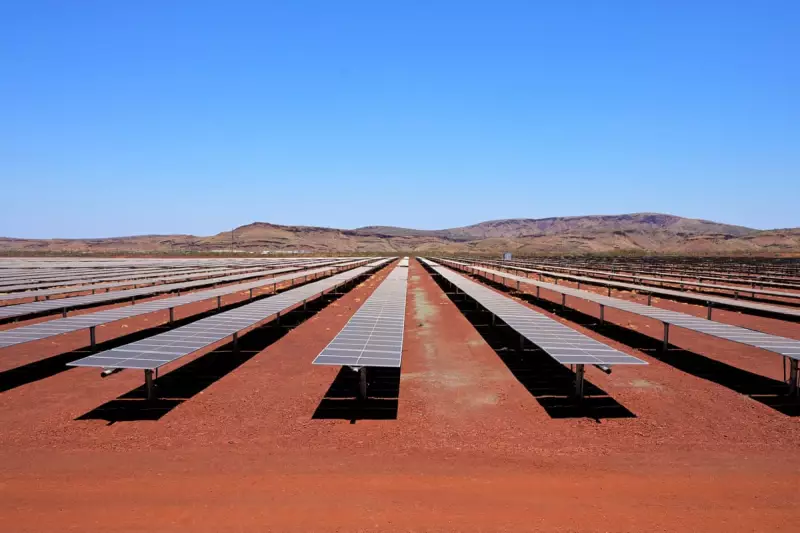
The scope of green projects is extensive, ranging from renewable energy expansion to state government light rail upgrades and federal government Murray-Darling Basin water purchases. The report quantified the collective impact of these investments, revealing they have funded efforts to:
- Abate 110 million tonnes of CO2-equivalent emissions
- Avoid 1.3 million tonnes of landfill
- Plant 3 million trees
- Recycle or return 363 million litres of water
Adam Roberts, Head of Private Markets at Australian Ethical, observed that sceptical investors are now actively pursuing renewable opportunities as projects demonstrate their financial viability. The Reserve Bank has confirmed that states' green bonds now offer equal or higher returns than their market competitors.
"There's obviously lots of noise in the market about green investing or not, globally and here in Australia, [but] there's ... enough of a need for capital and investment opportunities to just get on with it," Roberts said.
He added that Australian Ethical has more than tripled in size since 2020, now directing $14bn in funds from 134,000 members toward projects including public electric vehicle chargers, solar and battery initiatives, and soil recyclers.
Expanding into Social Housing
The flow of capital has increasingly extended to housing support funds. Matt Tominc, Chief Investment Officer at Conscious Investment Management (CIM), noted the significant transformation since his company committed to Australia's first large-scale privately funded social housing in 2021.
"Now that's a really big sector, it's the government's Housing Australia Future Fund ... so [there's] familiarity, more investment opportunities coming up," Tominc explained.
Danielle Logue, report lead and Director of the Centre for Social Impact at the University of NSW, highlighted that more professional teams are attracting larger capital pools, creating broader effects across diverse products.

However, the sector faces challenges, particularly regarding the ambiguous definition of "impact," which some fund managers cite as a barrier to investment. The corporate regulator has also taken legal action against superannuation funds for misleading customers about their sustainable investment claims.
"Verification processes give investors and regulators confidence around ... greenwashing or impact-washing," Logue stated. "As investors grow more comfortable with different types of deals and products and the evidence base grows, we'll start to see a shift."