
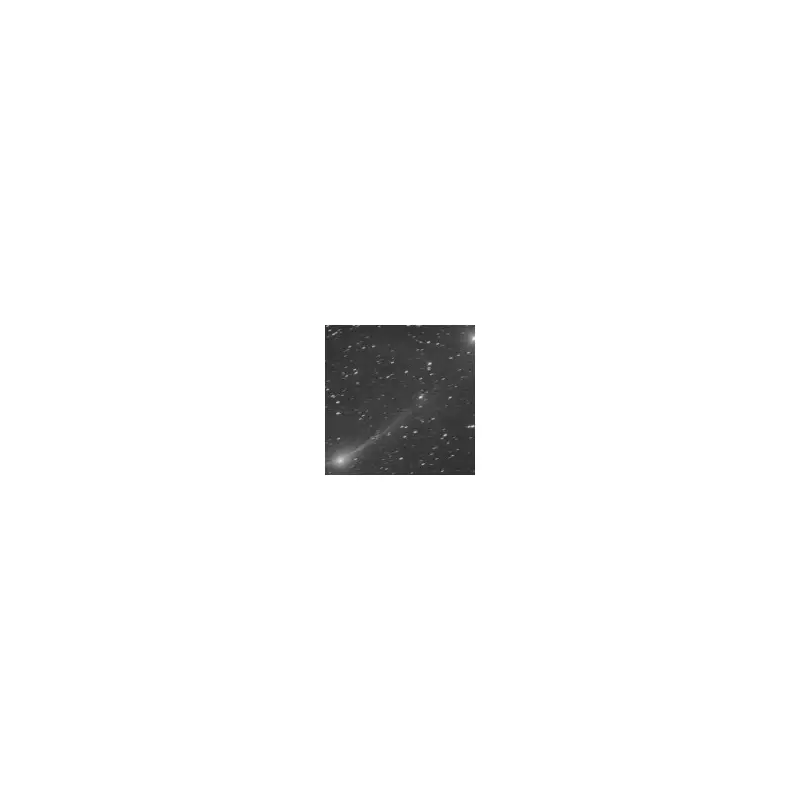
A Harvard scientist has intensified the mystery surrounding an interstellar visitor by claiming it could be an alien probe on a mission to Jupiter. Maverick astrophysicist Dr Avi Loeb continues to challenge the mainstream scientific community with his theory that the object known as 3I/ATLAS is more than just a space rock.
Thirteen Unexplained Anomalies
Today, Dr Loeb published a list of thirteen peculiar characteristics about the interstellar comet, marking only the third object ever identified as visiting our solar system from deep space. The most compelling anomaly for him is the comet's current trajectory, which is set to pass within Jupiter's gravitational influence next year.
The comet is expected to reach this crucial point near the gas giant on March 16, 2026. Dr Loeb speculates this might not be coincidental, suggesting: "The rare coincidence might mean that 3I/ATLAS intends to release technological devices as artificial satellites of Jupiter, potentially at Jupiter's Lagrange points L1 and L2."
He emphasises this course wasn't always the comet's path but was "enabled by the non-gravitational acceleration that 3I/ATLAS displayed near perihelion" - the point in its orbit closest to the Sun.
A Suspiciously Planned Journey
The Harvard professor claims the object's arrival was perfectly timed for close encounters with multiple planets while remaining hidden from Earth-based observers. "The arrival time was fine-tuned to bring it within tens of millions of kilometers from Mars, Venus and Jupiter and be unobservable from Earth at perihelion," Dr Loeb stated.
Among the most significant anomalies he identifies:
- Massive size statistically unlikely for random interstellar arrival
- Anti-tail pointing toward the Sun rather than away from it
- Unusually high nickel content in its gas plume
- Alignment with planetary plane despite its interstellar origins
- Extreme negative polarisation unprecedented in known comets
Dr Loeb ranks these as "major anomalies with no simple explanation" that collectively suggest the object might have targeted our solar system rather than arriving by chance.
Scientific Community Pushes Back
The mainstream scientific community remains largely sceptical of these extraordinary claims. NASA has explicitly stated its position, with Associate Administrator Amit Kshatriya telling a press conference: "3I/ATLAS is a comet. It looks and behaves like a comet and all evidence points to it being a comet."
Kshatriya acknowledged the excitement surrounding the speculation during NASA's recent communications blackout due to a government shutdown, noting it showed public enthusiasm for space discovery.
Even Dr Loeb himself acknowledges the statistical probability, giving the object only a 30% to 40% chance of being artificial. He concedes the most likely explanation remains that it's a natural comet, albeit an extraordinary one from beyond our solar system.
The interstellar object 3I/ATLAS was first spotted on July 1, 2025, and has sparked intense debate ever since. As the third confirmed interstellar visitor after 'Oumuamua and 2I/Borisov, its unusual characteristics continue to puzzle astronomers worldwide.
With the Jupiter encounter scheduled for March next year, scientists will be watching closely for any unusual activity around the gas giant that might validate - or彻底 disprove - these extraordinary theories about our mysterious celestial visitor.



