
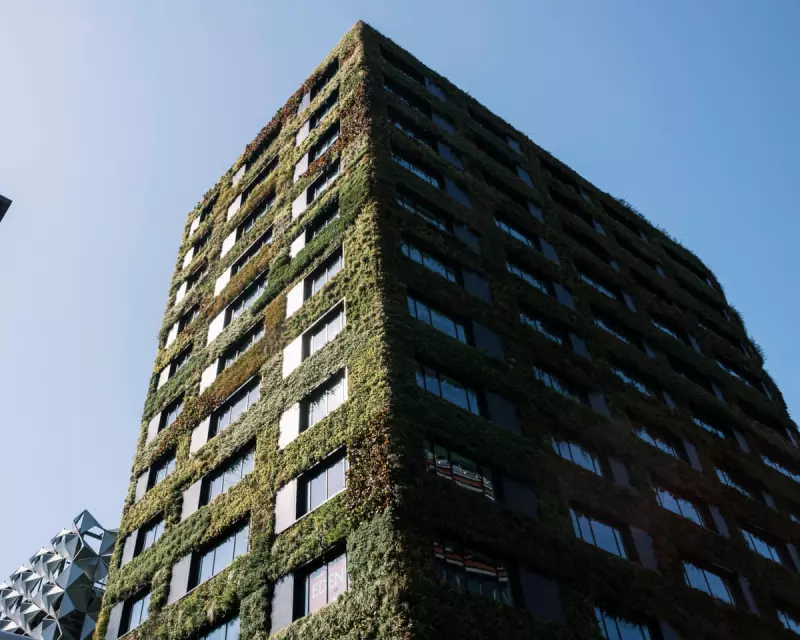
Growth in worldwide demand for environmentally friendly office spaces has noticeably slowed, with a sharp decline in the Americas linked to Donald Trump's environmental policy rollbacks, according to a major industry survey.
Survey Reveals Widespread Slowdown
The Royal Institution of Chartered Surveyors (Rics) found that building occupiers and investors across North and South America reported significantly weaker growth in demand for green commercial properties. Industry professionals attributed this shift directly to changing US policy priorities under the Trump administration.
While demand growth also softened in other global regions, the decline was less severe than in the Americas. The survey highlights growing concerns about meeting climate targets, given that residential and commercial buildings together accounted for 34% of global carbon emissions in 2023, according to UN Environment Programme data.
Policy Impact on Market Confidence
Kisa Zehra, Rics's sustainability analyst, emphasised that government policy and regulations significantly influence market confidence. The Trump administration's systematic dismantling of environmental protections established by previous governments has undermined certainty around green building standards.
The data reveals a stark contrast between regions. The balance of construction professionals reporting increased demand for sustainable commercial buildings in the Americas plummeted from 25% to just 11%. Meanwhile, outside the Americas, 40% still reported growth, though this represents a decline from 48% in 2021 when the survey began.
Nicholas Maclean, Rics's acting president, suggested this might represent a temporary setback rather than a long-term trend. "The people who are going to end up using these buildings want them to be sustainable. Everybody, frankly, knows this is the right thing to do," he stated.
Carbon Measurement Concerns
The survey uncovered additional worrying trends in construction industry practices. There was a notable decline in professionals measuring their projects' embodied carbon - emissions generated during manufacturing of materials like steel, glass and concrete, or during construction itself.
Forty-six percent of construction professionals now report not measuring embodied carbon, up significantly from 34% the previous year. Only 16% of respondents indicated that carbon measurement meaningfully informed material choices in project design.
This comes as the UN calls for "accelerated action in the buildings sector to meet global climate goals". Most building emissions originate from heating, cooling and powering structures, with approximately one-fifth generated during construction.
Despite the current slowdown, green buildings continue to offer competitive advantages through lower operating costs and higher rental appeal, particularly among large corporate tenants seeking sustainable office space.



