
Council-Led Insulation Plan Proposed to Fix England's Home Energy Crisis
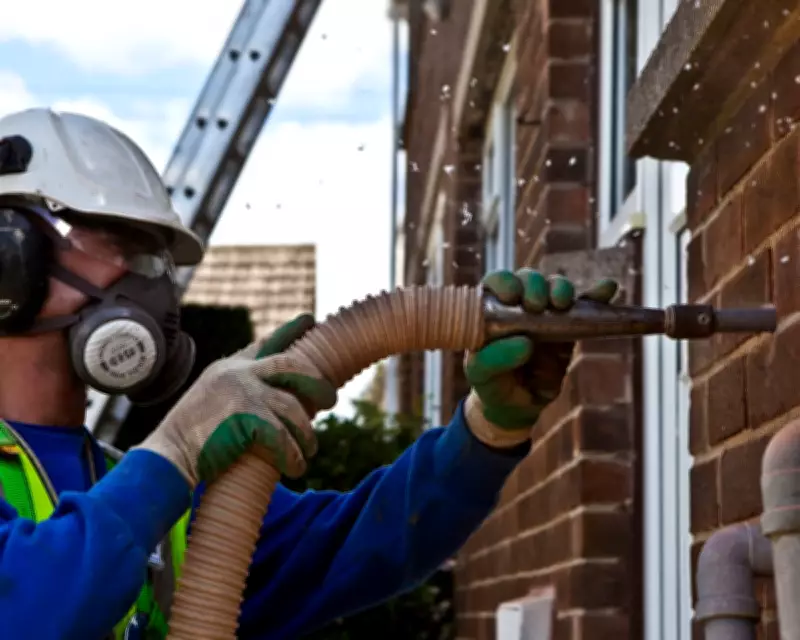
A groundbreaking proposal from the Common Wealth thinktank calls for a radical shift in England's home insulation strategy, advocating for councils to take direct control by training and employing their own workers. This move aims to replace reliance on private contractors, which has been plagued by quality issues and inefficiencies, with a more accountable and effective system.
Rethinking the Warm Homes Plan
Under the government's warm homes plan, unveiled in January, £15bn is allocated over three years to equip homes with better insulation, heat pumps, and solar panels. This initiative seeks to cut energy bills and reduce greenhouse gas emissions. However, the current model, where councils bid for funding and hire private contractors, has faced criticism for being bureaucratic and delivering subpar results.
Common Wealth's report, set for release this week, proposes establishing "home improvement corporations" under council oversight. These entities would allow for greater control over low-carbon retrofits and more efficient spending of public funds. Madeleine Pauker, the lead author, emphasized, "The current model is not capable of delivering that level of increase in the number of skilled workers. It has to be led by the public sector."
Addressing Past Failures
Past insulation schemes have been marred by significant problems. Last year, the National Audit Office found that 98% of homes fitted with external wall insulation under previous government schemes required repairs, with over a quarter of those with internal insulation also needing remediation. In January, a parliamentary committee called for an investigation into what it termed a "catastrophic failure."
To avoid repeating these mistakes, Common Wealth suggests councils train up a large portion of the estimated 140,000 workers needed for insulation installations, employing them permanently to ensure a steady stream of home improvements beyond the current plan. Pauker argued that this approach would raise standards through increased accountability and oversight.
Street-by-Street Upgrades for Deprived Areas
The thinktank recommends implementing insulation upgrades on a street-by-street basis, starting in the most deprived communities. This systematic method would replace the patchwork systems of the past, which relied on households applying for grants or loans with mixed results. Under an opt-out model, families would have to explicitly reject upgrades, potentially increasing uptake.
Common Wealth estimates that 30 home improvement corporations across England could enhance coverage in deprived areas and improve programme efficiency. Christopher Hammond, chief executive of UK100, a network of local authorities, noted successes like the Holbeck district in Leeds, where council-led repairs alongside insulation achieved a 90% resident uptake, transforming the area.
Government and Industry Response
The Department for Energy Security and Net Zero, overseeing the warm homes plan, stated, "Our £15bn warm homes plan could upgrade entire streets of social homes at once, lowering bills and making whole neighbourhoods warm. Our new Warm Homes Agency will also transform people's experience of home upgrades." The department pledged to work closely with local governments.
Hammond welcomed the report's focus but cautioned that home improvement corporations are not the only solution. He stressed the need for long-term, non-competitive resources for local leaders to scale up existing successful models. "The report also prompts a look at why past schemes haven't worked and why we need to keep benefits local," he added.
This proposal highlights a growing consensus for public-sector leadership in England's energy efficiency efforts, aiming to create sustainable, high-quality home upgrades that benefit communities nationwide.



