
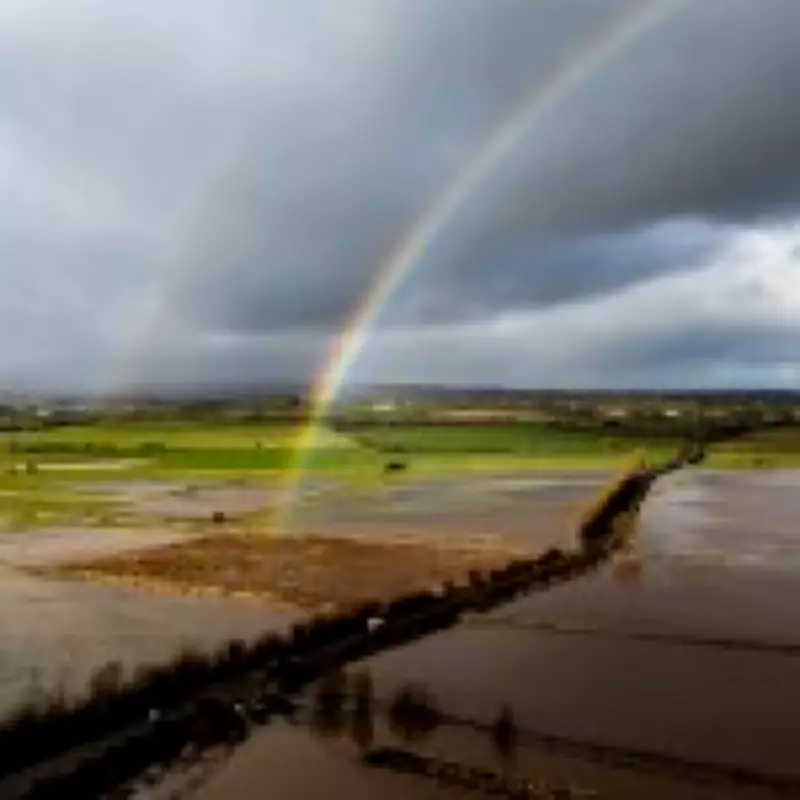
UK Flooding Crisis: Why the Nation Remains Dangerously Unprepared
Great swathes of the United Kingdom have ground to a complete halt this week as weather warnings trigger widespread travel chaos and disruption. A yellow weather warning currently covers London, southern England and significant portions of Wales, while more than one hundred separate flood alerts have been issued across the South, South West, the East and the Midlands. The Met Office confirms that heavy rain which began on Monday 9th February is set to continue across many regions for the next ten days, exacerbating an already critical situation.
Record Rainfall and Immediate Impacts
This week's relentless downpours contribute to what has become the UK's wettest winter on record, following significant flooding events in November 2025 and continuous precipitation recorded every single day of 2026 to date. Already this week, hundreds of homes have been inundated with floodwater. In a stark example, Aberdeen in Scotland has recorded 180% of its typical February rainfall within just the first ten days of the month, highlighting the intensity of current weather patterns.
The human cost of this increasing volatility has been tragically demonstrated in recent years. During Storm Bert in November 2024, at least five people lost their lives in England and Wales, including 75-year-old Brian Perry who went missing while walking his dog in North Wales. The following month, England rugby international Tom Voyce died when his vehicle was swept away by strong currents at Abberwick Ford near Alnwick during Storm Darragh. Experts unanimously warn that without substantial intervention, more lives will inevitably be placed at risk.
Systemic Failures in Flood Management
Dr Steven Forrest, a lecturer in flood resilience and sustainable transformations at the University of Hull, provides crucial insight into the systemic problems. "We need to shift from the mentality about 'if' there will be another flood to 'when' it will be, and how ready we are," he explains. "Often, we are reactive. Authorities frequently wait for an incident to occur before allocating funds for repairs, then essentially forget about the underlying vulnerabilities until the next disaster strikes."
Dr Forrest emphasises the need to strengthen support and funding for communities to learn from each flooding incident and improve preparedness. He highlights particular dangers, such as drivers underestimating water volume and potential debris when crossing flooded roads, and the hidden risks of tunnels and underpasses where depth isn't apparent until vehicles begin floating. He references incidents where tractors crossing flooded areas create destructive "bow waves" that can wear away materials and damage nearby properties.
Historical Precedents and National Vulnerabilities
Hull, where Dr Forrest is based, exemplifies the nation's flood vulnerability. In 2013, approximately 1,100 properties and over 7,000 hectares of land flooded following a massive tidal storm surge with gusts up to 90mph. Earlier, in 2007, the city's drainage systems were overwhelmed during one of the wettest months in living memory, requiring over £40 million in repairs. Nationally, the 2007 floods caused 13 deaths and damaged 55,000 homes and businesses, representing Britain's largest peacetime emergency since World War II.
Even the capital faces significant threats. The 2024 London Climate Resilience Review warned bluntly that "London is not prepared for another major surface water flooding incident and lives and livelihoods are at risk." While the Thames Barrier currently protects approximately 1.4 million Londoners from storm surges and is expected to function until 2070, crucial decisions about upgrades or replacement must be made well before that deadline.
The Human and Social Dimensions of Flooding
Tracey Garrett, CEO of the National Flood Forum, underscores the profound personal impacts often overlooked in public discourse. "I don't think people often realise how devastating a flood can be," she states. "It's not just water in your home; it can be filthy and often contain sewage. For many people, it erodes any sense of security they feel at home."
Garrett describes how flooding destroys irreplaceable memories—photo albums, family heirlooms like grandma's rocking chair, or childhood height markings on doorposts. Recovery frequently takes years, both structurally to dry and restore properties, and psychologically for individuals to overcome the trauma. She notes that many survivors experience ongoing anxiety, unable to sleep whenever it rains and constantly monitoring water levels in their streets.
Statistics reveal alarming vulnerabilities: around 6.3 million properties in England are in flood-risk areas, with low-income households eight times more likely to live in tidal floodplains. Nearly two-thirds of low-income renters lack home contents insurance, leaving them financially exposed to devastating losses.
Preparedness Gaps and Community Responses
Despite the increasing frequency of flooding—Britons are now more likely to experience flooding than burglary—preparedness remains worryingly low. According to the Red Cross, just one in six adults is signed up to receive flood warnings, leaving many unaware of imminent dangers. The National Flood Forum recommends creating a "Grab Bag" emergency kit containing:
- Important documents including insurance details
- Mobile phone portable chargers
- Emergency cash and credit cards
- Essential medication or repeat prescription forms
- A torch, water, essential toiletries and non-perishable food
During flood warnings, official advice includes turning off gas, electricity and water supplies if safe to do so, moving family, pets and valuables to higher ground, using flood protection products like barriers, and following emergency service guidance which may include evacuation.
Towards Sustainable Flood Resilience
Dr Forrest advocates for fundamental shifts in approach. "Flooding in itself isn't a 'natural' disaster," he argues. "The hazard of large volumes of water is natural, but the consequences we feel stem from human choices and decisions. Flooding reveals underlying vulnerabilities in our systems—poor infrastructure design and maintenance, spatial planning that ignores flood risk, and people in precarious financial situations."
With climate change accelerating—through rising ocean temperatures, glacial melt and consequent sea level rise—flooding will inevitably become more common. Dr Forrest emphasises the need to "stop the rot" by accelerating evaluation and maintenance of deteriorating flood defences, while revising the flood warning system to better engage at-risk communities without causing panic.
He envisions moving beyond "fighting nature" toward "living with water" by incorporating flood management into urban planning. "We don't want flooding to make people fearful," he concludes. "We need situations where people feel confident and empowered—supported to understand their flood risk and helped by government to become flood-ready, minimising disruption from future extreme weather. This doesn't have to be a battle."
Community solidarity has shown promising signs, with residents in areas like Tenbury Wells and Pontypridd coming together during recent floods. Television dramas like ITV's 'After The Flood' have raised public awareness, depicting both the terror of flash flooding and the importance of community support during recovery.
At the University of Hull, Dr Forrest oversees an MSc in Flood Risk Management, nurturing a new generation of "enthusiastic and engaged" flood risk managers. Recent community engagement events have facilitated valuable dialogues between students and residents about flood anxieties and preparation challenges, offering hope for more collaborative, resilient approaches to Britain's escalating water management crisis.



