
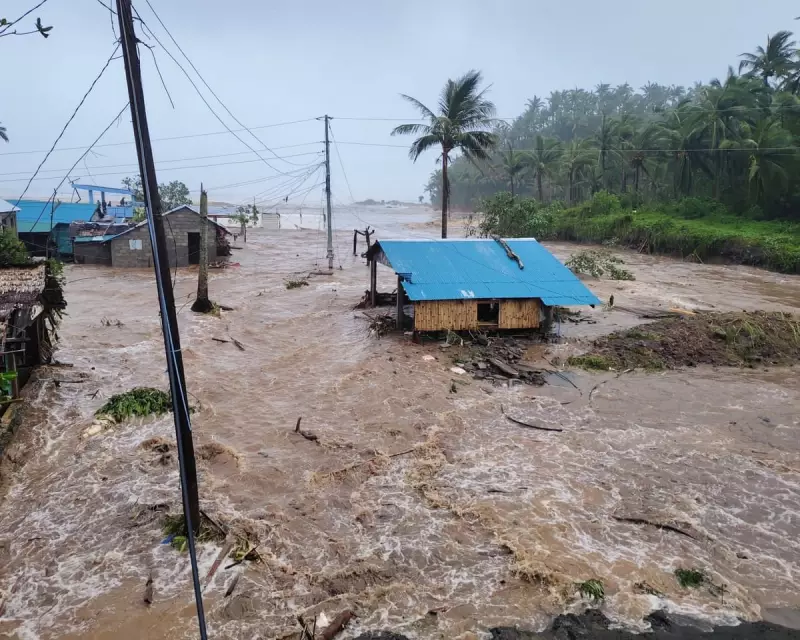
Super Typhoon Fung-wong has carved a path of destruction through the Philippines, resulting in at least two confirmed fatalities and the forced evacuation of more than 1.4 million people. The storm, one of the most powerful to threaten the archipelago in years, unleashed flash flooding, devastating landslides, and gale-force winds across the nation.
Widespread Devastation and Rescue Efforts
The province of Catanduanes was among the worst-hit areas when Typhoon Fung-wong made landfall on 9th November 2025. Photographs and footage from disaster response teams depicted a harrowing scene, with floodwaters submerging buildings up to their rooftops and houses being swept away by the powerful currents.
In the municipality of Pandan, civil defence workers executed daring rescues. Roberto Monterola, a disaster-mitigation officer for Catanduanes, reported that personnel saved 14 individuals trapped on the roof of a house completely engulfed by rising waters. Another frantic call led to the rescue of a man and four relatives moments before the wind threatened to rip the roof from their home.
Tragically, these efforts were accompanied by loss. Authorities confirmed on Monday that one person drowned in Catanduanes, while another was killed in eastern Samar when her house collapsed on her.
A Monster Storm and Its Aftermath
Fung-wong was a behemoth, with its rain and wind band stretching an immense 1,800 kilometres (1,118 miles) wide, enough to cover two-thirds of the Philippine archipelago. While the storm was downgraded from a super typhoon to a typhoon as it crossed the country's largest island, its impacts remained severe. The state weather service PAGASA reported sustained winds of 165 km/h, with gusts still reaching a terrifying 275 km/h.
The National Disaster Risk Reduction and Management Council (NDRRMC) is now grappling with the extensive damage to infrastructure and homes. To shelter the displaced, approximately 6,000 evacuation centres have been opened, providing temporary housing for around 92,000 families.
Climate Crisis Intensifying Typhoon Threat
This disaster underscores the escalating threat posed by the climate crisis, which scientists confirm is making tropical storms more intense and frequent. Fung-wong marks the 21st typhoon to hit the Philippines in 2025 alone. Research shows the rate of super-typhoons impacting the country has surged by more than 100% over the past two decades. The World Bank estimates these intense storms cause an average of US$3.5 million (£2.7 million) in damage annually to the nation.
The storm's arrival came just days after Typhoon Kalmaegi, which claimed at least 224 lives and left 135 others missing in the Philippines before moving on to Vietnam. Philippine President Ferdinand Marcos Jr. had preemptively declared a state of emergency on Thursday in response to the compounded devastation expected from both weather systems.



