
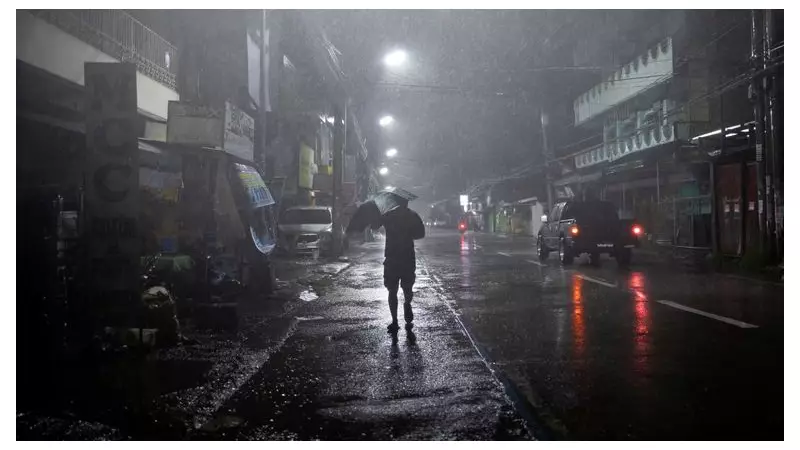
The Philippines is reeling from the impact of Super Typhoon Fung-wong, which made landfall on Sunday, resulting in at least four fatalities and the pre-emptive evacuation of more than one million people.
Widespread Devastation and Emergency Response
Packing sustained winds of 115mph and gusts of up to 140mph, the super typhoon battered eastern and central parts of the country, including Aurora province in central Luzon. The powerful storm caused significant power outages and widespread damage, prompting President Ferdinand Marcos Jr to declare a state of emergency.
Officials confirmed that one person drowned in Catanduanes, while in Catbalogan City, firefighters recovered the body of a woman trapped under the debris of her collapsed home. The tragedy deepened in Kayapa, in Nueva Vizcaya province, where two children died after a mudslide buried a house.
A Nation Still Recovering
The disaster compounds the misery for Filipinos, who are still dealing with the aftermath of Typhoon Kalmaegi, which killed more than 200 people earlier in the week. Defence secretary Gilberto Teodoro Jr warned that Fung-wong could affect a vast expanse of the nation, including the capital Manila and Cebu, the central province hardest hit by the previous typhoon.
In a public address, Mr Teodoro Jr urged residents to heed evacuation orders, stating that refusing to comply was both dangerous and unlawful. "We ask people to pre-emptively evacuate so that we don't end up having to conduct rescues at the last minute, which could put the lives of police, soldiers, firefighters and coast guard personnel at risk," he said.
The Office of Civil Defence stated that more than 30 million people could be exposed to the hazards posed by the super typhoon. In preparation, people in high-risk villages in northeastern provinces, such as the coastal Bicol region, were told to evacuate.
On the Ground: Evacuations and Cancellations
Evacuation centres, such as a repurposed basketball court in Isabela in northern Luzon, provided shelter for dozens of families. "We're scared," said Christopher Sanchez, 50, who fled with his family. "We're here with our grandchildren and our kids. The whole family is in the evacuation area."
The storm's disruption extended to travel, with the civil aviation regulator cancelling nearly 400 domestic and international flights. By Monday, the typhoon's speed had dropped to between 80mph and 100mph as it was forecast to move northeast towards Taiwan.



