
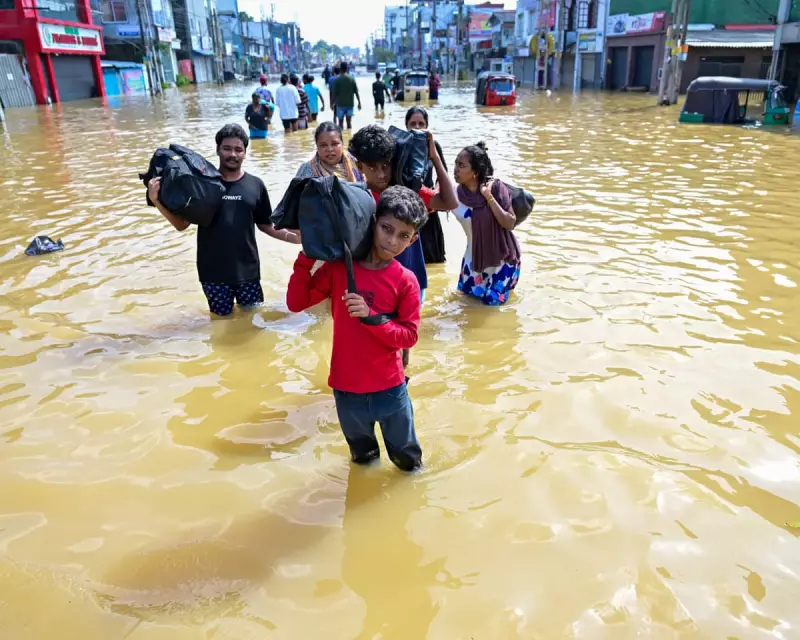
Severe flooding has devastated Sri Lanka's capital city after Cyclone Ditwah triggered torrential rains and deadly mudslides across the island nation, with authorities confirming nearly 200 fatalities and hundreds more missing.
The Disaster Management Centre reported at least 193 deaths following a week of extreme weather, while 228 people remain unaccounted for in what officials describe as the country's deadliest natural disaster in years.
Capital Submerged as River Levels Rise
Northern districts of Colombo faced severe inundation as water levels in the Kelani River surged rapidly, forcing residents to evacuate through flooded streets carrying their possessions. A DMC official explained: "Although the cyclone has left us, heavy rains upstream are now flooding low-lying areas along the banks of the Kelani River."
In the Colombo suburb of Wellampitiya, dramatic photographs captured residents wading through chest-high waters with their belongings, while in Wennawatte, 46-year-old Selvi described being forced to abandon her home. "My house is completely flooded. I don't know where to go, but I hope there is some safe shelter where I can take my family," she told Agence France-Presse.
Widespread Destruction and Ongoing Risks
The scale of devastation became increasingly apparent on Sunday as emergency crews cleared roads blocked by mudslides and fallen trees. In Manampitiya, 250km north-east of Colombo, receding waters revealed extensive damage to businesses and properties.
72-year-old resident S Sivanandan stated he had never witnessed such volume of water in the flood-prone town, noting that a car had flipped upside down directly outside his shop.
The National Building Research Organisation issued warnings about continued landslide risks, noting that mountain slopes remain saturated with rainwater and pose significant danger to affected communities.
International Response and Emergency Measures
Sri Lankan President Anura Kumara Dissanayake declared a state of emergency on Saturday and appealed for international assistance to address the catastrophe's aftermath.
India led the relief effort, dispatching essential supplies and two helicopters for rescue operations, with two additional aircraft expected to join the mission. Pakistan committed rescue teams, while Japan pledged to send assessment personnel and further support.
The extreme weather system has caused unprecedented damage, destroying more than 25,000 homes and forcing 147,000 people into government-run temporary shelters. A staggering 968,000 additional people require assistance after being displaced by the flooding.
Military personnel from the army, navy, and air force have been deployed alongside civilian workers and volunteers to support relief operations throughout affected regions.
Climate Crisis Intensifies Disaster Patterns
Experts note that the climate emergency has significantly altered storm patterns, resulting in heavier rainfall, flash flooding, and stronger wind gusts during cyclone season.
This disaster represents Sri Lanka's most severe natural catastrophe since 2017, when flooding and landslides claimed over 200 lives and displaced hundreds of thousands of people. The worst flooding this century occurred in June 2003, resulting in 254 fatalities.
As recovery efforts continue, authorities remain concerned about additional landslide risks and the long-term impact on communities already struggling with the extensive damage to infrastructure and property.



