
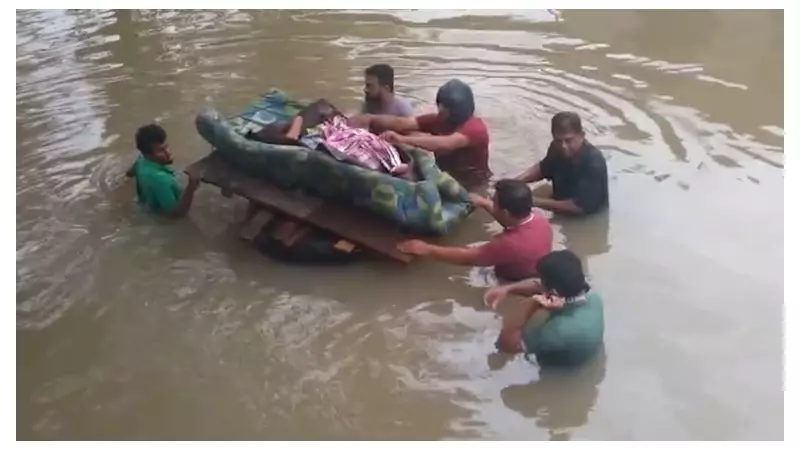
Families across Sri Lanka are confronting the immense physical and emotional devastation left by catastrophic flooding, as the death toll from Cyclone Ditwah climbs above 400 people.
Families Forced to Flee Rising Waters
On the outskirts of the capital, Colombo, resident Asiri spent five days sheltering upstairs with his family to escape the rising floodwaters that inundated his home. He points to a water mark two and a half feet up his wall, indicating the terrifying height the water reached. "There was no power, no water - it all broke," he explained, surveying the extensive damage to his property.
His uncle, Sunil, demonstrated the desperate lengths families went to in order to survive. He fashioned a makeshift wooden raft attached to an inflatable ring to ferry his brother to hospital, a scene of stark improvisation that has been repeated nationwide.
A Nation Grappling with Another Tragedy
This disaster marks one of the worst natural catastrophes in Sri Lanka's recent history, a nation still bearing the scars of a devastating tsunami that killed around 35,000 people and a severe economic collapse. Unlike the 2004 tsunami, Cyclone Ditwah did not only strike coastal areas but also hammered urban centres like Colombo and mountainous regions, triggering deadly landslides.
In the popular tourist area of Kandi, rescue workers are still retrieving bodies from landslide debris. Hundreds of people remain missing, compounding the national grief.
International Response and Criticism
The scale of the crisis has prompted a regional response, with India and Pakistan deploying helicopters and cargo planes to assist with rescue and relief efforts. However, the monumental task of repair and recovery lies ahead.
Some citizens have criticised the Sri Lankan government's initial reaction, claiming it was slow to declare a state of emergency and to deliver aid to stranded people. The cyclone places Sri Lanka among a list of Asian nations on the front line of an increasingly intense monsoon season, which experts note appears to worsen each year.
The hard work of rebuilding homes and lives is just beginning for thousands, with the true cost of Cyclone Ditwah being counted not just in damaged property, but in profound community trauma.



