
Rescue teams are in a desperate race against time across Southeast Asia after catastrophic flooding and landslides killed more than 600 people, with hundreds more still missing. The disaster, triggered by intense monsoon rains, has left a trail of destruction in Indonesia and Thailand, submerging communities, destroying homes, and severing critical supply lines.
Widespread Devastation and Rescue Challenges
In Indonesia, the situation remains particularly dire. Officials confirmed that the death toll has risen to at least 442 people, with hundreds injured and 402 individuals still missing. The worst-affected areas on the island of Sumatra have been isolated, with debris and damaged infrastructure hampering aid delivery. Thousands of survivors are stranded without shelter, food, or clean water.
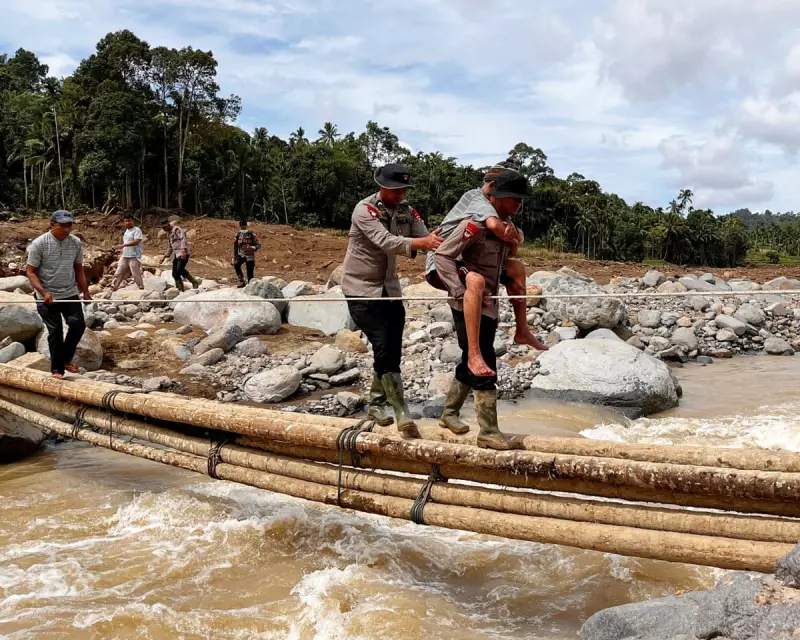
Heavy equipment and access to the hardest-hit regions, including the city of Sibolga and Central Tapanuli district in North Sumatra, are severely limited. The scale of the destruction was vividly captured in Reuters photographs showing rescuers carrying victims across makeshift bridges in West Sumatra.
Struggle for Survival and Desperate Measures
For those who survived, the struggle is now for basic necessities. In Padang, the capital of West Sumatra, 41-year-old Afrianti described returning to find her home and business completely destroyed. "My home and business are gone, the shop is gone. Nothing remains," she told Reuters, now sheltering with her family of nine near a single remaining wall of her former house.
The desperation has led to reports of looting in some areas. A police spokesperson, Ferry Walintukan, explained that the incidents occurred before logistical aid could arrive. "The looting happened before logistical aid arrived," Walintukan said. "[Residents] didn't know that aid would come and were worried they would starve." Social media videos showed people wading through waist-deep water to reach damaged shops for food and medicine.
In Sungai Nyalo village, the floodwaters had receded by Sunday, but a thick layer of grey mud coated everything. Residents reported that no outside assistance had reached them, and authorities had not yet begun clearing the roads.
Regional Impact and Climate Connection
The crisis extends beyond Indonesia. In Thailand, authorities reported at least 162 fatalities in one of the country's worst floods in a decade. The Thai government has initiated relief measures, including compensation for bereaved families, but has faced public criticism over its response, leading to the suspension of two local officials.
This annual monsoon season, which typically runs from June to September, has been exacerbated by a tropical storm. The resulting toll ranks among the highest for floods in both Indonesia and Thailand in recent years. Scientists point to the climate crisis as a key factor, altering storm patterns to produce heavier rainfall, more intense flash flooding, and stronger winds.
The extreme weather has also impacted Sri Lanka, where a powerful cyclone triggered mudslides and flooding, killing at least 212 people and displacing nearly 148,000. As floodwaters receded in towns like Manampitiya, the full extent of the damage to businesses and property became clear.
With hundreds still missing and vast areas cut off, the focus remains on search, rescue, and delivering life-saving aid to the survivors of this devastating natural disaster.



