
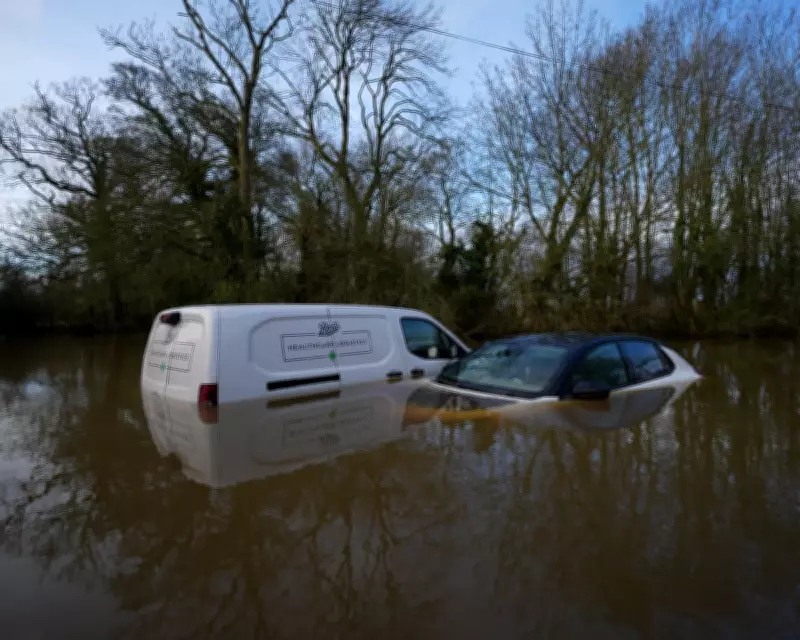
Vehicles Stranded in Flooded Leicestershire Ford Amid Ongoing UK Rain Crisis
Multiple vehicles were left abandoned in a submerged ford on Watery Gate Lane in Thurlaston, Leicestershire, on 9 February 2026, as persistent rainfall continues to cause significant disruption across the United Kingdom. The striking image captured by photographer Joe Giddens illustrates the immediate dangers posed by flooded roadways, with cars rendered immobile by rising waters that have overwhelmed local drainage systems.
Widespread Weather Impacts Across Multiple Sectors
The incident in Leicestershire represents just one visible manifestation of a broader weather pattern affecting numerous aspects of British life. Consistent precipitation has created challenging conditions for farmers attempting to maintain crops and livestock, while construction projects face delays due to waterlogged sites. Sporting events have been cancelled or postponed, and wildlife habitats are experiencing disruption from saturated environments.
Perhaps most concerning are the structural damages occurring nationwide. Roads are developing potholes and washouts, while homes in vulnerable areas face increasing risks of water ingress and foundation problems. The cumulative effect represents a substantial infrastructure challenge that may require extensive repair efforts once conditions improve.
Regional Rainfall Statistics Reveal Concerning Patterns
Meteorological data underscores the unusual nature of current conditions. Parts of Devon, Cornwall, and Worcestershire have experienced daily rainfall for forty consecutive days, creating saturated ground with limited capacity to absorb additional precipitation. Meanwhile, provisional statistics from the Met Office indicate Northern Ireland recorded its wettest January in nearly a century and a half, with 149 years of records surpassed.
Wales has already reached 39% of its average February rainfall total early in the month, suggesting the pattern may continue. These statistics collectively point toward an unusually wet period affecting multiple regions simultaneously, rather than isolated incidents of bad weather.
Safety Considerations During Extreme Weather Events
As authorities monitor conditions, safety remains paramount when encountering flooded areas. The Leicestershire ford incident demonstrates how quickly vehicles can become immobilized, potentially placing occupants at risk. Emergency services emphasize that even shallow-appearing water can conceal hazards or possess sufficient force to sweep vehicles away.
Residents are advised to monitor local flood warnings, avoid unnecessary travel through affected areas, and prepare emergency supplies in case of prolonged disruption. Those living in flood-prone regions should have evacuation plans ready and stay informed through official channels rather than relying solely on social media reports.
Documenting the Human Impact of Persistent Precipitation
Beyond statistics and photographs, the true measure of this weather event lies in its effect on daily life. From commuters facing extended travel times to business owners dealing with flood damage, the cumulative impact touches numerous aspects of society. Agricultural communities face particular challenges, with planting schedules disrupted and livestock management complicated by waterlogged fields.
As the situation evolves, documenting these experiences helps create a comprehensive understanding of how communities adapt to challenging weather patterns and what support systems prove most effective during prolonged periods of disruption.



