
Cuban Farmers Struggle Under Sanctions and Fuel Shortages in Agricultural Heartland
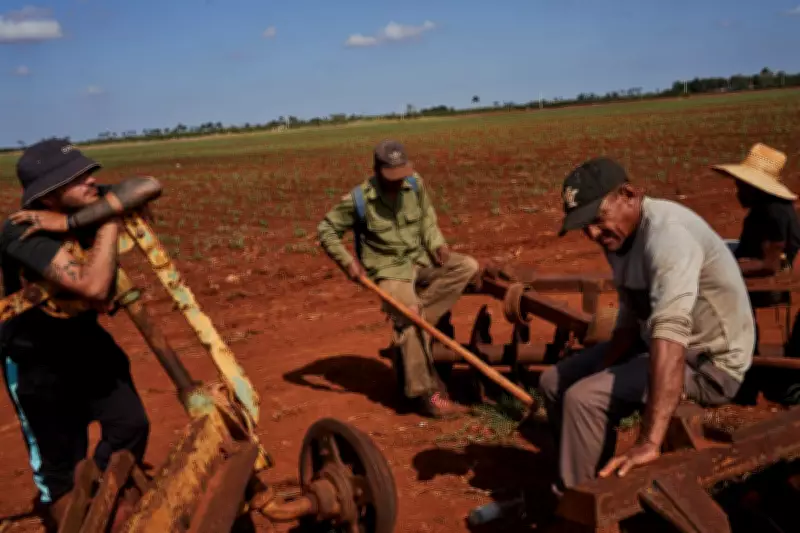
In the sun-drenched cornfields of Artemisa, Cuba, Abraham Rodríguez takes a weary break from ploughing furrows. At just 26 years old, he has spent nearly half his life working the land, a tough existence that has grown increasingly unsustainable. "I make 1,200 pesos (£1.80) a day, so I have to work two days to buy a bottle of oil," he explains, highlighting the dire economic realities. Meat has become a distant memory, with his last meal consisting of white rice and fried banana. "Breakfast? What's that?" he remarks with bitter irony.
Worsening Conditions in Cuba's Rural Core
Artemisa, once celebrated as "Havana's granary" and supplying about 40% of the capital's fresh produce, now epitomizes the deepening agricultural crisis. Fertile soils and a warm climate historically made it a key region for grains, vegetables, and fruit, but today, many farmers survive on scarce meals, unable to afford essentials. Cuts to the state procurement system, where the government buys farmers' products, leave crops rotting in fields, exacerbated by post-Covid inflation and stringent US sanctions.
Yomar Matos, a former construction worker from Guantánamo, turned to farming three months ago after unemployment struck. Relocating to Artemisa to join family, he shares a meager breakfast of black coffee and cigarettes with his brother and stepfather. His voice trembles as he speaks of his daughters: one in Brazil, better off with her mother working as a cashier, and another just five months old in Cuba. "My girl left skinny, and now she's grown up just like me," he smiles, masking the pain of separation.
Fuel Shortages and Economic Unsustainability
The crisis is intensified by fuel shortages that drive up costs, making agriculture economically unviable for many. Edián and Maykel Romero Álvarez, siblings who inherited land from their father and grandfather, worry about the future. "Since Trump took Maduro, everything changed," Maykel says, referring to US intervention in Venezuela that worsened Cuba's energy crisis. "Now we don't have a drop of fuel, so we can't sell our produce." He laments seeing food waste in a time of need, a sentiment echoed across the region.
Despite a Communist party sign proclaiming "Proud to be farmers," the reality is grim. Small producers like the Romero Álvarez brothers receive little government investment, as priorities shift to cooperatives and state farms. Yet, they are encouraged to keep producing under a revolutionary rhetoric of "feeding the nation," even as solutions remain elusive.
Shift to Illegal Trades and Migration
As traditional farming falters, some turn to illegal charcoal trading or migration to survive. Luis Torres García, 63, has produced charcoal in his backyard near Güira de Melena for decades, meeting increased demand due to blackouts. He sells to the state and privately, charging market rates to cover costs without exploiting others. "I remember what it was like to be poor, to be hungry and in need," he says. "Why should I take advantage?"
His wife, Milagros Moreno, a former nurse, now sorts rice at home due to deteriorated transport. Both criticize Trump's "maximum pressure" campaign. "That crazy old man should leave Cuba alone so we can trade with other countries," Torres García asserts, clicking his tongue. "They want to suffocate us, to provoke war against the state."
Down the road, Ángel Reyes, 42, sells charcoal sacks after fuel shortages ended his taxi driving career. His hands blistered from marabú tree spines, he focuses on feeding his children. "I can buy them a pair of shoes once a year – but food, you need to eat every day," he explains, undeterred by potential state inspections.
Historical Context and Systemic Challenges
Cuban agriculture has evolved since the 1959 revolution, with land mainly state-owned but management shifting over years. Initially focused on large-scale monoculture like sugar, dependent on USSR exports, it shifted after the socialist bloc's collapse to crop diversification and cooperatives. In 2008, Raúl Castro loosened regulations to attract farmers to idle land, yet small producers still struggle with inefficiency and lack of support.
Marie Aureille, an anthropologist researching Cuban agriculture, notes that while this approach avoided collapse, it never became viable for farmers, leaving some land abandoned. The ongoing energy crisis and sanctions compound these systemic issues, pushing families to the brink.
As Rodríguez stares at his unfinished ploughing, the weight of the crisis is palpable. "I wouldn't mind a US intervention, as long as it's for the better," he muses, reflecting a desperate hope for change. In Artemisa, the heartland of Cuban agriculture, survival hinges on resilience amid mounting pressures, with farmers bearing the brunt of geopolitical strife.



