
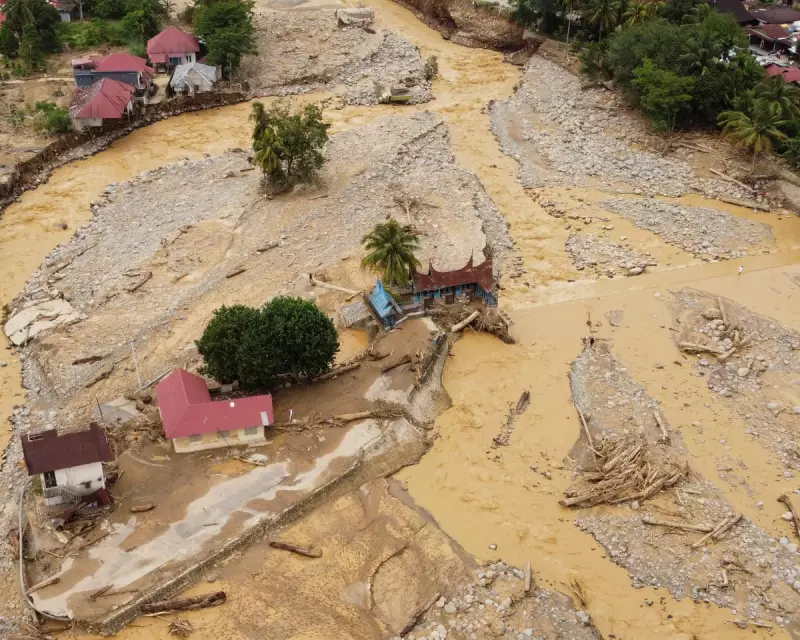
Military forces in Sri Lanka and Indonesia have been mobilised in response to catastrophic flooding that has claimed close to 1,000 lives across parts of Asia in recent days. Separate, intense weather systems have unleashed torrential rains, triggering deadly flash floods and landslides.
Regional Crisis Unfolds as Death Toll Rises
The scale of the disaster is immense, with the combined death toll from four nations approaching a grim milestone. In Indonesia, the confirmed fatalities have reached at least 442, with hundreds more individuals reported missing. This represents the country's deadliest natural disaster since the 2018 Sulawesi earthquake and tsunami.
In Sri Lanka, officials confirmed on Monday that at least 340 people have been killed following the onslaught of Cyclone Ditwah. Many residents remain unaccounted for as the full extent of the damage in the central regions becomes clear.
Government Responses and Relief Efforts
The responses from the two hardest-hit nations have differed in key aspects. Indonesian President Prabowo Subianto, visiting North Sumatra, stated that "the worst has passed, hopefully". His government's priority is now the rapid dispatch of aid, particularly to isolated villages. Indonesia has deployed three warships carrying supplies, two hospital ships, and Hercules aircraft to deliver basic necessities and medicine, notably to Aceh province.
However, President Prabowo has faced growing pressure to declare a national emergency and, unlike Sri Lanka, has not publicly appealed for international assistance.
Sri Lankan President Anura Kumara Dissanayake took a different tack, declaring a state of emergency and explicitly calling for international aid. He described the event as "the largest and most challenging natural disaster in our history", vowing to rebuild a better nation. The country's military has been using helicopters to airlift stranded citizens and deliver food, though one helicopter crashed near Colombo on Sunday.
On the Ground: Scenes of Devastation and Recovery
For survivors, the challenge of recovery has just begun. In Ma Oya, north of Colombo, resident Hasitha Wijewardena described the arduous clean-up: "The water has gone down, but the house is now full of mud," he said, appealing for military assistance.
In the Colombo suburb of Wennawatte, Selvi, 46, was forced to abandon her flooded home with her family and a few belongings. "I don’t know where to go, but I hope there is some safe shelter where I can take my family," she told reporters.
While rains have subsided in Sri Lanka, allowing some shops in Colombo to reopen, low-lying areas remain inundated, setting the stage for a major, prolonged relief operation.
Climate and Weather: A Dangerous Convergence
The disaster stems from a dangerous confluence of seasonal and extreme weather patterns. Much of Asia is currently in its annual monsoon season, which routinely brings heavy rainfall. However, this event was exacerbated by a rare tropical storm that dumped exceptional rain on Indonesia's Sumatra island.
Experts note that the climate crisis is intensifying such events, as a warmer atmosphere holds more moisture, leading to more frequent and severe heavy rainfall episodes. The flooding in southern Thailand and northern Malaysia was also part of this widespread weather disruption.
The collective losses mark the worst catastrophe for Sri Lanka since the 2004 Asian tsunami, underscoring the profound vulnerability of the region to both sudden-onset storms and creeping climatic changes.



