
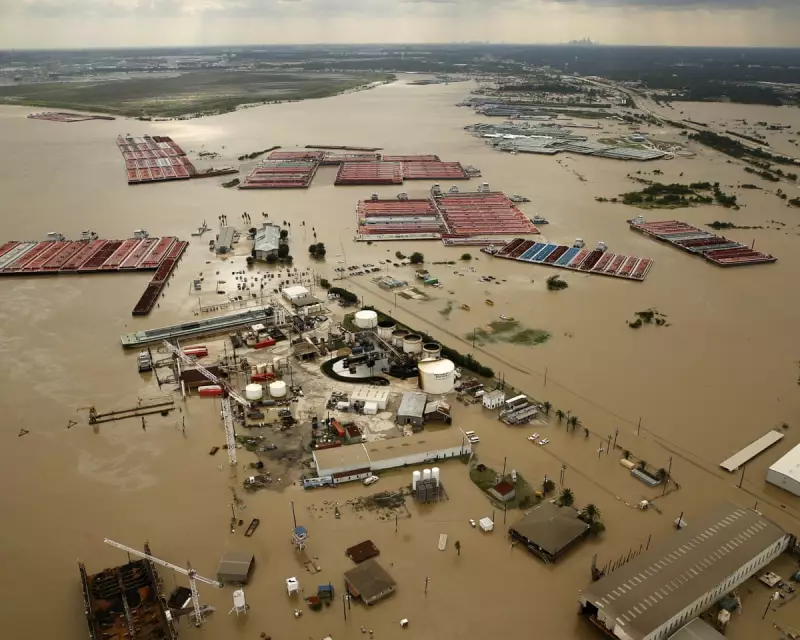
A groundbreaking study has revealed that more than 5,500 toxic sites across the United States could face coastal flooding by the end of this century due to rising sea levels, posing significant health and environmental risks.
Widespread Threat to Hazardous Facilities
Research published in Nature Communications and led by University of California scientists warns that if heat-trapping pollution continues unchecked, rising seas will flood a wide range of dangerous facilities. These include sites handling sewage, toxic waste, oil and gas, and other industrial pollutants.
The analysis examined projections for a 1%-annual-chance flood – commonly known as a 100-year flood – under both high and low emissions scenarios. After investigating 23 coastal states and Puerto Rico, researchers discovered the risk is heavily concentrated in specific regions.
Florida, New Jersey, California, Louisiana, New York, Massachusetts, and Texas account for nearly 80% of the hazardous sites expected to be at risk by 2100. The study examined over 47,600 coastal facilities nationwide, finding that more than 11% – equivalent to 5,500 facilities – are projected to face 100-year flood events or more frequent flooding by century's end.
Disproportionate Impact on Vulnerable Communities
The research uncovered alarming disparities in how flooding risks affect different communities. Under a high-emissions scenario, neighbourhoods containing one or more at-risk facilities have higher proportions of:
- Renters and households in poverty
- Hispanic residents and linguistically isolated households
- Older adults and non-voters
- Car-less households
The study noted that racial residential segregation and unequal distribution of stormwater infrastructure further contribute to racialised patterns of flood risk across American cities.
Researcher Lara Cushing from UCLA's Fielding School of Public Health emphasised: "Flooding from sea level rise is dangerous on its own – but when facilities with hazardous materials are in the path of those floodwaters, the danger multiplies. This analysis makes it clear that these projected dangers are falling disproportionately on poorer communities and communities that have faced discrimination."
Significant Health Risks and Locked-In Dangers
Professor Sacoby Wilson from the University of Maryland's School of Public Health outlined the severe health threats posed by floodwaters contaminated with industrial waste and sewage. Immediate symptoms can include rashes, burning eyes, headaches, fatigue, and respiratory issues, while longer-term dangers encompass cancers and damage to kidneys and liver.
Perhaps most concerning is the finding that most of this risk is already locked in due to past emissions. By 2050, nearly 3,800 hazardous facilities are projected to face flooding threats regardless of current action.
The study found that restricting greenhouse gas emissions to the low emissions scenario makes little difference to the number of sites at risk by 2050, but would reduce the number of vulnerable sites from 5,500 to 5,138 by 2100 – a reduction of 362 sites or 7%.
Under a high emissions scenario, the research projects that by 2100:
- Over a fifth of coastal sewage treatment facilities, refineries and formerly used defence sites will be at risk
- Roughly a third of power plants face flooding threats
- Over 40% of fossil fuel ports and terminals are projected to be vulnerable
Rachel Morello-Frosch from UC Berkeley's School of Public Health highlighted potential solutions: "If policymakers are ready to move forward. And there is a clear need for disaster planning and land-use decision-making, as well as mitigation strategies to address the inequitable hazards and potential health threats posed by sea level rise."
This research emerges alongside other concerning studies, including findings that several east coast cities including New York, Baltimore and Norfolk are sinking, with subsidence linked to groundwater extraction, natural gas operations and building weight. A June study by the Union of Concerned Scientists also found that rising sea levels will threaten nearly 3 million Americans across 703 coastal communities, with critical infrastructure including affordable housing, wastewater treatment facilities, schools, and hospitals facing monthly disruptive flooding by 2050.



