
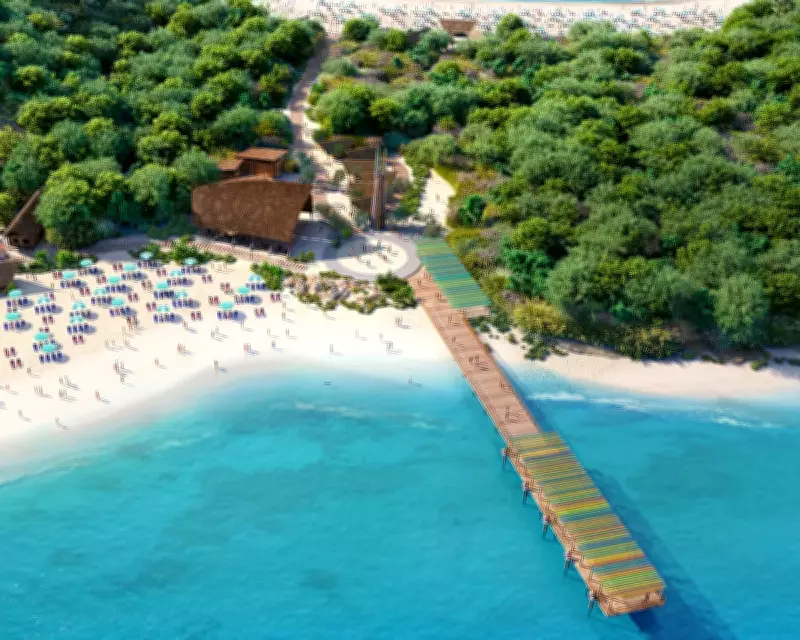
Vanuatu Indigenous Leaders Challenge Royal Caribbean's Private Beach Club Plans
Indigenous community leaders in Vanuatu have raised significant concerns regarding plans by the cruise operator Royal Caribbean to construct a private beach club on Lelepa Island. The leaders argue that the company's environmental impact assessments are "incomplete" and "misleading", potentially jeopardizing fragile ecosystems and nearby cultural heritage sites.
Incomplete Environmental Assessments Spark Outcry
In a letter dated February 26, which has been obtained by the Guardian, Lelepa's council of chiefs criticized the environmental impact assessment commissioned by Royal Caribbean. The letter states that "the current EIA is incomplete, misleading, and does not meet the standards required under Vanuatu law." The chiefs emphasized that local communities had not been adequately consulted during the assessment process.
The proposed development involves Royal Caribbean leasing parts of Lelepa, a 5-kilometer-long island with approximately 500 residents, to build a resort capable of hosting up to 5,000 visitors daily. Scheduled to open in 2027, the project would feature 10 bars, two eateries, and two private beach resorts, including an adults-only area. Cruise ships would transport passengers from Australia to Lelepa as part of Pacific tours.
Cultural Heritage and Environmental Protection at Stake
Lelepa's paramount chief, Ruben Natamatewia III, the highest-ranking customary leader on the island and a signatory to the letter, expressed mixed feelings about the project. While acknowledging that the development could be "a good thing", he voiced concerns that the environmental assessment was not "realistic" and stressed the need for comprehensive community consultation.
The council of chiefs has called for a cultural heritage assessment to ensure that customary sites remain unaffected by the development. Specific concerns have been raised about Fels Cave, a culturally significant UNESCO World Heritage site containing ancient rock art located to the island's south.
Chief Tungulman Albert Solomon Peter Manaure, an Australia-based representative of the council, highlighted broader environmental worries. "The ocean and the land are our bank – that's where we harvest our resources, where we turn it into food or into cash," he said. Many landowners support tourism development but remain apprehensive about potential impacts on turtle nesting sites and fishing grounds.
Royal Caribbean's Response and Ongoing Negotiations
In response to inquiries, Royal Caribbean initially stated that it had submitted its EIA and "ensured it complies with Vanuatu environmental regulations," noting that the development is "at the opposite end of the world heritage site." Following further questions, the company clarified that it is still incorporating feedback from public consultation "into the final EIA ahead of submission," including matters related to environmental protection and waste management.
A spokesperson affirmed that Royal Caribbean is "progressing all necessary permits in relation to the EIA" and working with government, chiefs, environmental organizations, and local communities to "ensure the natural environment is protected." The company has been in discussions with local landowners since at least 2018 about establishing a permanent tourism facility similar to its exclusive beach clubs in the Bahamas.
Broader Context of Cruise Tourism Impacts
The environmental impact of cruise ship travel has faced increasing scrutiny in recent years, with several European port cities implementing restrictions due to pollution and overtourism concerns. Despite this, the cruise sector is experiencing significant growth, with record numbers of Americans expected to travel on cruise ships in 2025.
Joseph Cheer, a professor of sustainable tourism and heritage at Western Sydney University, commented on the tensions small island nations often face. "Cruise tourism is often criticized for its adverse environmental impacts, questionable economic impacts, and the way it wields power and influence over small island countries," he said. "With good governance of the sector, it is possible to overcome evident friction points."
The Vanuatu government was contacted for comment but did not respond to the Guardian's questions. The chiefs are demanding that construction not proceed until outstanding assessments and consultations are accepted by customary owners, underscoring the critical balance between economic development and environmental preservation in vulnerable island communities.



