
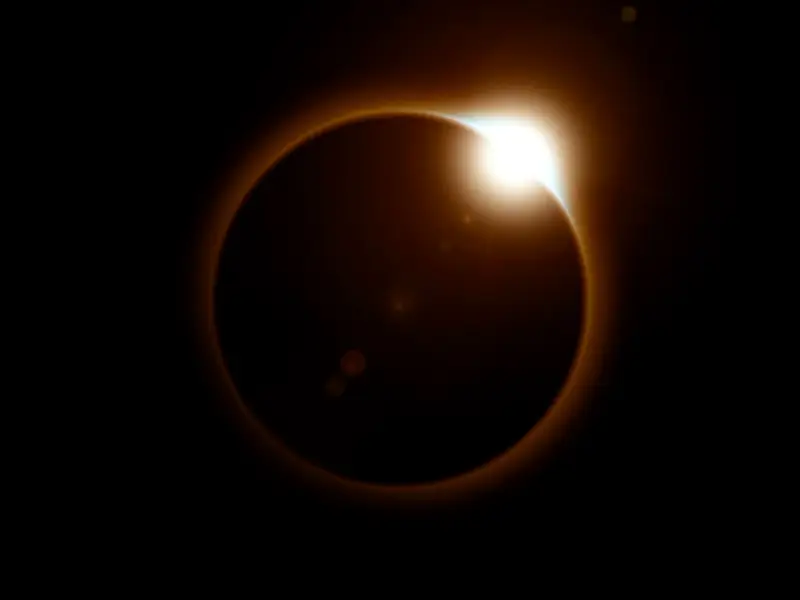
On Wednesday, August 12, 2026, the UK will experience its most significant solar eclipse in over two decades, with some regions witnessing up to 96 percent coverage of the Sun. This celestial event marks the deepest solar eclipse visible from British shores since the total eclipse of August 11, 1999, according to The Mirror.
What to expect during the eclipse
The eclipse occurs when the Moon passes directly between the Earth and the Sun, casting a shadow that creates a narrow path of darkness across the planet's surface. While the UK narrowly misses the path of totality—reserved for parts of Spain, Portugal, and Iceland—most of the country will still experience a dramatic partial eclipse, with coverage exceeding 90 percent in many areas.
The European Space Agency explains the phenomenon: "With the Sun’s dazzling disc covered, we get a unique chance to see its wispy atmosphere. Stars and planets appear in the sky. The temperature drops. The wind picks up. And birds and insects may behave as if it’s nighttime." Observers will notice the Sun appearing as though a "bite" has been taken out of it, leading to twilight-like conditions even in the middle of the day.
UK city-by-city eclipse times and coverage
The eclipse will unfold across the UK in the early evening, with the maximum coverage occurring between 7:05 PM and 7:15 PM BST. Here are the exact times and coverage percentages for major UK cities, as reported by The Mirror:
- Edinburgh – 90.7% coverage at 7:05 PM
- Glasgow – 91.4% at 7:06 PM
- Belfast – 93.1% at 7:08 PM
- Leeds – 90.8% at 7:09 PM
- Manchester – 91.4% at 7:10 PM
- Liverpool – 91.8% at 7:10 PM
- Sheffield – 91% at 7:10 PM
- Birmingham – 91.8% at 7:11 PM
- Cardiff – 93.2% at 7:13 PM
- London – 91.4% at 7:13 PM
- Exeter – 94% at 7:15 PM
Where to see the highest coverage
The southwestern tip of England will be the prime viewing location, with Penzance in Cornwall achieving 95.76 percent coverage at 7:16 PM. Even higher coverage is expected in the Isles of Scilly, where Hugh Town will see 96.44 percent of the Sun obscured—the highest in the UK. This makes the region the best spot for eclipse enthusiasts, continuing a tradition from 1999 when Cornwall and Devon were in the path of totality.
For those unable to travel, most UK locations will still see over 90 percent coverage, offering a spectacular sight. The last total eclipse visible from the UK was on August 11, 1999, when Cornwall and Devon experienced full darkness. This year’s event, while not total, will be the deepest partial eclipse seen in the UK since that historic date.
Safety and viewing tips
Experts urge the public to never look directly at the Sun without proper eye protection, such as eclipse glasses or solar filters. Regular sunglasses are not safe. Viewers can also use indirect methods like pinhole projectors to observe the eclipse safely. The event is a rare opportunity to witness a celestial alignment that won't occur with such high coverage in the UK for many years to come.



