
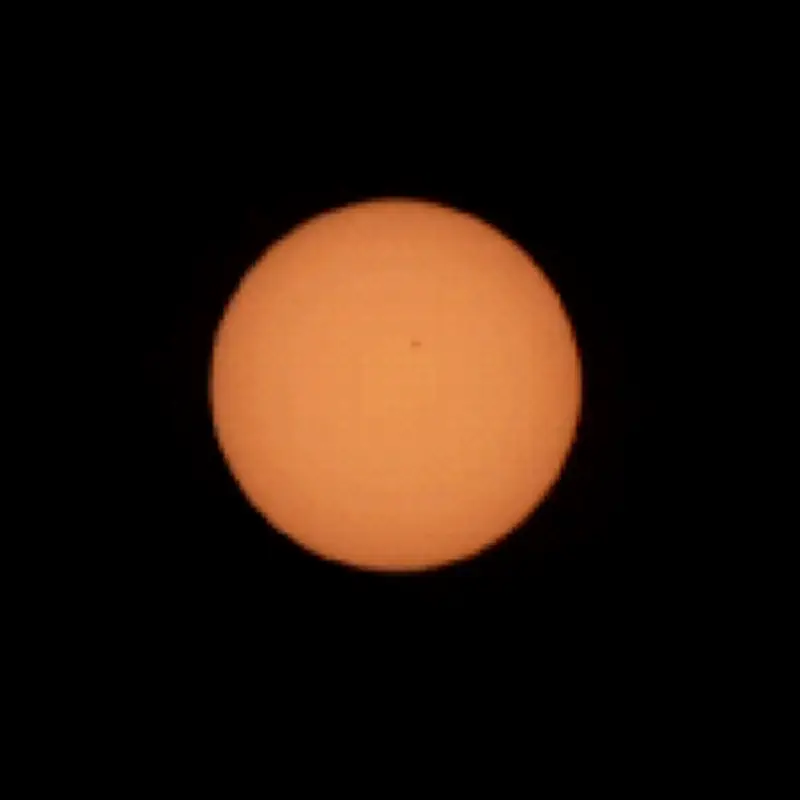
On August 12, 2026, the UK will experience a significant partial solar eclipse, with the moon covering up to 97% of the sun in some regions. This celestial event, part of a total solar eclipse visible from northern Spain and the Atlantic, marks the deepest partial eclipse in the UK since 2015 and the last until 2090, according to astronomy writer Jamie Carter.
What happens during the eclipse?
The eclipse begins with a partial phase as the moon takes a 'bite' out of the sun, progressing to totality—when the moon fully obscures the sun—for those in the path of totality. The total phase will last over six minutes, making it one of the longest of the century; a similar-length eclipse won't occur for another 157 years, according to Nasa. During totality, observers may see the sun's corona and a reddish-pink chromosphere, conditions that last about two minutes.
The moon's shadow races across Earth at up to 3,000mph, covering a path stretching 5,100 miles from the Arctic to the Mediterranean. For UK viewers, the eclipse will be partial, with the sun's visibility reduced to as little as 3% in some areas, depending on location.
Where to see the eclipse in the UK
Dr Megan Argo, a reader in astrophysics at the University of Lancashire, advises that the eclipse will be 'strongest the further west and south you are.' She recommends coastal locations with clear western horizons, such as the Pembrokeshire, Gower, Devon, and Cornwall coasts. 'Cardiff and Belfast will see slightly more of the sun eclipsed than either London or Edinburgh,' she adds.
Jamie Carter, author of 'A Stargazing Program for Beginners,' suggests that while Scotland and Cornwall get the best views, 'everyone in the UK will get a very similar view.' He advises finding a spot with clear horizons, checking weather reports, and joining local astronomy clubs, with viewing parties planned in Cardiff and Leicester. For precise timings, Carter recommends timeanddate.com.
Eclipse timings and viewing safety
In the UK, the partial eclipse begins at 6:17pm, reaches its maximum at 7:13pm (when the sun appears as a 'sad face' crescent), and ends at 8:06pm. Nasa will live-stream the event for those who cannot watch in person.
Never look directly at the sun without proper eye protection, even during a partial eclipse. Use solar viewers or glasses, or fit special solar filters to cameras, binoculars, or telescopes. Nasa warns that ordinary sunglasses are not sufficient.
After the eclipse: Perseid meteor shower peak
Immediately following the eclipse, the Perseid meteor shower peaks, offering a double celestial show. The Perseids, active from July to late August, are the summer's strongest shower. Carter notes that the best viewing time is around 2am on August 13, when observers might see up to 50 meteors per hour. 'The darker your location, the more you'll see,' he says.
This eclipse is a precursor to the next total solar eclipse on August 2, 2026, which will again be best viewed from northern Spain. 'That will be the last time there's a total solar eclipse anywhere near Europe for a long time,' Carter adds, making this month's event a must-see for UK skywatchers.



