
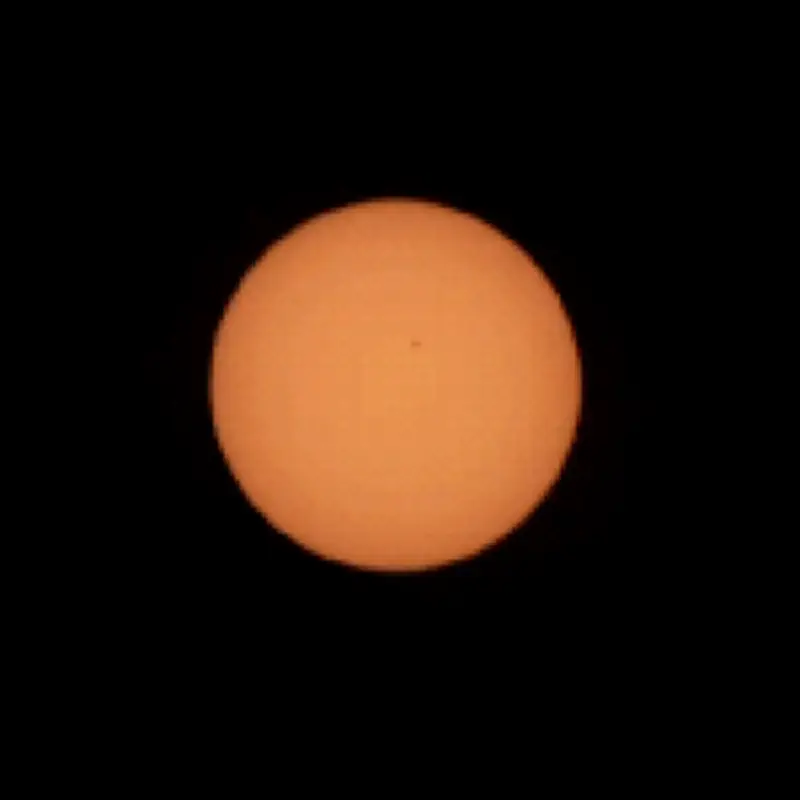
On Wednesday, August 12, 2026, skywatchers across the UK will witness a deep partial solar eclipse, with the moon obscuring up to 90% of the sun in some areas. This rare celestial event marks one of the most significant eclipses visible from the UK for decades, as the next comparable occurrence won't happen until 2081.
Where to See the Eclipse in the UK
According to Dr. Megan Argo, a reader in astrophysics at the University of Lancashire, the best views of the partial eclipse will be in western parts of the UK. She advises, 'To see a total eclipse you will need to head to northern Spain, or get on a boat and head out into the Atlantic!' However, for those staying in the UK, Dr. Argo and the Met Office recommend the following locations: Devon, Cornwall, Western Pembrokeshire, and Plymouth.
The Met Office confirms that even in the easternmost points of the UK, the moon will block about 88-90% of the sun. For example, London will see roughly 9% of the sun visible, while the Isles of Scilly will have only 3% visible. The path of totality stretches 5,100 miles from the top of the Earth to the Mediterranean, but the UK will only experience a partial phase.
Timing of the Eclipse
The partial eclipse will occur between approximately 6pm and just after 8pm on August 12, with the peak around 7.10pm. Exact times vary by location, so it's advisable to check precise timings for your area using online resources like timeanddate.com. The moon's shadow races across Earth at up to 3,000mph, according to eclipse calculators, making the event a dynamic spectacle.
Understanding the Science
A solar eclipse happens when the moon passes between the sun and Earth, casting a shadow. By cosmic coincidence, the moon and sun appear the same size in our sky, allowing the moon to fully cover the sun during totality. During a total eclipse, the sun's corona—a halo of hot gas—becomes visible, along with a reddish-pink chromosphere. Totality lasts only about two minutes, according to NASA, but the UK will not experience totality this time.
Safety First: How to Watch
Never look directly at the sun without proper protection. Certified eclipse glasses with the ISO 12312-2:2015 certificate are essential. Check for any damage to the lenses before use; if damaged, replace them. For cameras, binoculars, or telescopes, use a solar filter. A pinhole projector is another safe method to view the eclipse indirectly.
Bonus: Perseid Meteor Shower
After the eclipse, the Perseid meteor shower will peak, offering a spectacular light show. Jamie Carter, editor of WhenIsTheNextEclipse.com, says, 'The best time to look will be about 2am, when you might see as many as 50 per hour.' He adds, 'The darker your location, the more you’ll see, but some Perseids can be really bright.'
Looking ahead, the next total solar eclipse, nicknamed the 'Eclipse of the Century', will occur on August 2, 2027, with southern Spain as a prime viewing location. Totality will last six minutes and 22 seconds, making it a historic event. Carter notes, 'That will be the last time there’s a total solar eclipse anywhere near Europe for a long time.'



