
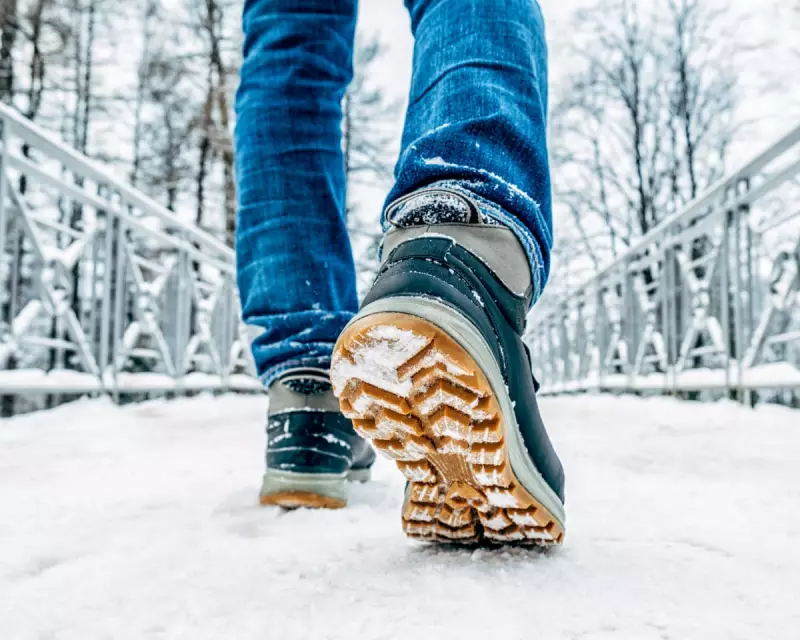
The Science Behind Snow's Sound: How Temperature Creates Crunch or Squeak
Canadians have long claimed an uncanny ability to gauge the outdoor temperature simply by listening to the sound of snow under their boots. This winter folklore, often shared among those who brave the cold, now finds support in scientific research, shedding light on a fascinating auditory phenomenon of the season.
From Crunch to Squeak: The Temperature Threshold
Researchers from the University of Wisconsin have delved into this topic, which has historically received little academic attention. Their findings suggest that temperature plays a crucial role in determining the characteristic sounds produced when walking on snow. At temperatures above -10°C, the pressure from a footstep causes a thin surface layer of snow to melt slightly. This melting, followed by compression, generates the familiar crunching sound many associate with a brisk winter day.
As the mercury climbs closer to 0°C, the behaviour of the snow changes. The grains begin to slide against each other more readily, often producing a wetter, squelching noise as the snow approaches a slush-like consistency. However, the most distinct auditory shift occurs around the -10°C mark.
The Icy Squeak of Extreme Cold
Below -10°C, the acoustic signature transforms dramatically. The dominant sound is no longer from compression melting but from the crushing of ice crystals themselves. This action produces a high-pitched squeaking sound. The science behind this is intriguing: at lower temperatures, ice crystals tend to adhere more strongly to one another. When compressed, this increased inter-crystal friction creates louder and more pronounced squeaks. Essentially, the colder it gets, the more vocal the snow becomes with its characteristic squeal.
Beyond Temperature: Other Influencing Factors
While temperature is a primary driver, the researchers note that the exact soundscape underfoot is influenced by several other variables:
- The depth and density of the snow cover.
- The type of surface or terrain lying beneath the snow.
- How long the snow has been settled, affecting its crystalline structure and moisture content.
These complex factors mean that no two snowy walks sound exactly alike. Yet, the core relationship with temperature provides a consistent framework.
A Learned Skill of Winter Life
This research lends credence to the idea that individuals who spend a lifetime in snowy climates, like many Canadians, can develop a refined auditory sensitivity. Through repeated experience, they may genuinely learn to distinguish subtle sonic cues associated with specific temperature ranges. This could be considered a form of environmental literacy born of necessity and habit.
In practical terms, recognising the sharp, warning squeak of very cold snow might signal that conditions are becoming dangerously frigid, prompting a wise decision to head back indoors. It transforms a simple walk into an interactive dialogue with the winter environment.
The study from Wisconsin not only validates a piece of cultural wisdom but also opens a small, captivating window into the physics of everyday winter experiences. It reminds us that even the most commonplace phenomena, like the sound of a footstep, can hold complex scientific stories waiting to be heard.



