
The Hidden Menace Beneath Sydney's Beaches
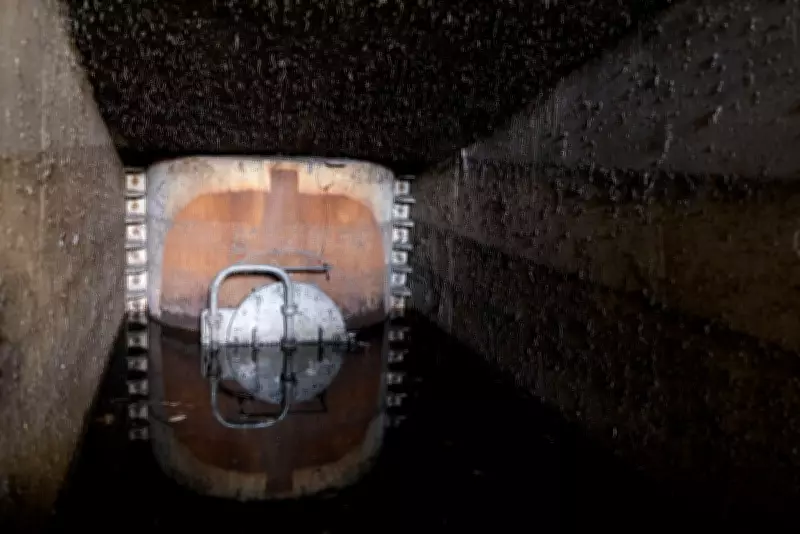
Deep within the Malabar wastewater treatment plant in Sydney, a colossal fatberg, estimated to be the size of four buses, lies trapped behind a rusty bulkhead door. This congealed mass of fats, oils, and grease (FOG) is the suspected source of recurring "poo balls" that have forced closures at popular beaches like Coogee, Bondi, and Manly in late 2024 and early 2025.
An Inaccessible Dead Zone
Fiona Copeman, the hub manager at Malabar, describes the area as a "four-bus zone," referencing a 300 cubic metre underground chamber. Despite attempts to assess its size using drones, turbulence from sewer gases and rapid effluent flow have made accurate measurements impossible. The fatberg resides in an "inaccessible dead zone," beyond wooden stopboards that prevent safe access except during specific low-flow conditions.
When conditions allow, crews pump out spillover material every four to six months, removing up to 53 tonnes at a time. However, this only addresses surface accumulation, leaving the core fatberg undisturbed. Sydney Water has explored shutting down the deepwater ocean outfall for months to access it, but a secret 2025 report deemed this approach unacceptable due to environmental risks.
The Science Behind the Sloughing Events
The working theory is that "sloughing events," triggered by power losses or heavy rainfall, dislodge pieces of the fatberg. These fragments are forced through diffusers at the end of a 2.3km ocean outfall, eventually washing back to shore. The NSW Environment Protection Authority has issued a pollution reduction program, mandating fat removal and plant upgrades.
Copeman notes that FOG levels in the Malabar catchment have surged by 39% over the past decade. Ben Armstrong, Sydney Water's principal manager of environment, emphasizes the challenge: "We're at the end of the pipe, so it's really hard to treat it when you need to remove it at the source."
Daily Operations and Upgrades
The Malabar plant handles 40% of Sydney's sewage, processing 485 megalitres daily in dry weather and up to 1,300 megalitres during wet spells. Higher volumes reduce efficiency in sedimentation tanks, where solids settle. Upgrades include improving scum transfer pumps and diverting sewage upstream, part of a $3 billion capital works program.
Onsite, the smell in sedimentation areas matures from a seaside pong to a meaty fug, yet staff adapt without nasal protection. "I reckon you're either built for sewage, or you're not," Copeman remarks. The plant's cogeneration facility uses FOGs to power 80% of operations, occasionally feeding excess electricity to the grid.
Uncertain Future for Beachgoers
Despite efforts, Copeman acknowledges uncertainty about future events. "I don't want to say that there will never be an event again," she admits, but assures that everything possible is being done to prevent recurrences. As swimmers enjoy nearby Malabar beach, occasional sewage wafts serve as a reminder of the ongoing battle beneath the surface.



