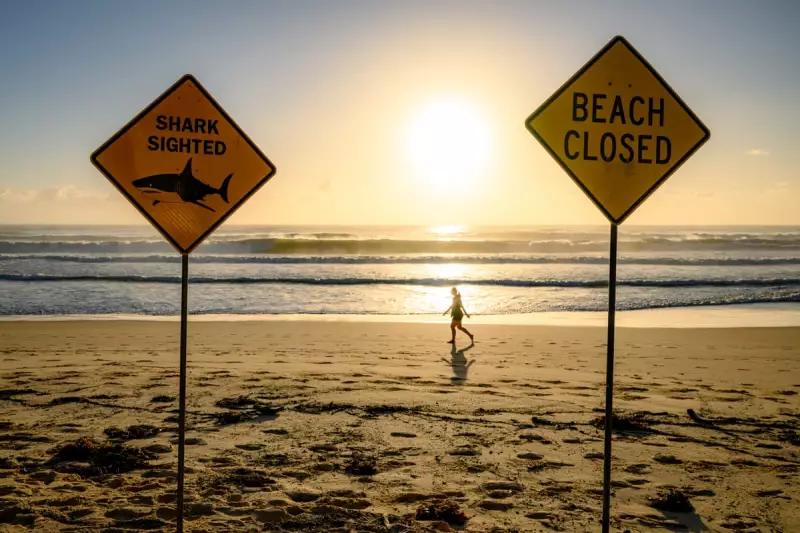
In a startling series of events, New South Wales has witnessed four shark attacks in under 48 hours, prompting authorities to advise beachgoers to opt for local pools instead. This unprecedented cluster has ignited intense debate among experts, who are probing whether Sydney's creaking sewage infrastructure could be a contributing factor to the heightened shark activity.
The 'Perfect Storm' of Factors Behind the Attacks
Marine scientists describe the recent spate of shark incidents as the result of a 'perfect storm' of environmental conditions. Key elements include a surge in ocean temperatures driven by global heating, increased human presence in the water during the summer months, and murky waters following weekend storms. Dr Amy Smoothey of the NSW Department of Primary Industries and Regional Development has identified bull sharks as the probable culprits, noting their preference for warmer waters above 19°C, with populations typically peaking in Sydney from January to February.
Impact of Heavy Rainfall and Murky Waters
Intense rainfall over the weekend, with some areas receiving over 50mm in hours, has been highlighted as a critical factor. This deluge flushed brackish water from estuaries into the ocean, creating ideal hunting conditions for bull sharks, which thrive in low visibility. The turbid waters also attract bait fish, which feed on microorganisms like plankton. These microorganisms, in turn, flourish on nutrients and bacteria washed from river systems, storm water, and sewage overflows.
Robert Harcourt, emeritus professor of marine ecology at Macquarie University, explains that bull sharks enter a foraging mode after heavy rain, actively feeding more. Research on tagged bull sharks around Sydney confirms they follow fish into turbid areas post-storm, with males moving within a day.
Could Sydney's Sewage System Be a Factor?
Professor Ian Wright, a water scientist at Western Sydney University with experience at Sydney Water, asserts that the city's unique sewage management system plays a role. Sydney's system relies solely on primary treatment, removing solids before discharging effluent directly into the ocean, unlike other Australian cities that use secondary treatment to break down organic material. With ageing pipes and infrastructure from the 19th century, the system struggles with population growth, leading to overflows during extreme rain events.
Wright suggests that storm water may flush diffuse pollution and sewage overflows into the ocean, elevating bacterial levels and driving shark activity. He notes, "A lot of our urban runoff, especially in heavily developed areas, becomes dilute sewage."
Expert Perspectives on the Indirect Link
Victoria Camilieri-Asch, a shark ethology consultant, describes the connection between runoff and shark activity as indirect. Nutrients from storm, agricultural, and wastewater sources feed microorganisms, attracting small fish, then larger predators like sharks. She acknowledges that bull sharks are known to linger near wastewater areas globally, making it plausible that Sydney's system adds to the effect.
Deepwater Ocean Outfalls and Their Role
Another distinctive feature is Sydney's deepwater ocean outfalls at Malabar, Bondi, and North Head, built in the late 1980s and early 1990s. These pipes extend 2 to 4km offshore, discharging 80% of the city's effluent. An EPA report links heavy rain and fat buildup from these outfalls to 'poo balls' washing up on beaches, as seen again after recent storms.
While Harcourt dismisses a direct link between outfalls and beachside shark attacks, noting nutrient attraction has moved offshore, Dr Colette Kerry, a physical oceanographer at UNSW, offers a different view. She points to climate change altering the eastern Australian current, keeping it warmer and closer to the coast. This may trap nutrient-rich brackish water and effluent plumes near shore, potentially influencing shark behaviour.
Unanswered Questions and Official Responses
Guardian Australia's inquiries to Sydney Water were redirected to NSW Water Minister Rose Jackson, who cautioned against oversimplifying the issue. She emphasised that shark attacks remain rare and highlighted a $34bn network upgrade over the next decade, including improvements to the Malabar, Bondi, and North Head systems. Camilieri-Asch calls for new research into wastewater management's impact, while Wright equates poor water quality warnings with shark safety advice, urging avoidance of dodgy-looking or foul-smelling waters.
In summary, while Sydney's sewage system is not the sole cause, experts agree it contributes to a complex interplay of factors—from warm, murky waters to nutrient runoff—that may attract sharks. As the city grapples with outdated infrastructure and climate challenges, this incident underscores the need for continued investigation and investment in water management to safeguard both public health and marine ecosystems.