
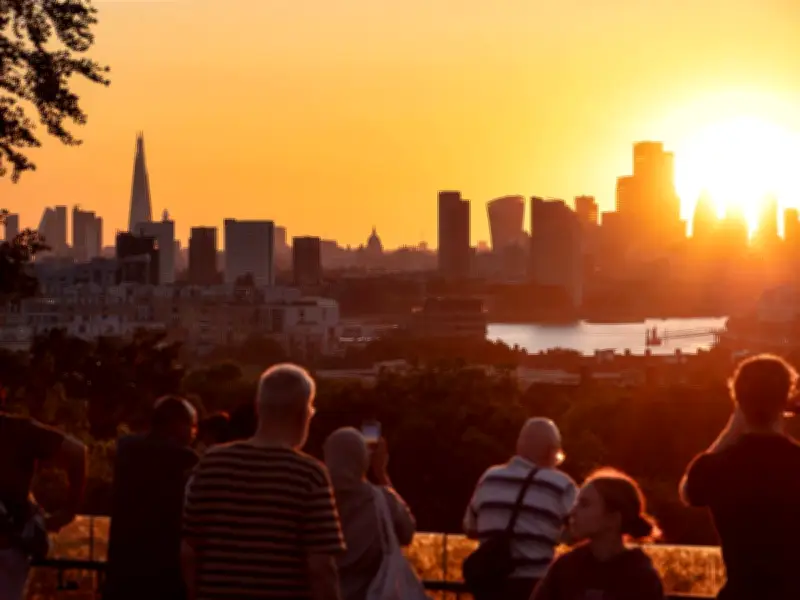
London is set to experience its most dramatic partial solar eclipse since 1999 this Wednesday, August 12, with the Royal Greenwich Observatory confirming that between 90 and 96 per cent of the Sun will be obscured across the UK. In the capital, 90 per cent of the Sun will be hidden by the Moon, making it one of the best viewing locations in the country.
Prime London Vantage Points
Greenwich Park, home to the Royal Observatory, is poised to be a top spot. The Flamsteed Astronomy Society is hosting an official event there, with experts on hand to answer questions. While viewing from the park is free, entry to the observatory's official event requires a ticket, available on the official website.
Parliament Hill, rising 98 metres, offers expansive views over central London, making it an exceptional vantage point. Telegraph Hill in South London, at 58 metres, provides a prime west-northwest view. Primrose Hill, at 64 metres, is another excellent choice for North Londoners, with citywide views.
Unique Eclipse Experiences
For a different perspective, ZipWorld at the ArcelorMittal Orbit in Queen Elizabeth Olympic Park, Stratford, is hosting an eclipse-viewing event featuring expert talks and an optional slide experience. City Cruises London is offering a special Thames cruise with open-air decks, drinks, canapés, live entertainment, and eclipse glasses available for purchase.
UK-Wide Coverage and Timings
Across the UK, Pembrokeshire will see 94 per cent coverage, Cornwall 95 per cent, and the south-western tip of Ireland up to 97.5 per cent, the highest in the British Isles. According to the Royal Greenwich Observatory, Edinburgh and Glasgow will reach eclipse maximum first at 7.05pm, followed by Galway, Dublin, Manchester, and Liverpool at 7.10pm. Norwich and Birmingham hit maximum at 7.11pm, London, Bristol, and Cardiff at 7.12pm, and Truro last at 7.16pm. The eclipse will end between 8pm and 8.10pm, depending on location.
Safety First: How to View the Eclipse
Viewing the eclipse safely is crucial. The reduced light can suppress the natural urge to look away, allowing intense sunlight to damage the retina without pain. Regular sunglasses are inadequate and can be more harmful. Purpose-built eclipse glasses or handheld solar viewers from reputable sources like the Greenwich Observatory are essential. Be wary of online products that may not meet safety standards.
Why Eclipses Occur
Solar and lunar eclipses happen during an 'eclipse season,' a 31- to 37-day window occurring twice a year when Earth's orbit is closest to the Sun. A new Moon within this period can cast its shadow on Earth, causing a solar eclipse. A fortnight later, a full Moon can trigger a lunar eclipse, as will occur on August 28. For the lunar eclipse, an elevated location with a clear southwest view is recommended, as the Moon will sit low on the horizon.



