
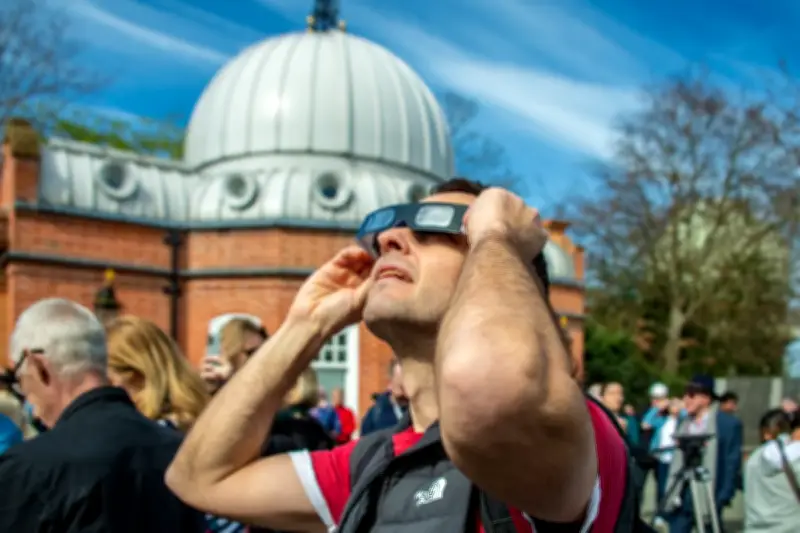
On March 29, 2025, skywatchers across the UK will witness a partial solar eclipse, a celestial event where the Moon passes between the Sun and Earth, casting a shadow that partially covers the Sun's disk. According to the Royal Observatory Greenwich, the eclipse will be visible from approximately 10:07 AM to 12:00 PM BST, with the maximum obscuration occurring around 11:03 AM for London observers. The exact timing and coverage vary by location, with northern parts of Scotland seeing up to 40% of the Sun covered, while southern England will see around 30%.
Why You Must Never Look Directly at the Sun
Experts emphasize that looking directly at the Sun during an eclipse, even for a few seconds, can cause permanent eye damage or blindness. The intense solar radiation can burn the retina, which has no pain receptors, so damage may go unnoticed until it's too late. The only safe ways to view the eclipse are through specially designed solar filters, such as eclipse glasses that meet the ISO 12312-2 international safety standard, or by using indirect viewing methods like a pinhole projector.
Dr. Emily Brunsden, an astrophysicist at the University of York, warned: "Never use regular sunglasses, smoked glass, or exposed film to view the eclipse. They do not provide adequate protection and can still cause serious eye injury." She added that children are particularly at risk, as they may not understand the dangers.
Safe Viewing Methods and Common Mistakes
To view the eclipse safely, you can use eclipse glasses or handheld solar viewers. Ensure they are from a reputable supplier and have the ISO certification. Alternatively, you can make a pinhole projector using two pieces of white card – poke a small hole in one and let sunlight pass through onto the other, allowing you to see a projected image of the Sun. Another safe method is to use a telescope or binoculars with a solar filter attached to the front, never the eyepiece.
Common mistakes include using regular sunglasses, camera lenses, or telescopes without proper filters, which can magnify the Sun's rays and cause instant damage. Also, avoid using eclipse glasses with any scratches or damage. Remember, the eclipse is only safe to view with the naked eye during the brief moment of totality in a total solar eclipse, but this event is partial, so no such safe period exists.
Where and How to Watch the Eclipse in the UK
The eclipse will be visible across the whole of the UK, weather permitting. Clear skies are essential, so check the forecast. For the best view, find an open area with an unobstructed view of the southeastern horizon, as the Sun will be in that direction during the event. Many local astronomy societies and science centers will host public viewing events with safe equipment. For example, the Royal Observatory Greenwich will stream the eclipse live on its website and social media channels, allowing people to watch from the comfort of their homes.
If you can't watch live, the observatory will also provide a recording afterward. Other livestream options include the Virtual Telescope Project and timeanddate.com, which will broadcast the eclipse from multiple locations worldwide.
Scientific Significance and Future Eclipses
Solar eclipses offer scientists a unique opportunity to study the Sun's corona, the outer atmosphere, which is usually hidden by the Sun's bright light. During the partial eclipse, researchers will collect data on solar activity, which is currently approaching a period of maximum in its 11-year cycle. This could lead to enhanced space weather, affecting satellites and communications on Earth.
For UK observers, this is the first solar eclipse since October 2022, and the next significant one visible from the UK will be a partial eclipse on August 12, 2026. So, if you miss this one, you'll have to wait another 18 months. Mark your calendars and prepare your viewing equipment in advance.



