
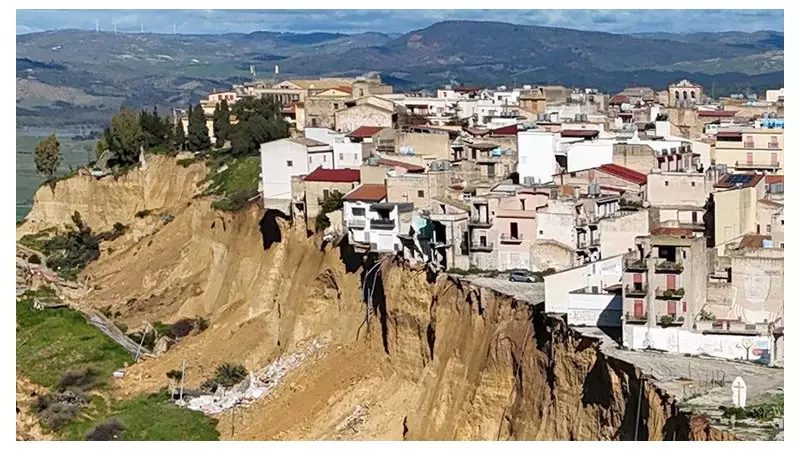
Massive Landslide in Sicily Leaves Homes Perched on Cliff Edge, 1,500 Evacuated
Heavy rainfall has triggered a devastating landslide in southern Sicily, causing a significant portion of the town of Niscemi to collapse and forcing the evacuation of more than 1,500 residents. Italian Premier Giorgia Meloni visited the affected area on Wednesday, where dozens of homes have been left teetering on the edge of a cliff, with some structures and vehicles already tumbling 20 metres onto the plain below.
Emergency Declared as Landslide Expands to 2.5 Miles
The landslide has now grown to span approximately 2.5 miles (4 kilometres), leading authorities to establish a 150-metre-wide no-go zone around the town. Fabio Ciciliano, Italy's civil protection chief, stated that parts of Niscemi, home to about 25,000 people, have become uninhabitable, with some residents unlikely to ever return. The entire hill is collapsing onto the plain of Gela, he explained, emphasising the need for permanent relocation for affected families.
Geological Vulnerabilities and Historical Context
Niscemi is built on layers of sand and clay that are highly permeable during heavy rain, making the area prone to landslides. This vulnerability is not new; a major landslide in 1997 forced 400 people to evacuate. Professor Giovanna Pappalardo from the University of Catania noted that the current event is more severe, with a landslide front extending four kilometres and directly impacting houses on the slope.
Government Response and Financial Impact
Premier Meloni viewed the damage from a helicopter and met with local officials, as the federal government declared a state of emergency for Sicily, Sardinia, and Calabria, allocating an initial €100 million (£86.9 million) in support. Sicilian regional officials estimate the overall damage at €2 billion (£1.74 billion), sparking political debate over funding priorities, including calls to redirect funds from a controversial bridge project to rebuilding efforts.
Ongoing Risks and Community Displacement
With the ground continuing to shift, residents in the affected area, which faces the city of Gela, must find long-term alternative accommodation. The landslide, which began on Sunday during Cyclone Harry, has raised criticism about construction in high-risk zones, highlighting the urgent need for sustainable planning and disaster management in the region.



