
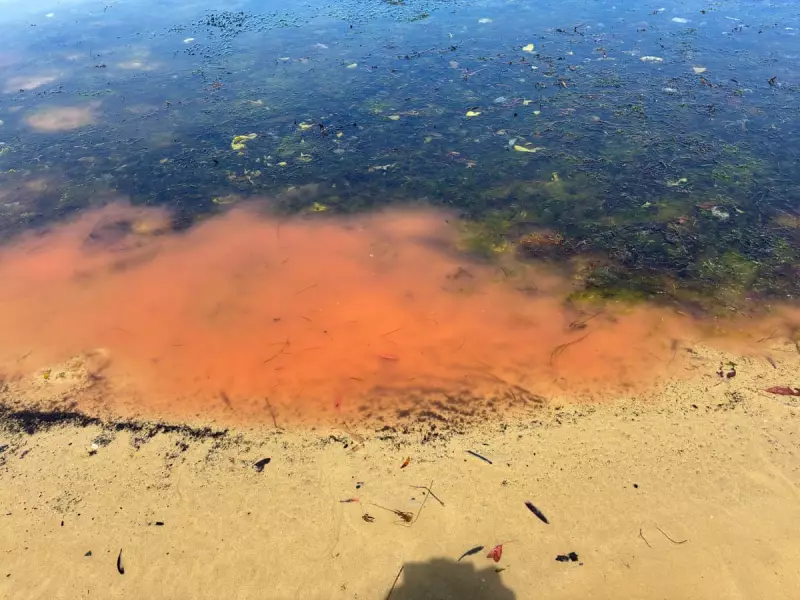
A mysterious pink slime has appeared on several secluded beaches in Tasmania, triggering an urgent environmental investigation and raising concerns about a potential algal bloom.
Slime Spreads Across Southern Coastline
The pink-tinged sludge was first reported along a stretch of Randalls Bay, about 60km south of Hobart, on Friday morning. Similar substances have since been recorded at Little Roaring Beach and Little Taylors Bay in the D’Entrecasteaux Channel.
Samples have been collected and sent to Tasmania’s Environment Protection Authority (EPA) for analysis. While the Department of Natural Resources and Environment Tasmania stated that results are pending, a spokesperson noted that algal blooms are a natural occurrence, often responding to changes in nutrients, temperature, or light.
"They are sometimes called red or pink tides because the blooms can turn the water red," the spokesperson explained. "Not all algal blooms are harmful, with many species acting as a major source of energy for animals in the marine food web."
Scientists Identify Likely Culprit and Warn of Growth
Based on photographic evidence, estuarine ecologist Faith Coleman suggested the most probable species is Noctiluca scintillans, a type of dinoflagellate known as 'sea sparkle' for its bioluminescent properties. "There have been lots of these blooms around Tassie of late," Coleman observed.
While this species is not typically toxic like the one behind South Australia's recent devastating bloom, it poses a different threat. Coleman warned that sea sparkle consumes small invertebrates and fish eggs, putting fish and crustacean populations at risk. It often appears following other biological events, such as a salmon spawning.
Marine scientist Lilly Henley, who collected samples for the group Neighbours of Fish Farming, reported that the suspected bloom had "grown significantly" in the last 12 hours. She expressed concerns for public safety after experiencing a tingling sensation on her skin from contact with the water and pointed to similar incidents linked to salmon farming in Chile.
Calls for Action and Government Response
The situation has been labelled an "environmental emergency" by the Bob Brown Foundation, which reported dead octopus and sea cucumbers washing ashore. Veteran campaigner Bob Brown called on Premier Jeremy Rockliff to visit the site and take control of the government's response, warning of a potential "disaster in the making."
When questioned on Saturday, Premier Rockliff stated he was not aware of any links to the salmon industry and emphasised the need for scientific testing before drawing conclusions. "We need to ensure our waterways are environmentally safe and sustainable," Rockliff said, highlighting the importance of Tasmania's 1,200 beaches.
The event echoes a catastrophic algal bloom in South Australia, which followed marine heatwaves and was estimated to have killed up to 250,000 marine animals. Although the Tasmanian slime is likely a different species, it underscores the growing frequency of such events, which scientists link to climate change and nutrient pollution.



