
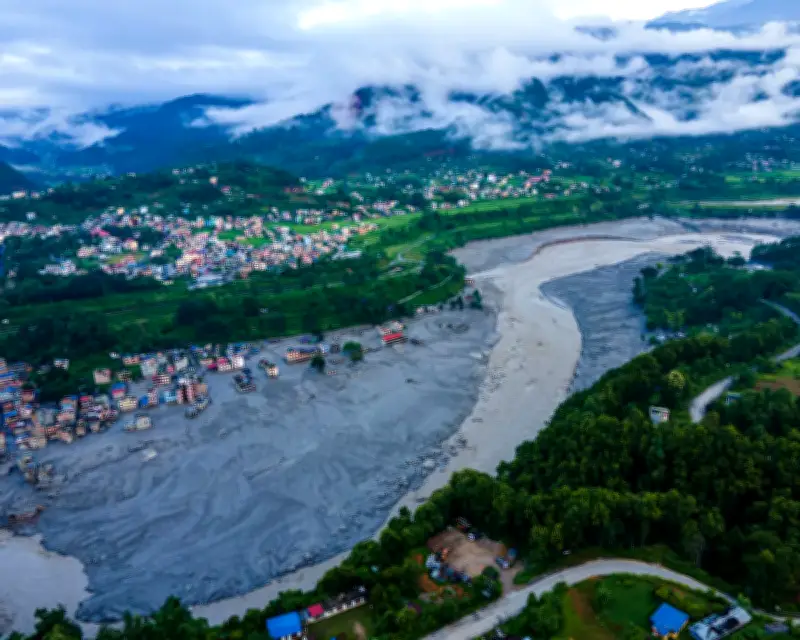
The catastrophic flooding triggered by a Himalayan glacier collapse along the Bhotekoshi River in Nuwakot, Nepal, has plunged New York's Nepali and Tibetan diaspora into grief and urgent action. With more than 600 people confirmed dead and nearly 3,000 missing, including relatives of community members in Queens, the disaster has sharpened focus on the disproportionate impact of climate change on vulnerable regions.
Community in Shock as Family Members Missing
Geeta Tamang, a 24-year-old computer science student at Queens College, learned of the disaster from her aunts while preparing for bed. Her family's village in Rasuwa, near the Nepal-Tibet border, was largely swept away by the torrent of water, mud, and rock. Tamang's grandmother's sister remains missing, and she fears the worst: "I don't think there's any chance she survived," she said, her voice trembling.
Tamang, who lives in Jackson Heights—home to one of the largest Nepali and Tibetan communities in New York City—found herself breaking the news to relatives who were unaware of the unfolding catastrophe. Calls to her family went unanswered, fueling her anxiety.
Concerns Over Official Death Toll in Tibet
Across the border in Tibet, Chinese authorities have reported at least seven deaths, but this figure is met with deep suspicion among Tibetans abroad. Sonam Tshiring, 58, a Tibetan refugee who settled in Queens three decades ago, believes the actual number of deaths in Tibet is far higher than officially acknowledged.
The disaster has also highlighted the broader climate crisis. Nepal contributes only a tiny fraction of global greenhouse gas emissions, yet its Himalayan communities face mounting dangers as temperatures rise and glaciers retreat. This injustice resonates strongly among the diaspora, who see their homelands bearing the brunt of a warming planet they did little to cause.
Younger Generation Mobilizes Support
Ninima Rai, 19, who moved to New York from Nepal at age 11, recalls the 2015 earthquake that devastated Nepal. This time, she watched from afar as her relatives were safe but communications disrupted. "It's hard to see how we can support them from so far away," she said, as she and other young Nepalis share updates and support aid organizations.
Tashi Sherpa, 16, born in the US but raised partly in Nepal, described a "chaotic time" with no safe space. "As a Nepali American … it's not just Nepal, but it's America too," she said. Both teenagers found action as an antidote to helplessness, with friends in Nepal preparing aid kits and collecting donations, while those in New York share information and check on relatives.
Community Leaders Demand Stronger Response
Tsomo Dasel, 40, owner of Himalayan Yak, New York's first Nepali restaurant on Roosevelt Avenue in Jackson Heights, voiced frustration with the US government's climate response. "The world needs to pay attention," she said. Dasel criticized the Trump administration's initial $500,000 emergency aid pledge for Nepal as an "insult" and "a joke," given the disaster's scale.
Dasel, whose husband's family in Nepal is safe, emphasized the need to exhaust all resources to find the missing. She also lamented the media's neglect of Tibet, asking, "What kind of world will we leave behind if our president doesn't believe in climate change?" Power outages in Nepal and Tibet have hampered communication, making it difficult for the diaspora to coordinate aid. Dasel remains ready to help: "Whatever the team needs."



