
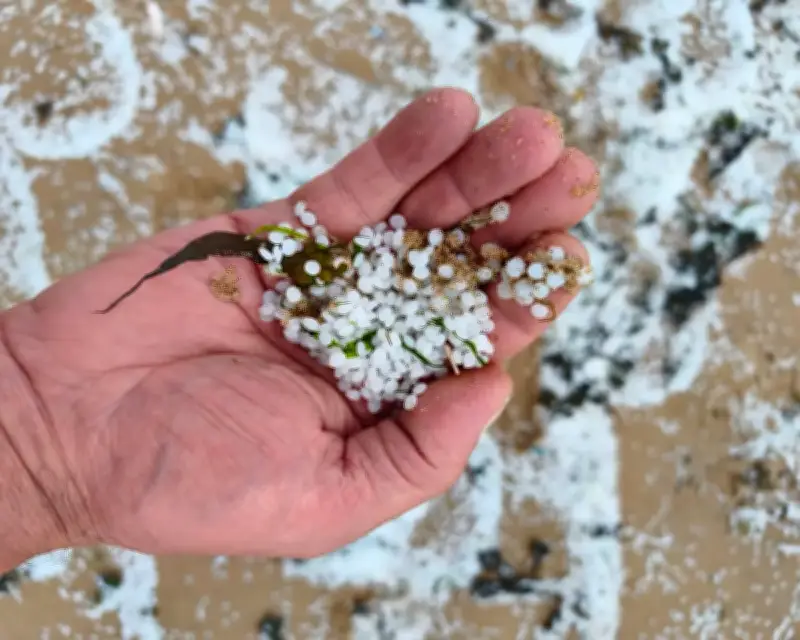
Volunteers in hi-vis clothing and rubber gloves are combing the sands of Whitley Bay, North Tyneside, in a massive community effort to clear up the aftermath of the Tyne nurdle spill. During a family trip to the beach, one father and his two children collected about 70 of the tiny plastic beads in just half an hour of careful hunting, illustrating the scale of the contamination.
The spill occurred on 19 July when a quayside gantry crane crashed onto the container ship BG Orange at North Shields, releasing around one billion nurdles—approximately 25 tonnes—from the ship's containers. Nurdles are tiny, hard, resilient beads used worldwide in the manufacture of all kinds of plastic products. Unlike the foam packing peanuts the father initially imagined, these beads are dense and durable, making them particularly hazardous.
Community Response and the Scale of the Clean-Up
The family walked past a clean-up crew of about 40 volunteers, who were kneeling or stooped over black buckets, collecting nurdles from the dry sand and seaweed. The Tyne Rivers Trust has already called the spill an “environmental disaster,” and the clean-up is expected to be a long-term effort. As the father noted, “Nobody can be quite sure where they're going to wash up, we can only be sure that they're not going away. This is, realistically, a clean-up job without an endpoint.”
The nurdles have spread along the coast, washing up at various points, including Fish Quay Sands in North Shields, where they were photographed by Mark Pinder. The unpredictable nature of tides means that nurdles could appear anywhere, making it impossible to predict where the next accumulation might occur.
Impact on Marine Life and the Food Chain
The marine food chain is already clogged with plastic, but this spill has made the problem a billion nurdles worse. Seabirds that wolf down nurdles—or fish that are full of nurdles—face starvation. As an RSPB policy officer bluntly put it, “A stomach filled with plastic can't be filled with food.” This stark reality underscores the urgency of the clean-up effort.
The father observed a fulmar crossing the bay as his children dropped their collected nurdles into the volunteers' buckets. The family's small contribution is part of a much larger picture, with volunteers working along the coast to remove as many nurdles as possible, though the task is daunting.
Ongoing Efforts and Future Outlook
The clean-up operation is a community-driven response, with volunteers dedicating their time to scour beaches and remove the plastic beads. However, the sheer number of nurdles—around one billion—means that many will likely remain in the environment for years. The father noted that at other spots, down the coast, up the coast, or at other times, other tides, they might have gathered up handfuls, but the distribution is uneven.
The spill has highlighted the broader issue of plastic pollution in marine environments, with nurdles being particularly problematic due to their size and resilience. The Tyne Rivers Trust's characterization of the spill as an “environmental disaster” is a clear indication of the severity of the situation. As the clean-up continues, the focus remains on removing as many nurdles as possible to mitigate the impact on wildlife and the ecosystem.



